

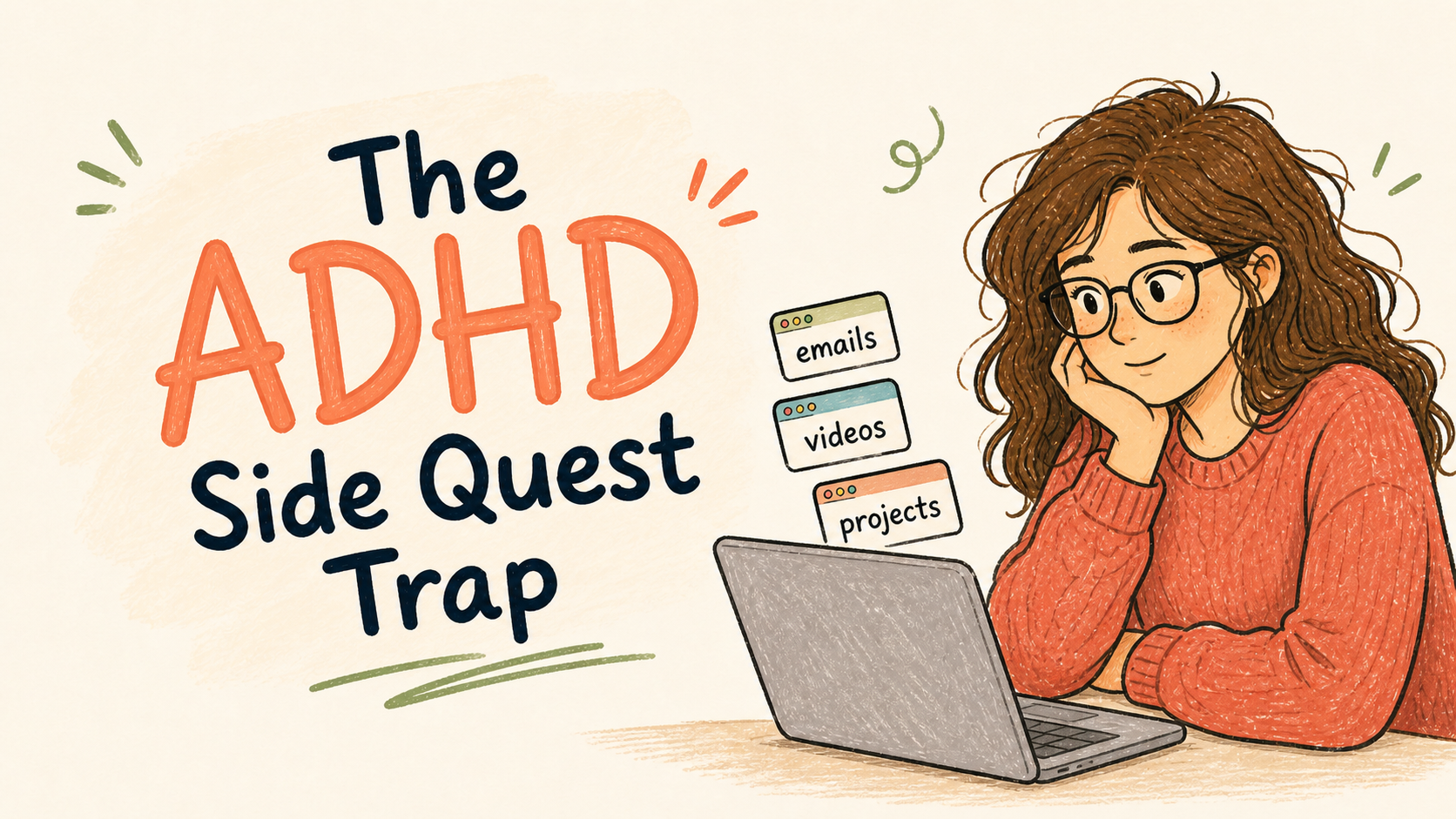
When Work Turns Into Side Quests
Maybe you opened your laptop to write one thing. Then you noticed a messy folder, checked your bookmarks, opened a saved article, and somehow half an hour passed before the real task began.
Or you opened email to reply to one client. Then you read every unread message, adjusted a label, opened a new tab, and landed somewhere completely unrelated.
For many people with adult ADHD, this is not a mystery. A normal work routine can become hard to hold because the brain catches too many interesting task cues at once. Attention follows the brightest one, then the next, then the next.
The painful part is that you may feel busy the whole time. You were doing things. They just were not moving the main task forward.
Why Side Quests Pull So Hard
ADHD task switching gets harder when every possible action has a little spark. A new tab, a small cleanup, a quick search, or an easy message can all feel more available than the task that matters.
Interest gets priority
If the side task feels newer, easier, or more rewarding, it can win attention before the main task has a chance.
The main task is too vague
When you have not named what you are doing right now, the brain starts looking for substitute goals.
Switching feels cheap
The cost of switching often shows up later, after the thread is lost and restarting feels heavy.
That means the goal is not to shame yourself for noticing side quests. The goal is to give them a place to land without letting them take the steering wheel.
The Change: Build a Main Quest and Side Quest System
You do not need to erase every distraction. For many ADHD brains, forced suppression creates more tension. A more sustainable system gives attention two paths: one clear main road, and one safe place for side roads.
Method
Name one main quest
Instead of writing a long list for the day, choose one task that counts most. Write it somewhere visible and say: this is main quest time.
Method
Catch side quests without opening them
When a new idea appears, save it in a side quest list. You are not ignoring it. You are parking it so the main thread can continue.
Method
Give side quests a boundary
Set a small window for them later, or define the limit: one search, one article, one tool. No recommendation spiral.
This works because it respects both needs: the need for progress and the need for mental flexibility.
How to Use It When You Notice a Distraction
The key moment is not when you are perfectly focused. It is the second you notice the pull toward something else.
Instead of asking
“Should I do this now?”
Try asking
“Is this my main quest or a side quest?”
Instead of
Research this right now
Try
Write it in the side quest list
Instead of
Clean all files first
Try
Return to the open document
Instead of
Read every email
Try
Reply to the one main message
A side quest list can be messy. It can be a sticky note, a notebook margin, a phone note, or a small section on your task board. The important part is that it is fast enough to use before attention fully leaves.
How Vingoals Helps Keep the Main Quest Visible
A visual ADHD checklist app can help when everything in the day feels equally loud. Vingoals can make the main quest visible enough to return to after a side thought appears.
The board does not need to hold your whole life. It can separate the current main line from the side quests waiting for later.
A main quest board could include:
- Check mail
- Edit video
- Make espresso
- Update resume
- Read book
- Plan day
- Hang out with friends
- Prepare exam
- Build app
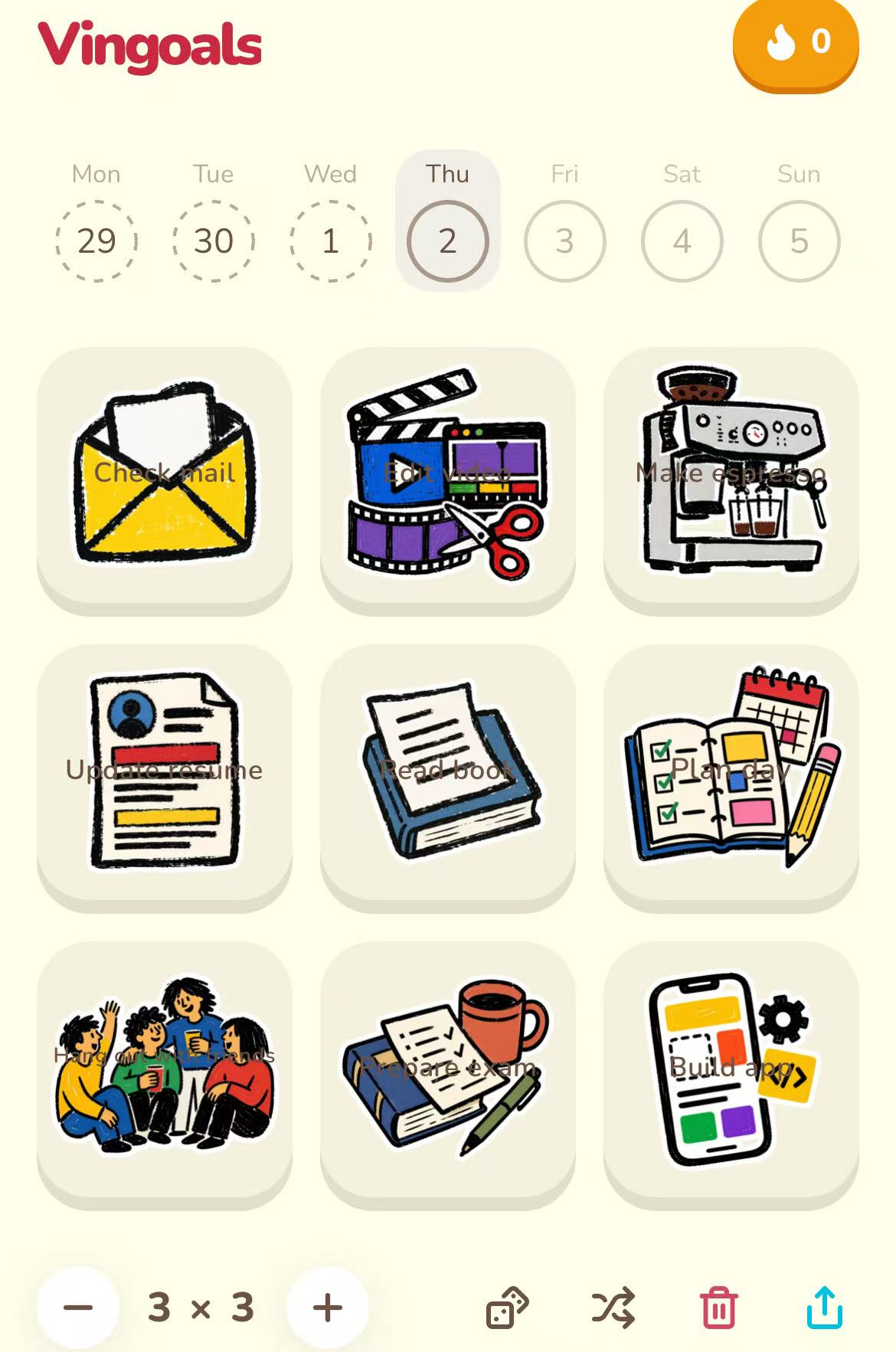
You can choose one square as the main quest, then let the other squares wait without disappearing. That gives curiosity a place to go without taking over the whole session.
Side Quests Are Not the Enemy
Your wandering attention is not proof that you cannot work. Often, it means your brain is catching more possible paths than it can sort in the moment.
A main quest gives the day a center. A side quest list gives sudden ideas a safe place. Together, they make it easier to move forward without pretending distractions will never happen.
You are not trying to become a one-track machine. You are building a route back.
Start with one tiny win today
Give today one main quest and one place for side quests.
Start with one tiny win today.
More real stories
See all stories
What Is ADHD? Why Starting Tasks Can Feel So Hard
ADHD is not laziness. Executive dysfunction and ADHD paralysis can make starting hard when the first step is too vague.
Read story
ADHD Long-Term Projects: Make Slow Progress Feel Visible
Long tasks can feel impossible when the reward is too far away. A three-day cycle and small feedback points can make slow progress easier to feel.
Read story
Study and Work With ADHD: Build a Sustainable Focus Rhythm
For ADHD, focus is often hard to switch on but powerful once it starts. A flow-friendly setup can make task initiation feel less jagged.
Read story
ADHD and Irregular Eating: A Low-Friction Food System
When ADHD hyperfocus takes over, meals can disappear from the day. A low-friction daily routine makes eating easier before energy crashes.
Read story
ADHD-Friendly Organizing: Make Things Easier to Put Away
For ADHD, organizing often fails when every object asks for a decision. A visible home for everyday things can make putting them away less exhausting.
Read story
ADHD Bedtime Procrastination
ADHD bedtime procrastination can make nights feel impossible to end. A softer shutdown routine can help your brain move toward sleep.
Read story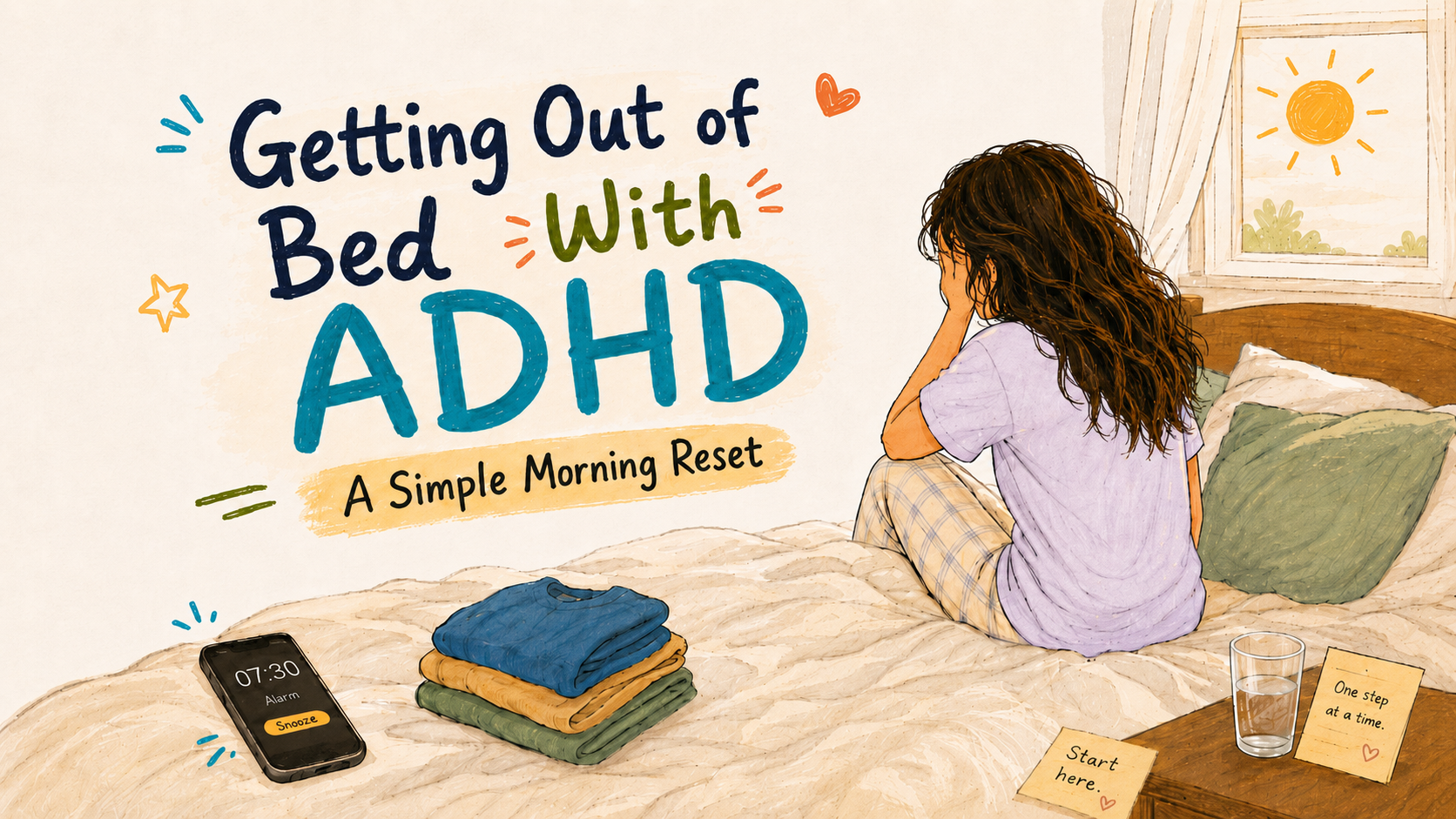
ADHD Morning Routine Reset
Getting out of bed with ADHD can feel like a whole task chain. A softer morning routine can help you restart without shame.
Read story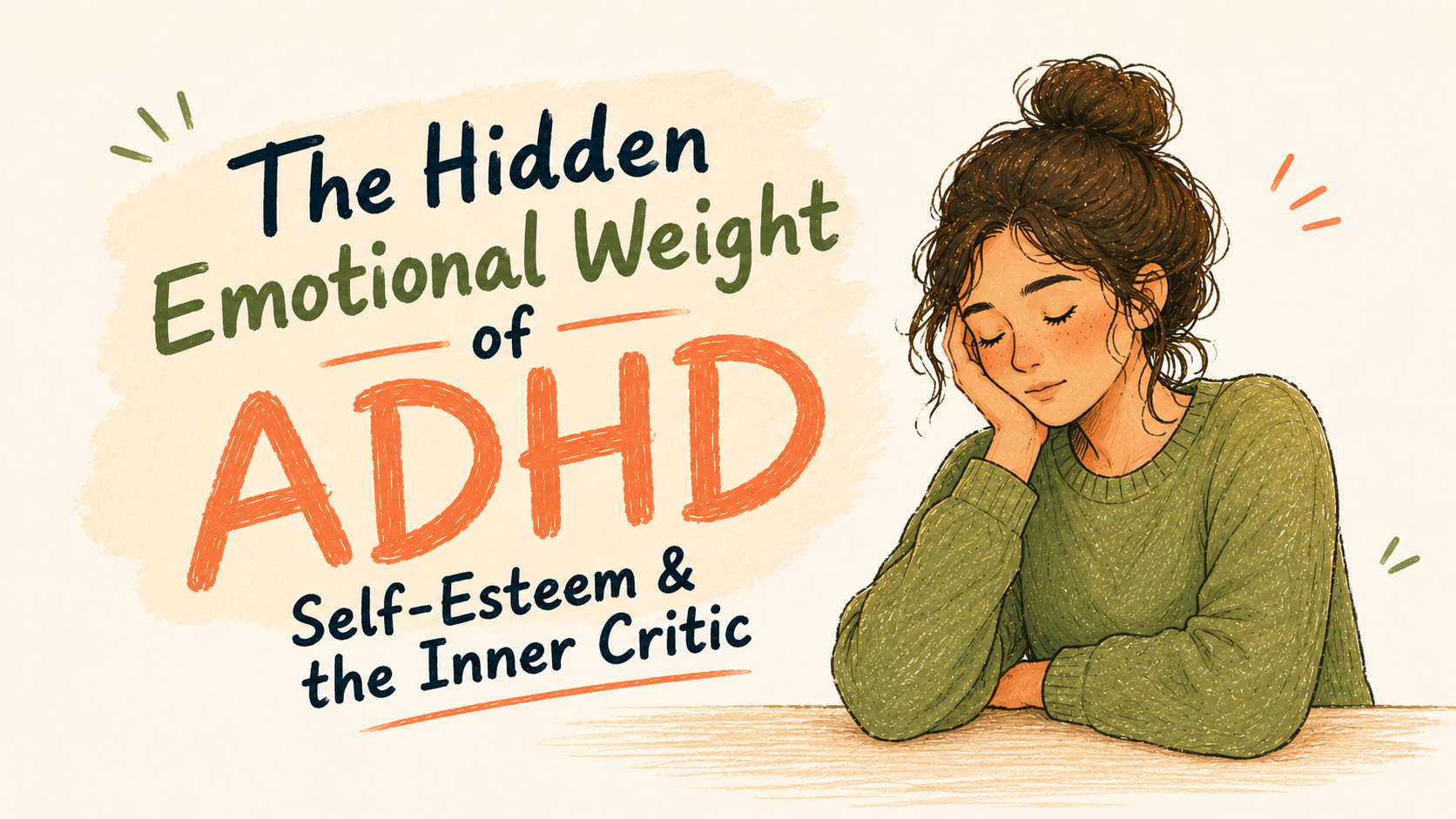
The Hidden Emotional Weight of ADHD
ADHD self-esteem can be shaped by shame, self-criticism, and the hard moments after a mistake. A kinder voice can help you recover.
Read story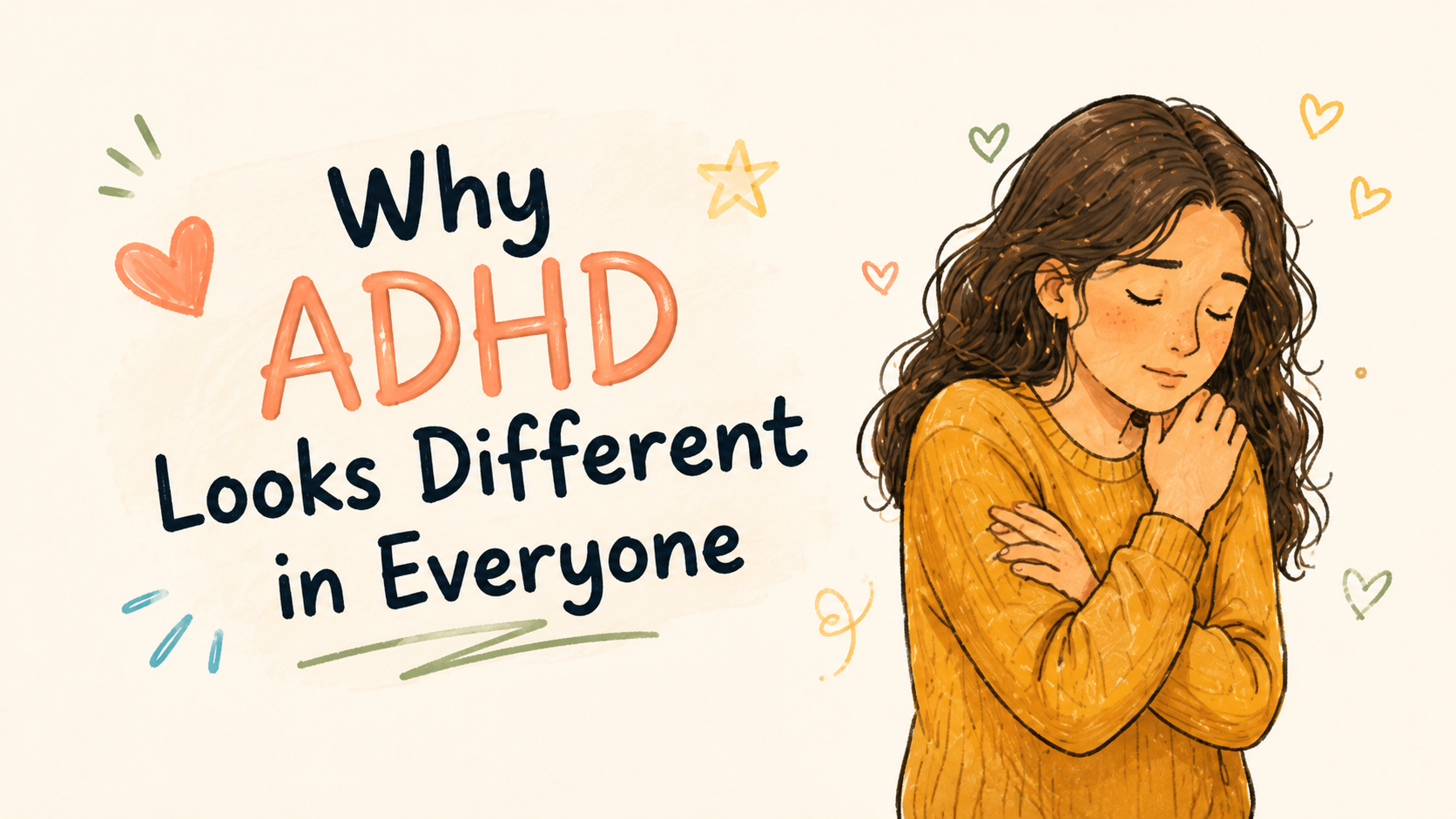
Why ADHD Looks Different in Everyone
ADHD can look restless, quiet, overwhelmed, impulsive, or hidden. The support that helps most depends on how it shows up in your real life.
Read story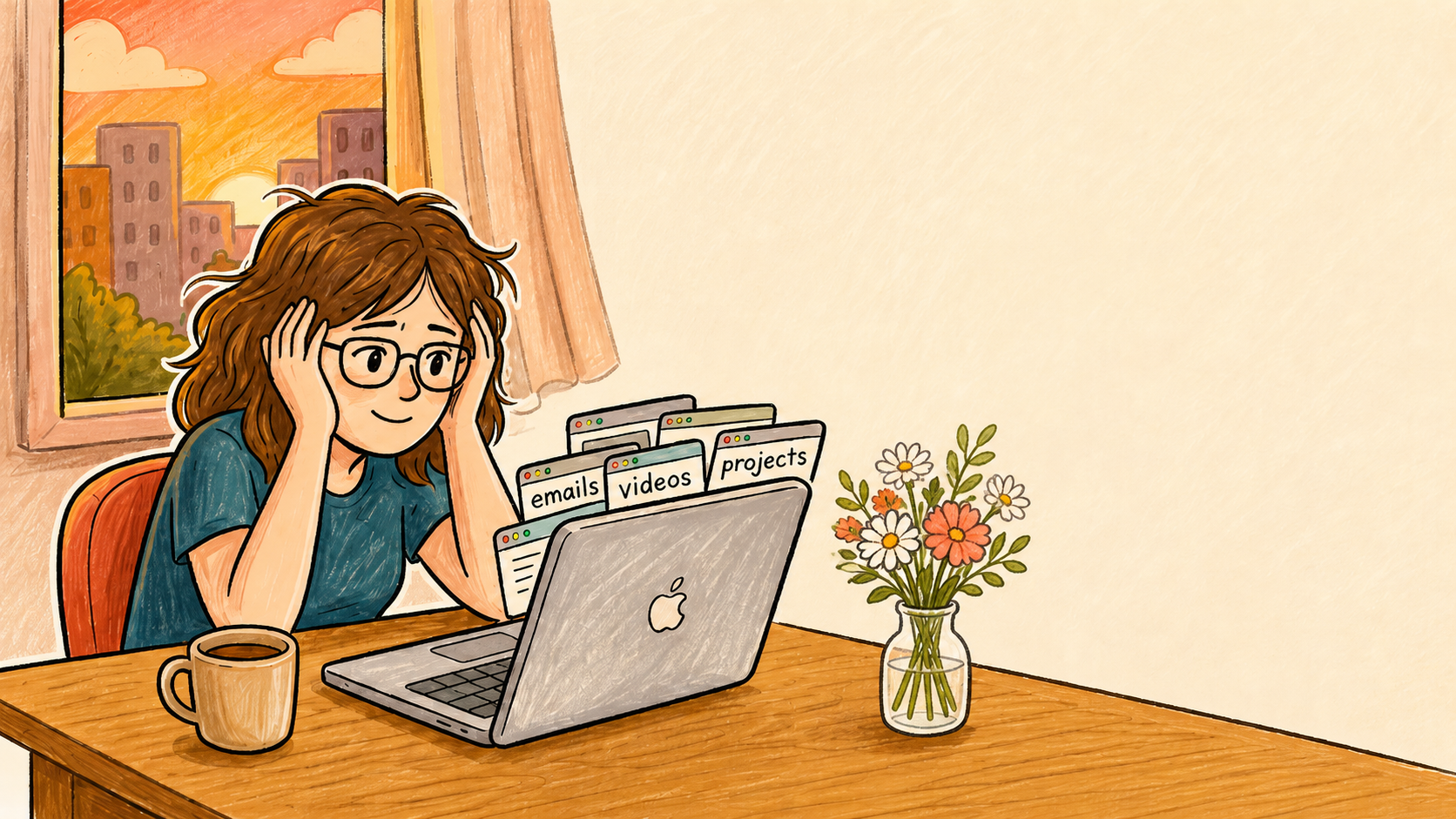
Freelancing With ADHD: Why Open-Ended Workdays Feel So Hard
Freelance freedom helped Maya work on her own terms, but open-ended workdays made starting hard. A smaller ADHD freelance routine helped her begin.
Read story
Living Alone With ADHD: Small Visible Steps That Make Life Easier
Living alone with ADHD made daily care feel heavy for CC. Small visible steps helped make the day feel lighter, clearer, and easier to restart.
Read story
ADHD Social Fatigue: When You Replay Every Conversation
If a normal gathering leaves you replaying every sentence, you are not alone. ADHD social fatigue often comes from the hidden work of reading cues and staying composed.
Read story
How to Study With ADHD Without Getting Stuck Before You Start
Studying with ADHD can feel hard before the studying even begins. Ashley used small visible steps to move through ADHD paralysis.
Read story