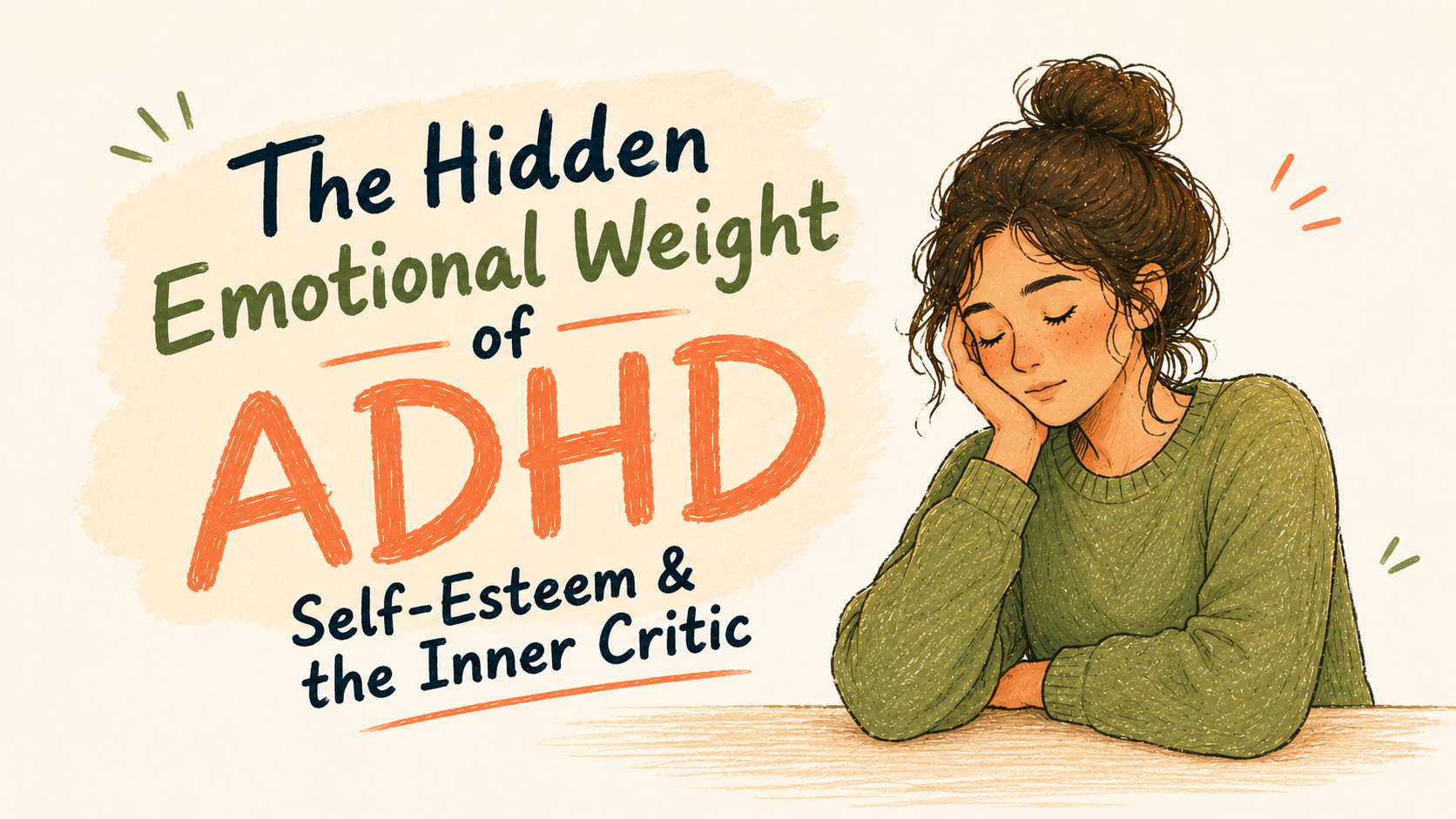
The ADHD Inner Critic
Many people with ADHD know the voice that asks why you messed this up again, why everyone else can do it, or why you did not start when you knew what to do.
This is the inner critic.
It notices every unfinished task but ignores everything you completed. Even after a productive day, one forgotten detail can make the whole day feel like a failure.
This voice is not always trying to help you improve. Often, it repeats an old belief: I am unreliable. I always get things wrong. I cannot trust myself.
Why ADHD Can Create This Cycle
ADHD affects attention, motivation, reward, and emotional regulation. Everyday tasks may not provide enough immediate reward to make starting feel easy, while mistakes and setbacks may trigger a strong emotional response.
The cycle can feel like this:
After this happens repeatedly, some people begin avoiding challenges, lowering expectations, or making jokes about themselves before anyone else can judge them.
Procrastination can also become a way to escape the discomfort of possibly failing. These reactions may look like laziness from the outside, but they are often attempts to protect yourself from more ADHD shame.
Add a Kinder Voice
You are not lazy, irresponsible, or broken.
Your struggles are real, but they are not proof that you are incapable.
The goal is not to completely silence the inner critic. It is to place a more honest and supportive voice beside it.
Instead of asking
“What is wrong with me?”
Try asking
“What made this difficult today?”
A kinder reset can start here
- Name what felt hard
- Notice the critic without obeying it
- Choose one smaller next step
- Start again from here
- Let the day still count
“Progress does not require perfection. It requires learning how to recover without turning every mistake into a judgment about who you are.”
A kinder response might sound like: "I understand why I got stuck. I can start again from here."
Progress does not require you to stop making mistakes. It requires learning how to recover without turning every mistake into a judgment about who you are.
A Smaller Way to Recover
When the inner critic gets loud, the next step does not need to be impressive. It can be as small as choosing one kind square on your board.
Those stickers can stand for real moments like:
- Put flowers in vase
- Eat fridge dessert
- Stretch once
- Meditate
- Cook bought food
- Buy one shirt
- Walk the dog
- Celebrate with a friend
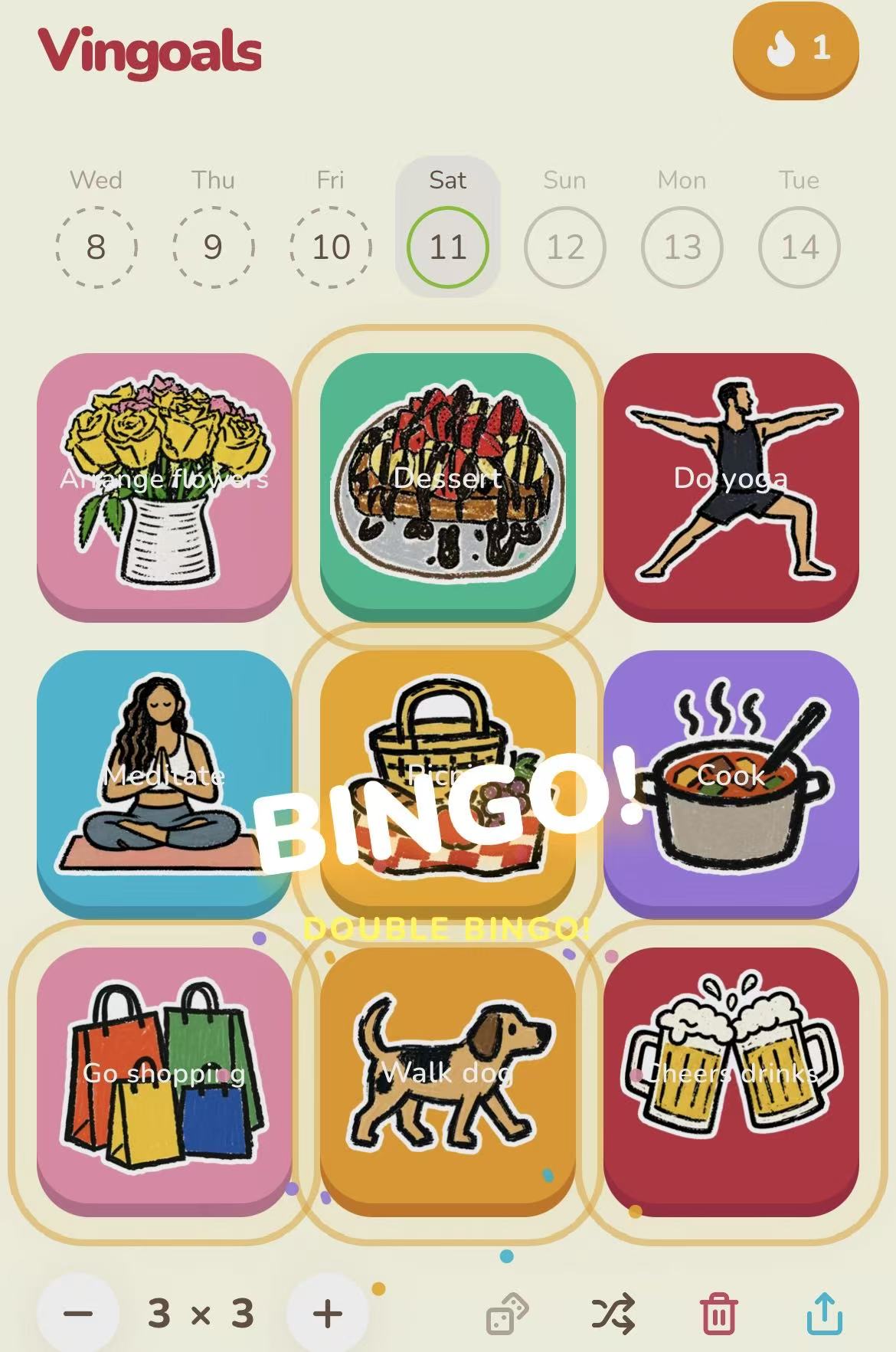
Vingoals can better help by turning recovery into something visible. Instead of holding every unfinished task in your head, you can see one next action, finish one square, and let that small win count.
Small steps are not a sign that you are behind. For emotional regulation ADHD support, they can lower pressure enough that your brain can move again.
You do not need to become perfect.
You only need to stop using every difficult moment as proof that you have failed.
Start with one tiny win today
Your hardest moment is not your whole story.
Start again with one kind, possible step.
More real stories
See all stories
What Is ADHD? Why Starting Tasks Can Feel So Hard
ADHD is not laziness. Executive dysfunction and ADHD paralysis can make starting hard when the first step is too vague.
Read story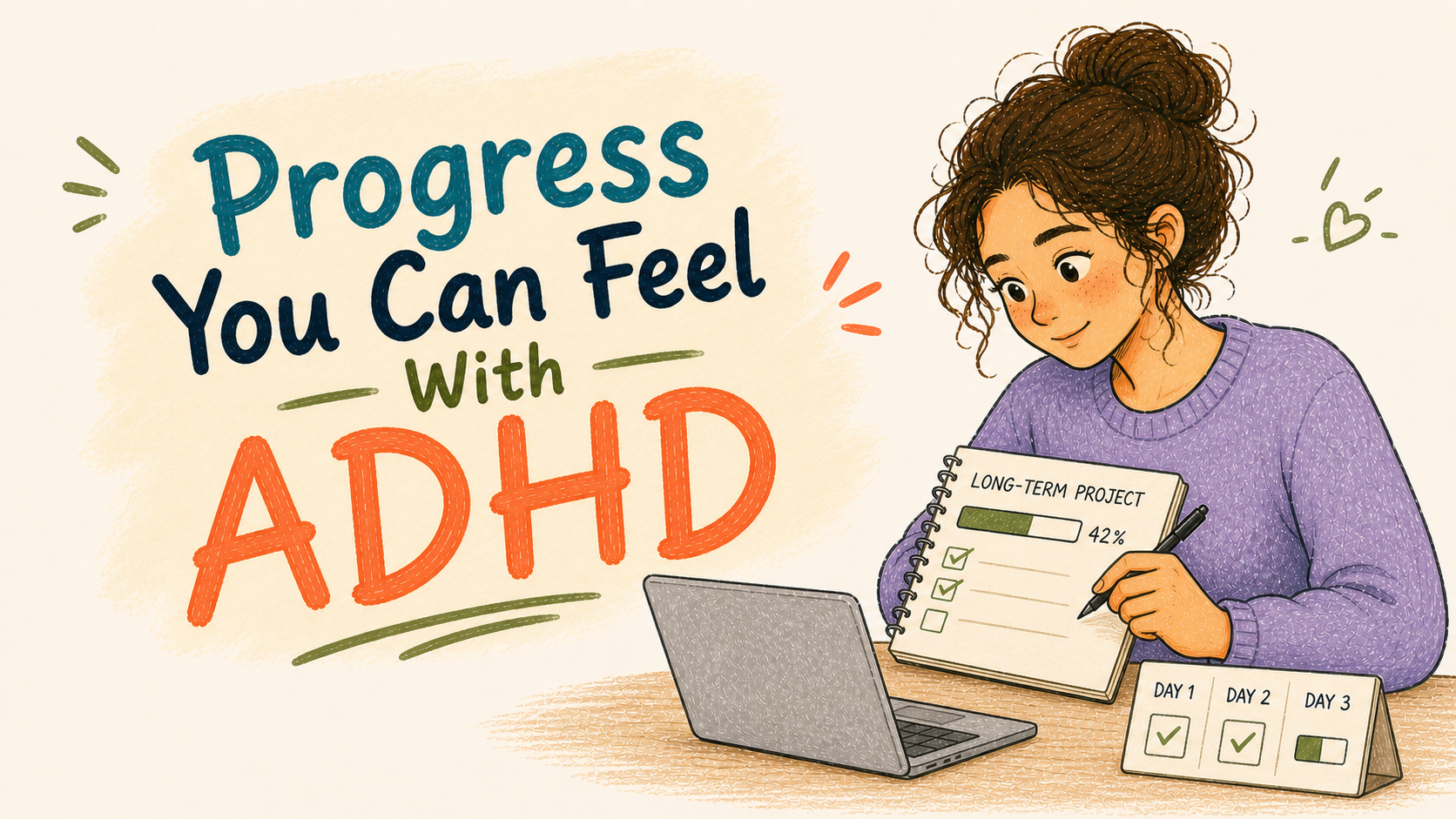
ADHD Long-Term Projects: Make Slow Progress Feel Visible
Long tasks can feel impossible when the reward is too far away. A three-day cycle and small feedback points can make slow progress easier to feel.
Read story
ADHD Task Switching: Use a Main Quest and Side Quest Strategy
When ADHD attention keeps following side quests, a work routine needs one main quest and a place for everything else.
Read story
Study and Work With ADHD: Build a Sustainable Focus Rhythm
For ADHD, focus is often hard to switch on but powerful once it starts. A flow-friendly setup can make task initiation feel less jagged.
Read story
ADHD and Irregular Eating: A Low-Friction Food System
When ADHD hyperfocus takes over, meals can disappear from the day. A low-friction daily routine makes eating easier before energy crashes.
Read story
ADHD-Friendly Organizing: Make Things Easier to Put Away
For ADHD, organizing often fails when every object asks for a decision. A visible home for everyday things can make putting them away less exhausting.
Read story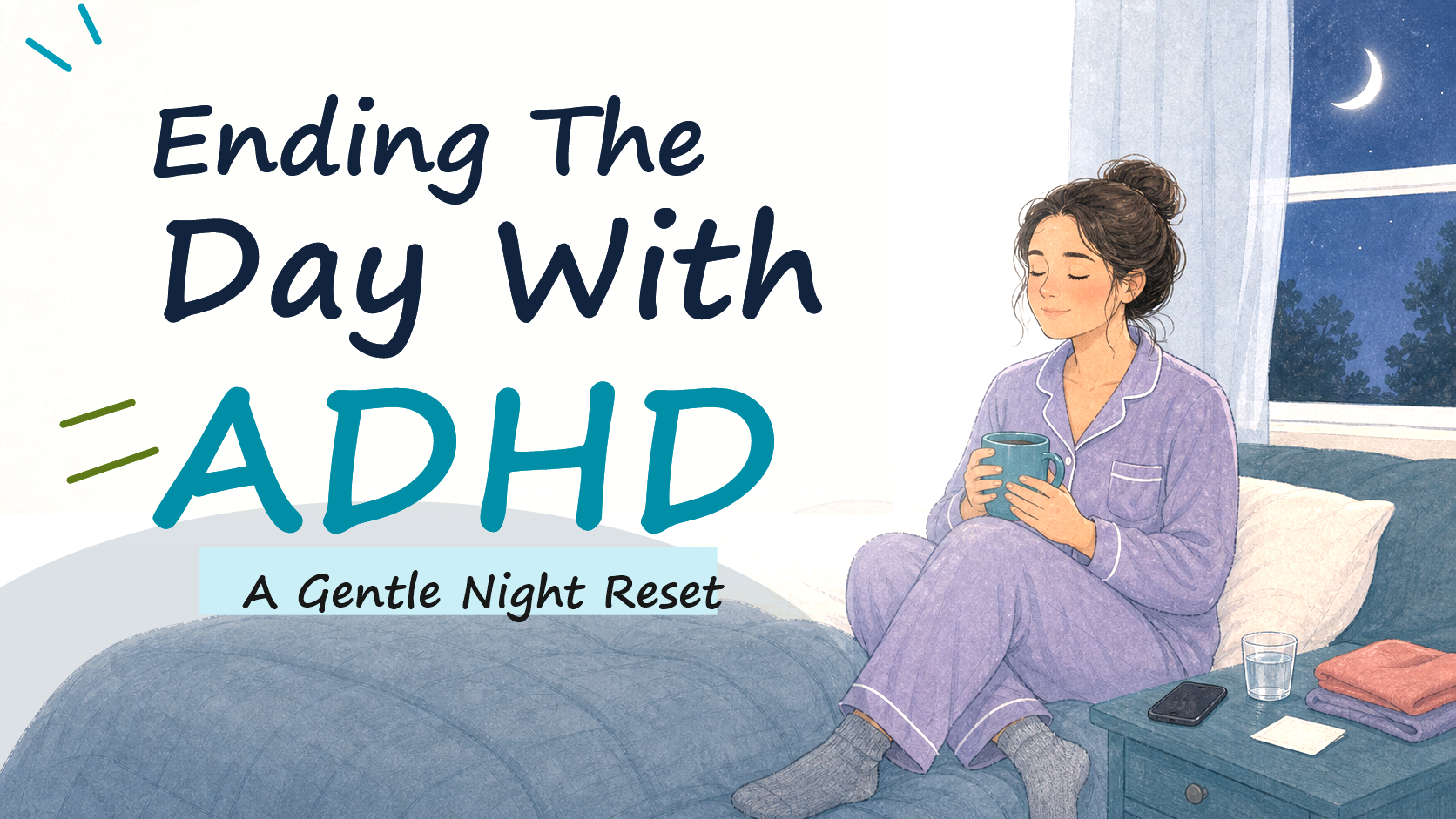
ADHD Bedtime Procrastination
ADHD bedtime procrastination can make nights feel impossible to end. A softer shutdown routine can help your brain move toward sleep.
Read story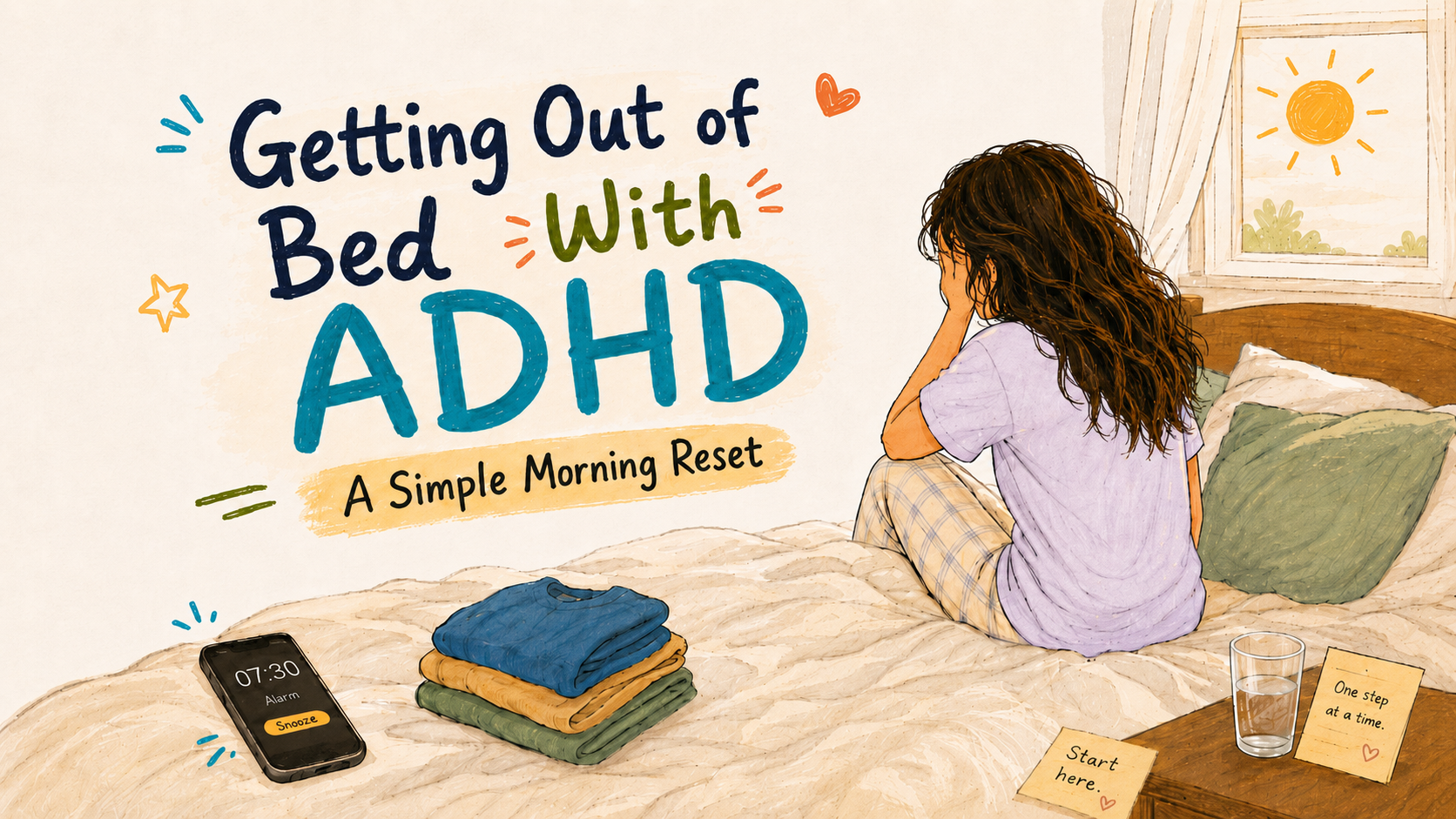
ADHD Morning Routine Reset
Getting out of bed with ADHD can feel like a whole task chain. A softer morning routine can help you restart without shame.
Read story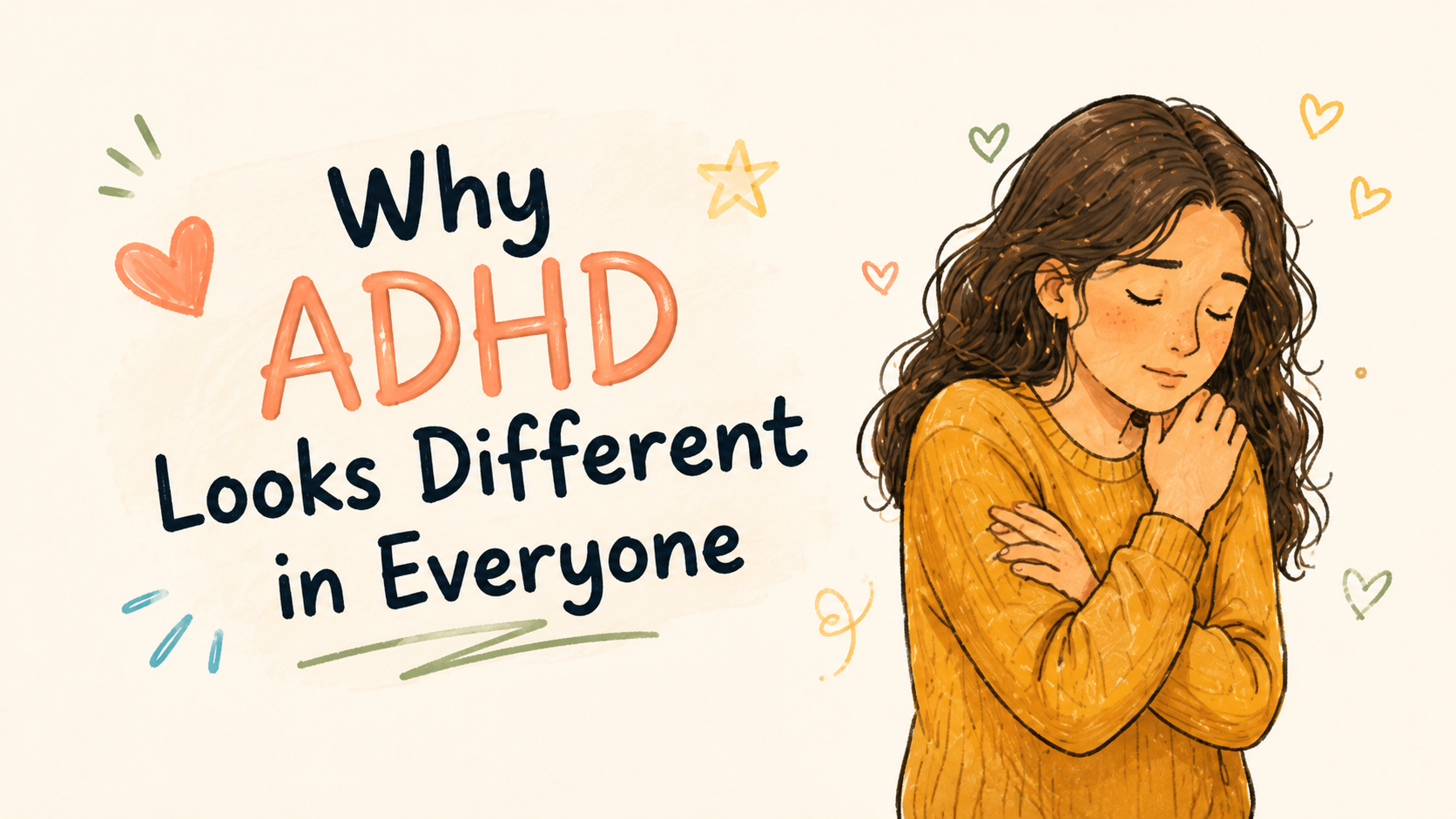
Why ADHD Looks Different in Everyone
ADHD can look restless, quiet, overwhelmed, impulsive, or hidden. The support that helps most depends on how it shows up in your real life.
Read story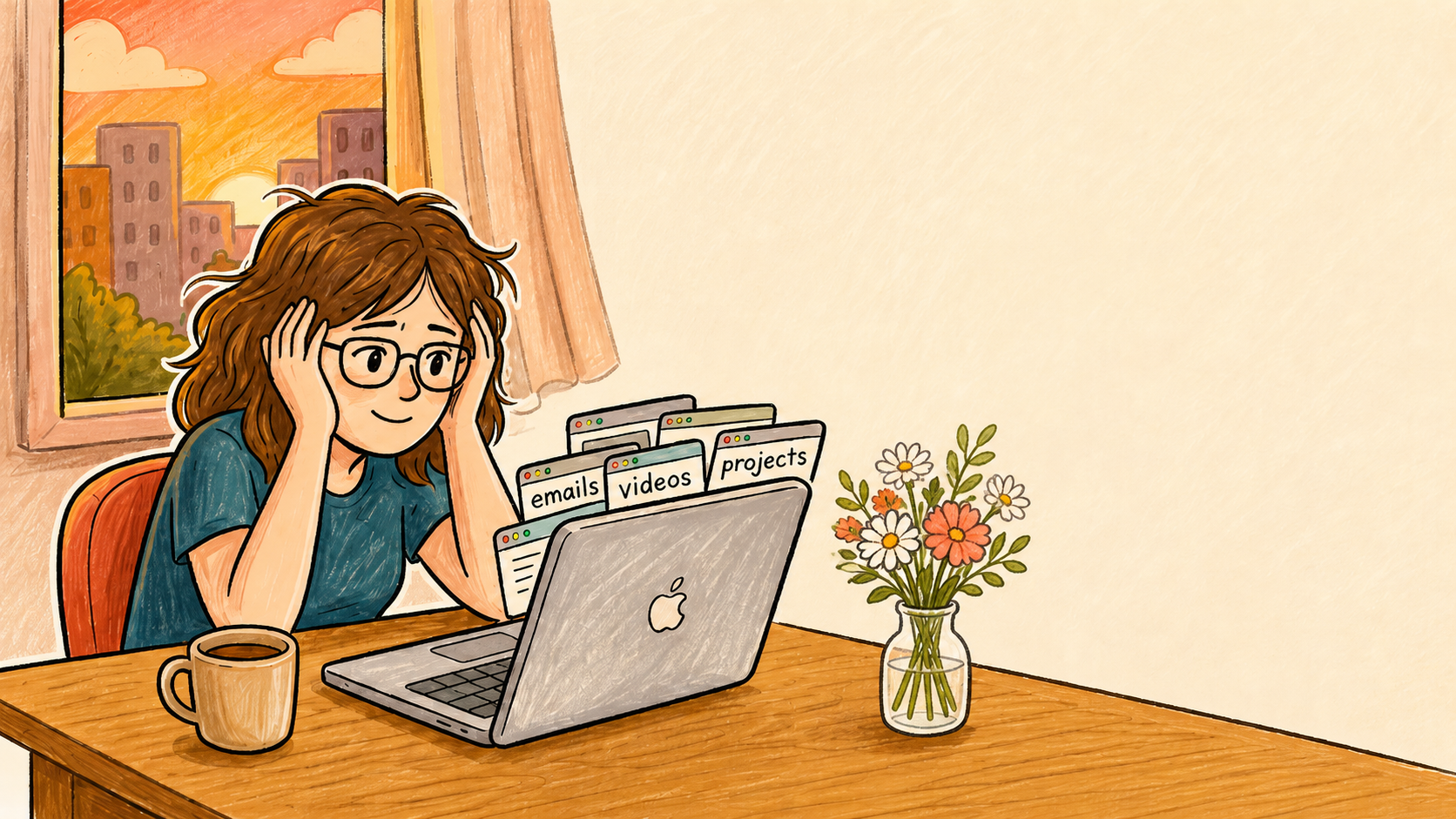
Freelancing With ADHD: Why Open-Ended Workdays Feel So Hard
Freelance freedom helped Maya work on her own terms, but open-ended workdays made starting hard. A smaller ADHD freelance routine helped her begin.
Read story
Living Alone With ADHD: Small Visible Steps That Make Life Easier
Living alone with ADHD made daily care feel heavy for CC. Small visible steps helped make the day feel lighter, clearer, and easier to restart.
Read story
How to Study With ADHD Without Getting Stuck Before You Start
Studying with ADHD can feel hard before the studying even begins. Ashley used small visible steps to move through ADHD paralysis.
Read story