
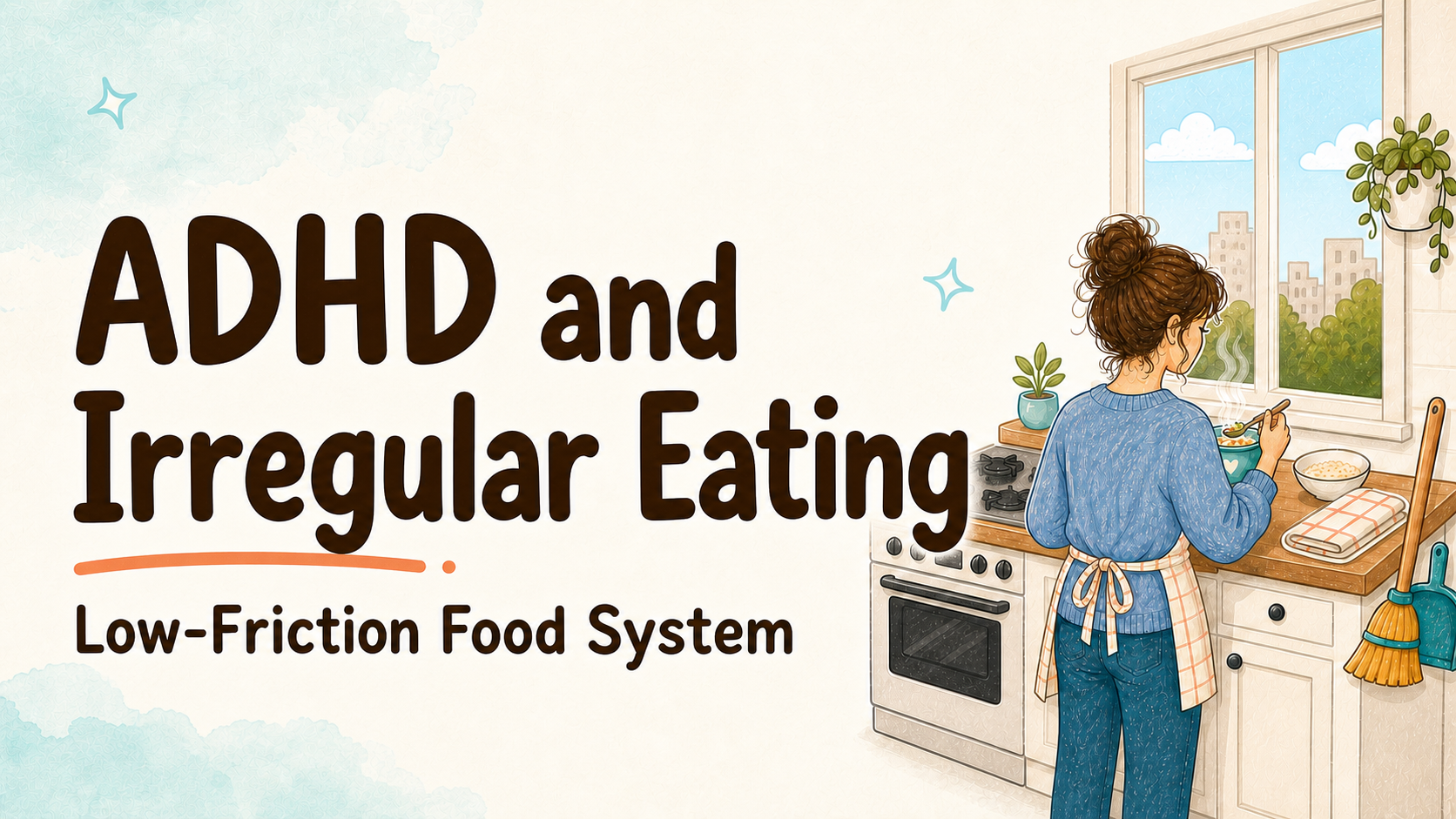
Why Meals Can Disappear With ADHD
Maybe you know the scene. You start writing, editing, drawing, gaming, studying, or answering messages. Then suddenly it is mid-afternoon. Your stomach hurts, your energy drops, and you realize lunch never happened.
At that point, eating does not feel simple. Cooking feels like too many steps. Delivery means choosing, ordering, waiting, and switching away from the thing you finally managed to focus on. So you grab a random snack, keep going, and hope it is enough.
For many people with adult ADHD, this is not laziness. ADHD can make it harder to notice time passing, especially when attention is locked onto something interesting or urgent. This is often called time blindness.
Hyperfocus hides the body
When attention is locked in, hunger cues can arrive late or feel easy to ignore.
Food becomes a decision chain
What to eat, whether to cook, what to order, and when to stop can all feel like separate tasks.
Eating starts to feel less like care and more like an enemy of momentum. The fear is: if I stop now, I may not get back into the flow.
Why Skipping Food Usually Backfires
In the moment, delaying food can feel efficient. You tell yourself, "Just a little longer." But the body still keeps score.
Long gaps without food can make the rest of the day feel harder. You may feel shaky, foggy, irritable, anxious, or suddenly desperate for something fast. Then the next meal can swing into overeating, guilt, or another missed routine.
The painful loop is that you skipped food to protect focus, but lower energy can make focus more fragile later.
The first win is much smaller than a perfect meal plan: make eating easy enough that it does not require a full task switch.
Build an Instant Energy Station
Instead of asking your future hungry brain to solve lunch from scratch, give it a visible option before the week begins.
Once a week, set up a small fridge zone for easy food. It does not have to look like polished meal prep. A few cooked basics, washed fruit, yogurt, bread, cheese, ready protein, or leftovers can be enough.
Method
Clear containers
See what is available without opening every box. Keep the easiest food at eye level.
Method
Simple date
A label like Eat by Wednesday removes one more decision when energy is low.
Method
Lunchbox calendar
Use a fridge note: Monday pasta bowl, Tuesday yogurt and fruit, Wednesday leftovers.
Think of this as an instant energy station for the version of you who will be hungry, focused, and reluctant to stop.
Keep Energy Patches Nearby
Not every meal will be neat. Some days, the best support is a small food bridge before the full crash.
Method
Desk snack
Nuts plus a protein bar can sit in a drawer or backpack for low-break moments.
Method
Pour-and-eat
Shelf-stable milk or soy milk plus cereal can become a fast breakfast or recovery snack.
Method
Quick assembly
Bread plus cheese, or fruit plus yogurt, gives you a default before negotiating starts.
Method
On your path
Use a snack drawer, sofa basket, bag pocket, or doorway spot as an outside reminder.
How Vingoals Helps Make Food Visible
A visual ADHD checklist app can help when food disappears from memory until the crash arrives. Instead of relying on hunger cues alone, Vingoals can turn eating into a few visible squares.
The board does not need to track every nutrient or every meal. It can simply make a daily routine easier to see, one low-friction action at a time.
A low-friction food board could include:
- Drink water
- Eat salad
- Make coffee
- Eat pasta
- Cook a warm meal
- Drink coconut water
- Meal prep
- Wash dishes
- Mark today complete
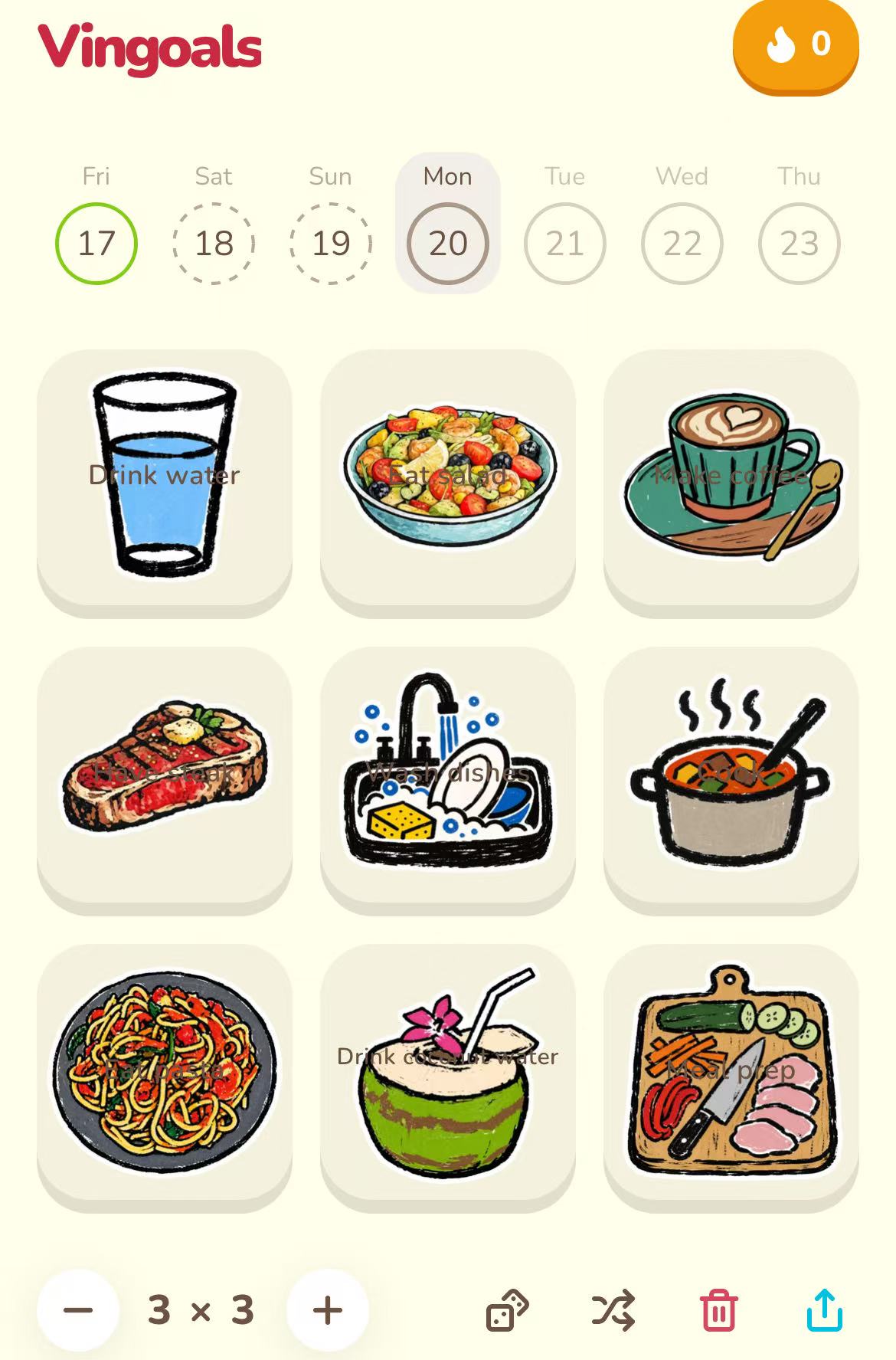
This makes the routine external. You do not have to hold the whole plan in your head while your attention is somewhere else.
The point is to make care easier to notice, easier to start, and easier to return to.
Eating Does Not Have to Ruin the Flow
The hardest shift may be emotional: reminding yourself that eating is not stealing time from the work. It is protecting the energy that lets the work continue.
Most meaningful things are not finished through one extreme burst. They are built through enough steady returns. A fifteen-minute food break may feel risky, but running on empty has a cost too.
You are allowed to make the break small. Heat the bowl. Eat the sandwich. Drink the milk. Then come back. The work will still be there, and your body will be a little more on your side.
Start with one tiny win today
Regular eating gets easier when food asks for fewer decisions.
Start with one visible snack, one simple meal, or one prepared square today.
More real stories
See all stories
What Is ADHD? Why Starting Tasks Can Feel So Hard
ADHD is not laziness. Executive dysfunction and ADHD paralysis can make starting hard when the first step is too vague.
Read story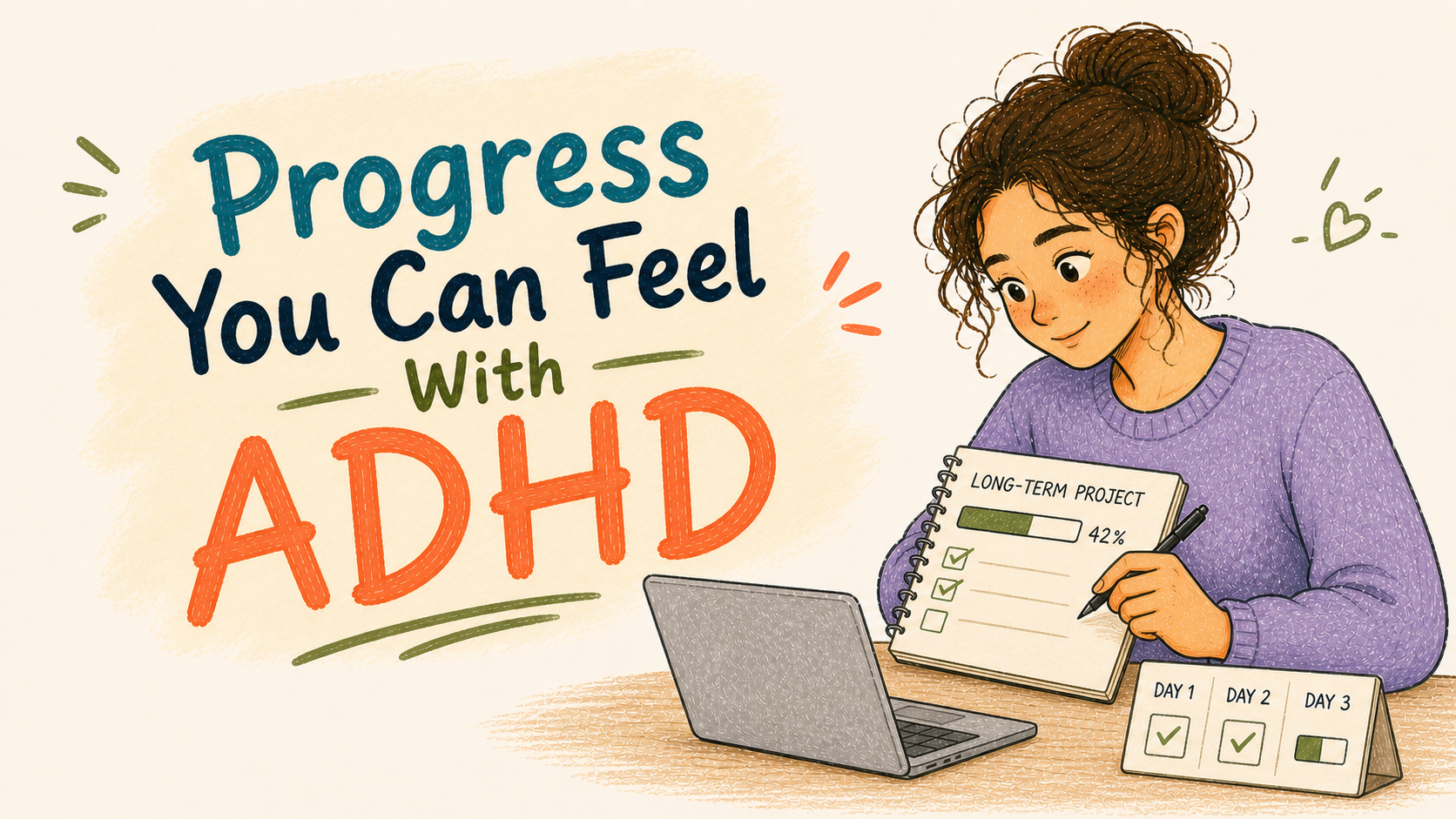
ADHD Long-Term Projects: Make Slow Progress Feel Visible
Long tasks can feel impossible when the reward is too far away. A three-day cycle and small feedback points can make slow progress easier to feel.
Read story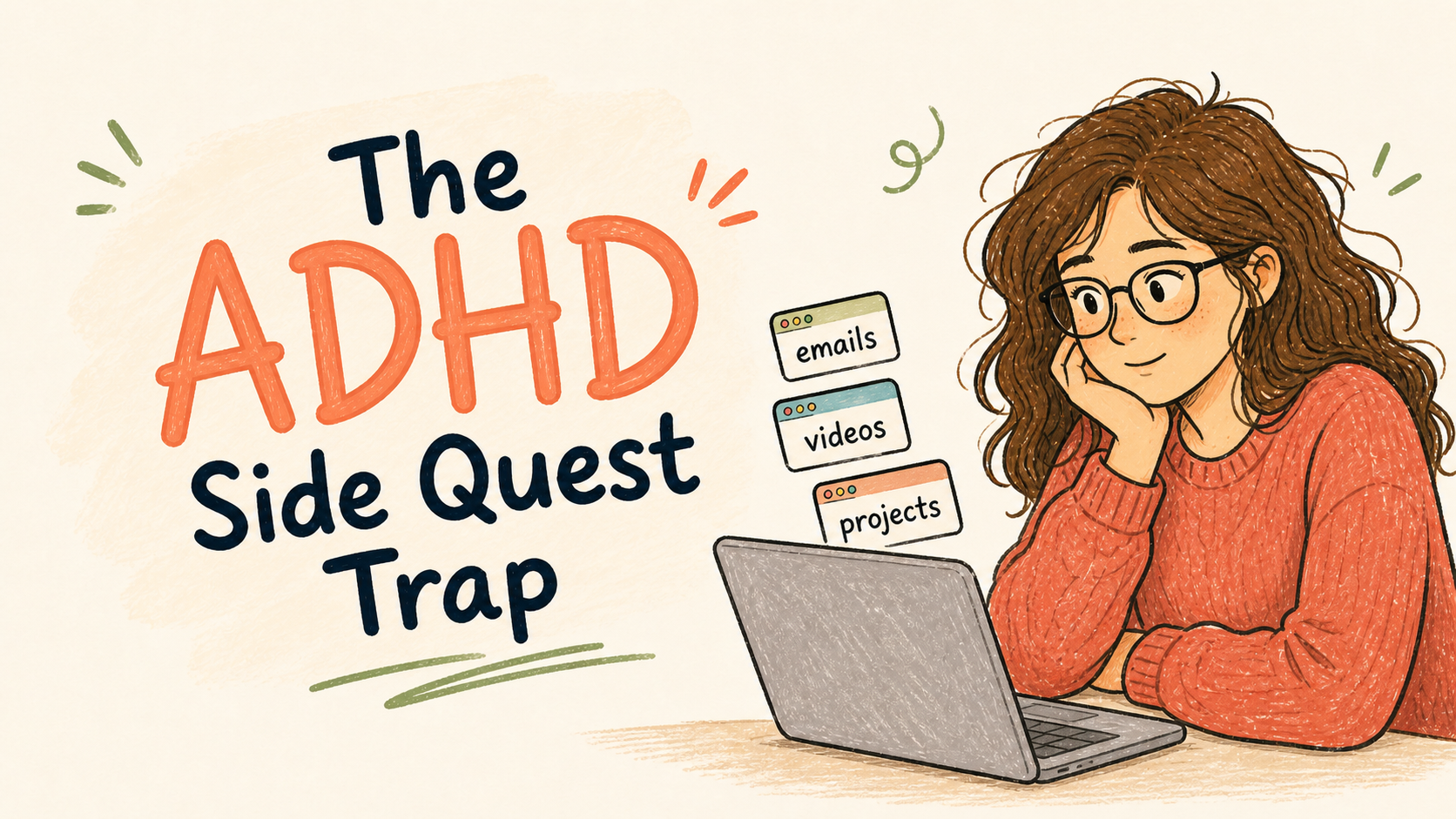
ADHD Task Switching: Use a Main Quest and Side Quest Strategy
When ADHD attention keeps following side quests, a work routine needs one main quest and a place for everything else.
Read story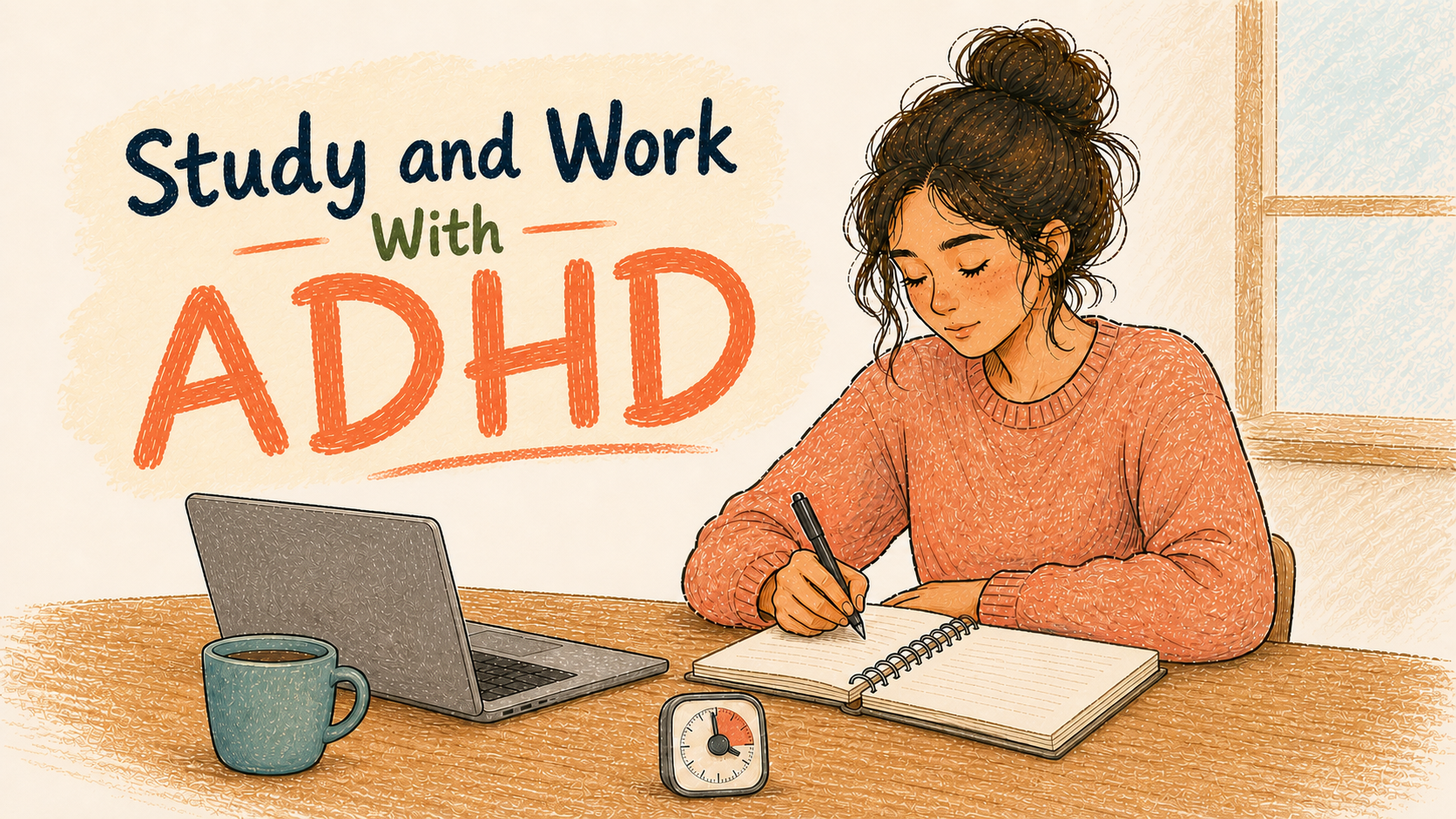
Study and Work With ADHD: Build a Sustainable Focus Rhythm
For ADHD, focus is often hard to switch on but powerful once it starts. A flow-friendly setup can make task initiation feel less jagged.
Read story
ADHD-Friendly Organizing: Make Things Easier to Put Away
For ADHD, organizing often fails when every object asks for a decision. A visible home for everyday things can make putting them away less exhausting.
Read story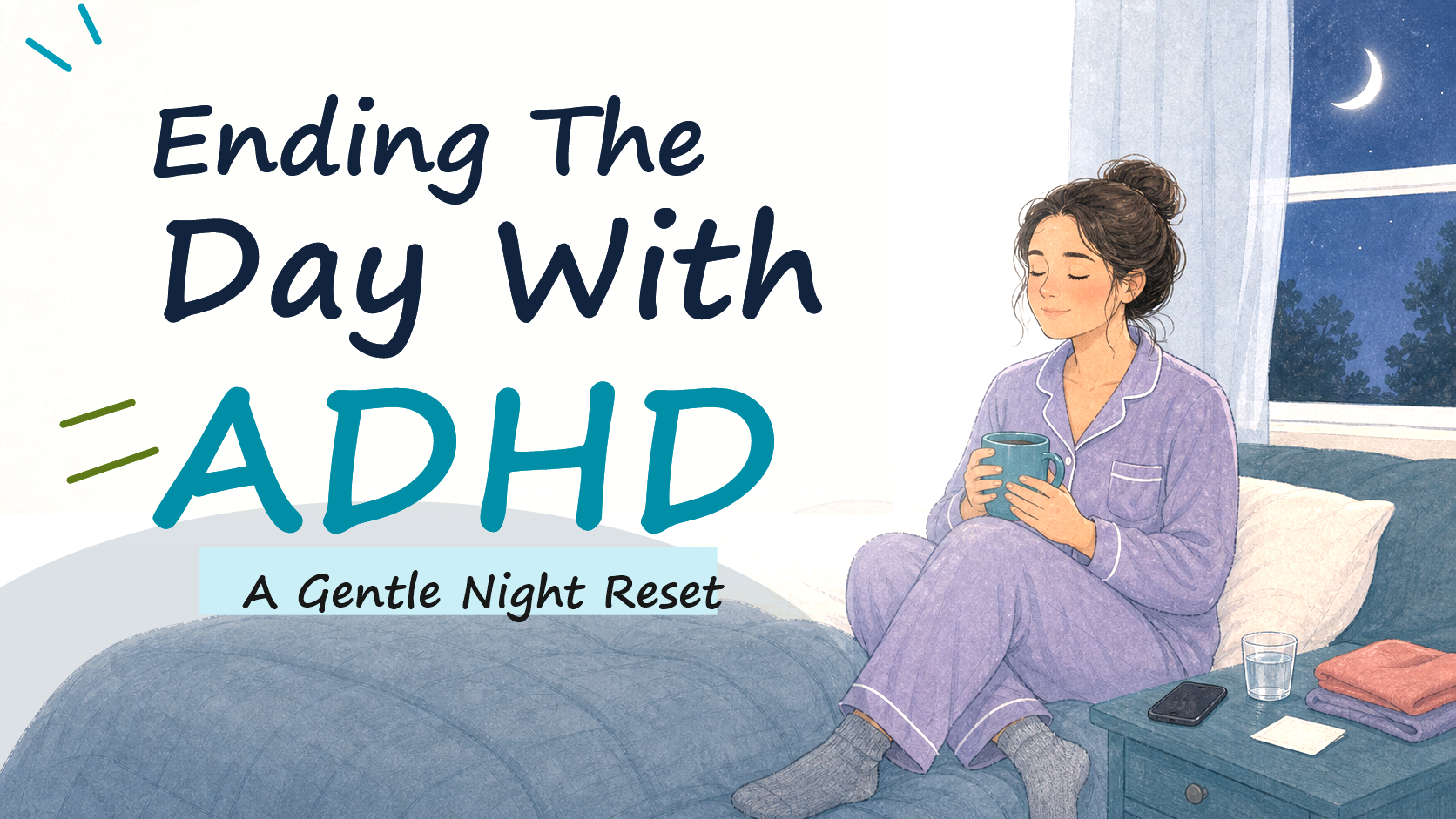
ADHD Bedtime Procrastination
ADHD bedtime procrastination can make nights feel impossible to end. A softer shutdown routine can help your brain move toward sleep.
Read story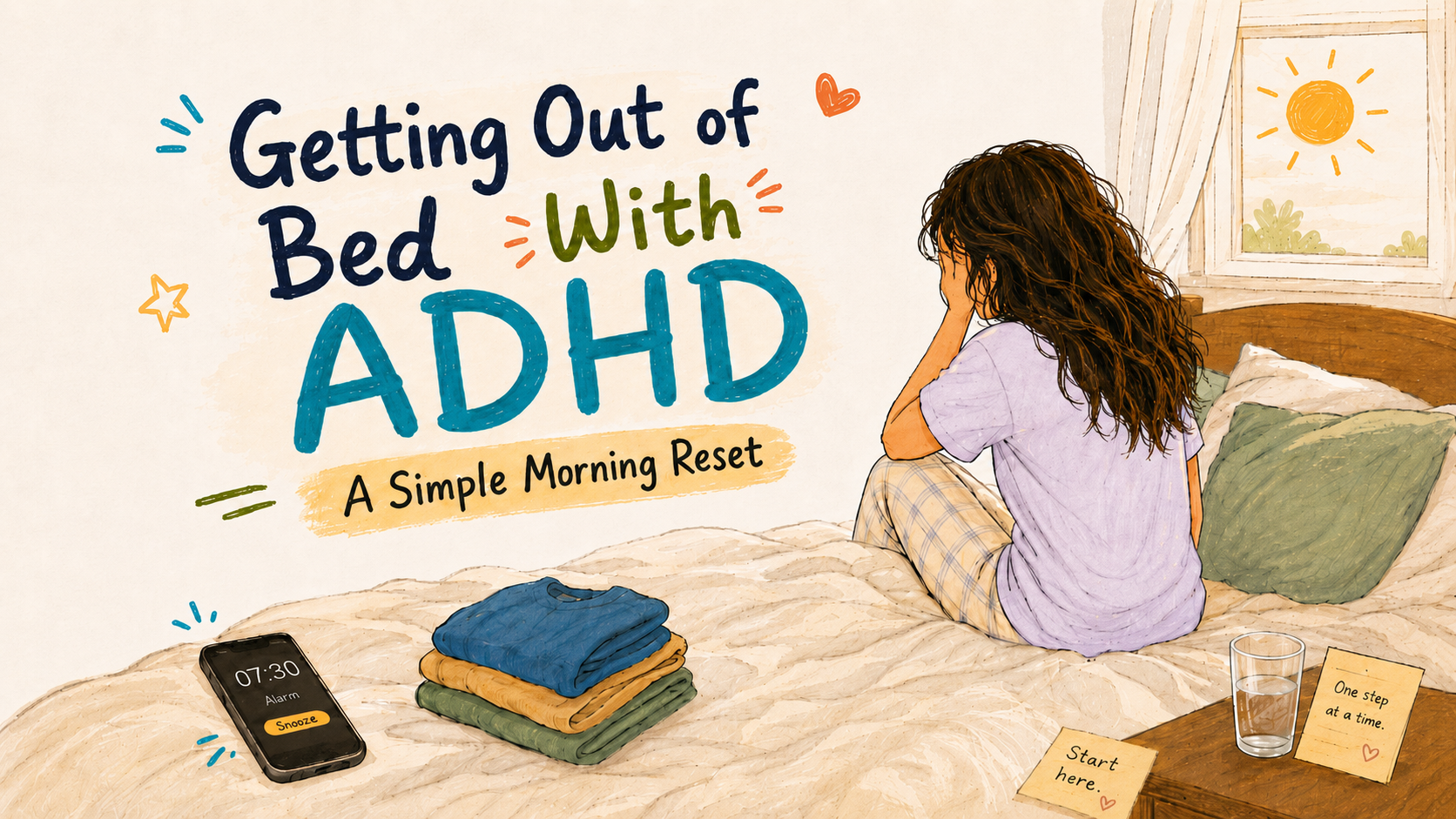
ADHD Morning Routine Reset
Getting out of bed with ADHD can feel like a whole task chain. A softer morning routine can help you restart without shame.
Read story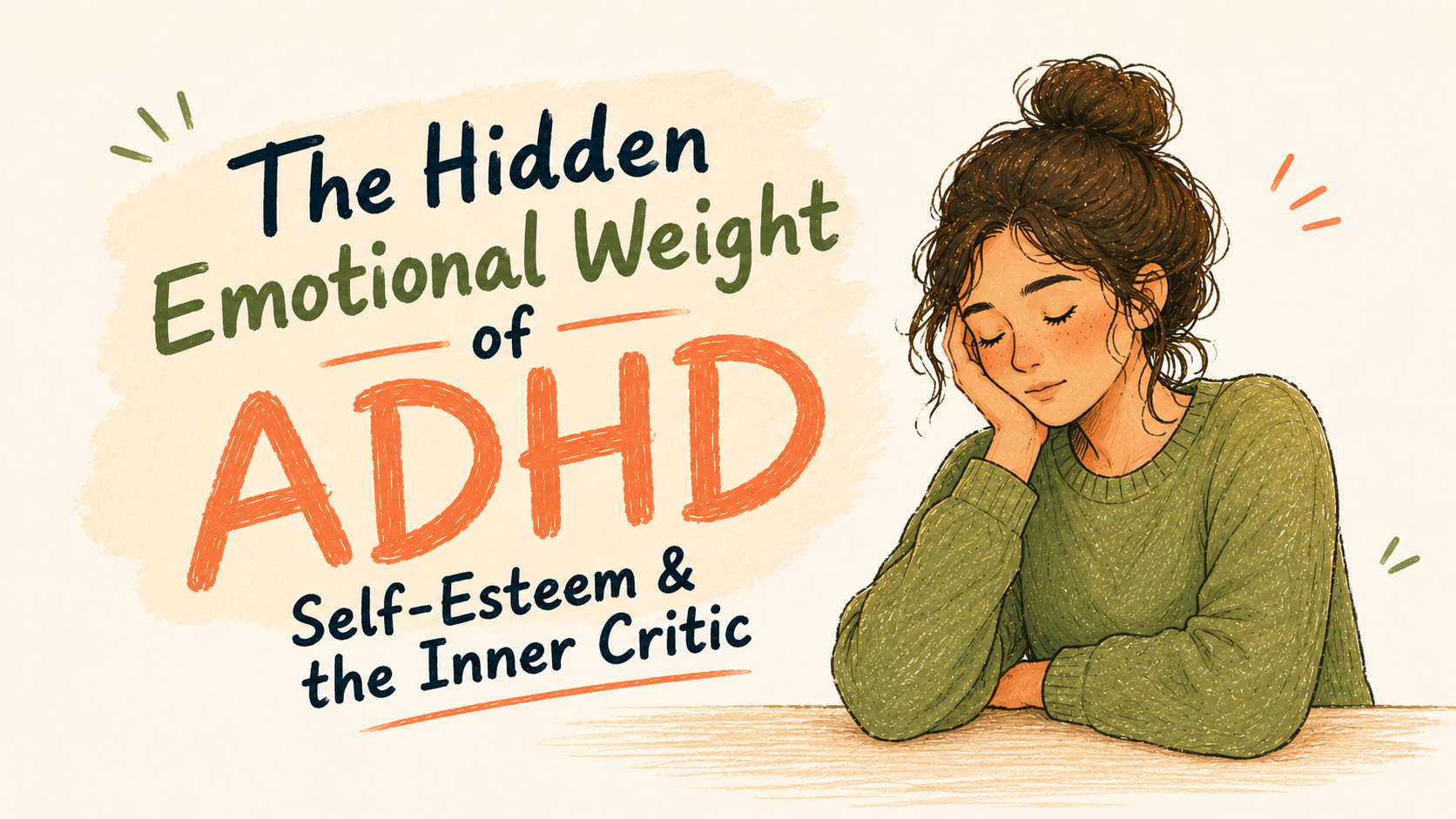
The Hidden Emotional Weight of ADHD
ADHD self-esteem can be shaped by shame, self-criticism, and the hard moments after a mistake. A kinder voice can help you recover.
Read story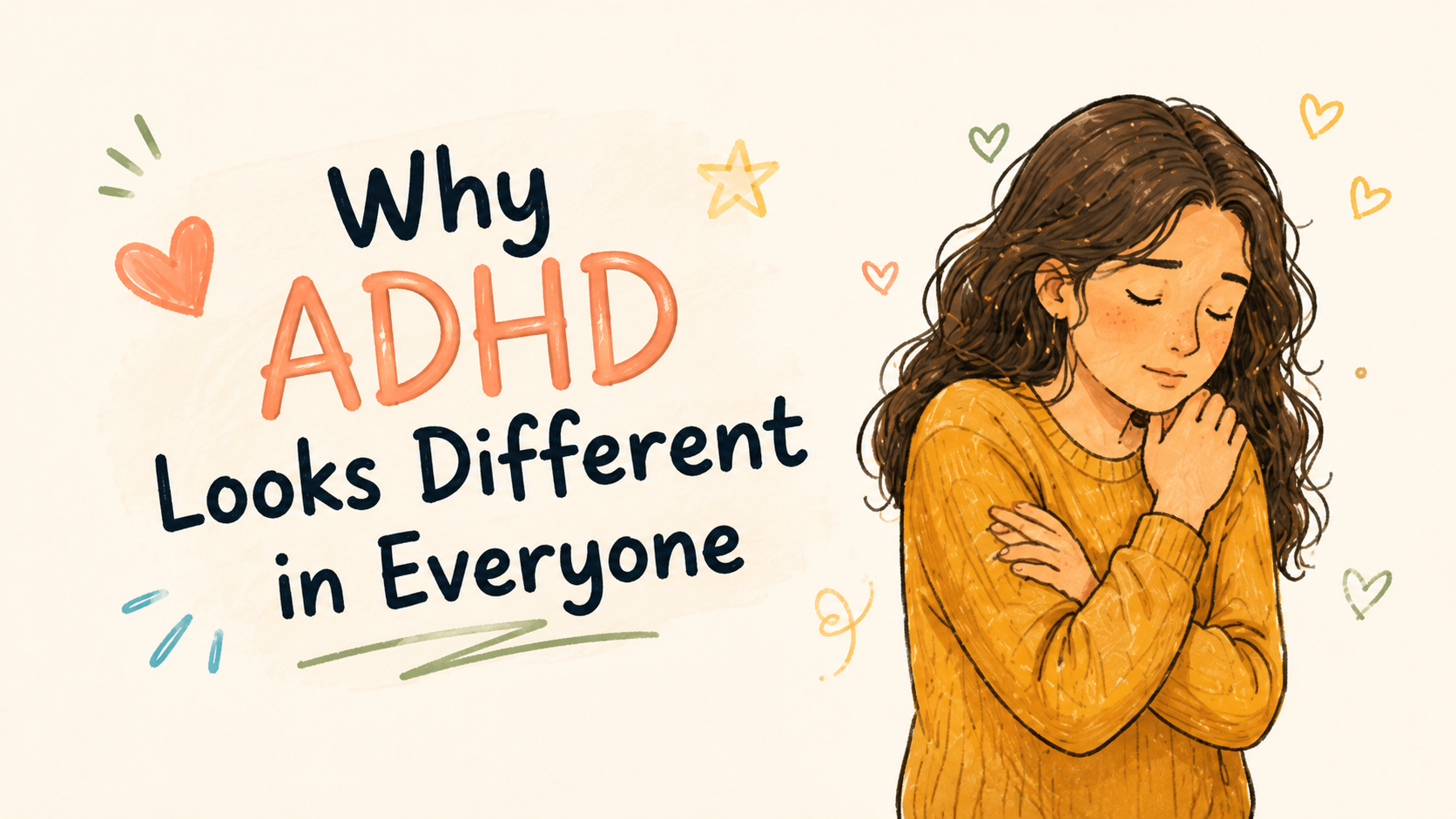
Why ADHD Looks Different in Everyone
ADHD can look restless, quiet, overwhelmed, impulsive, or hidden. The support that helps most depends on how it shows up in your real life.
Read story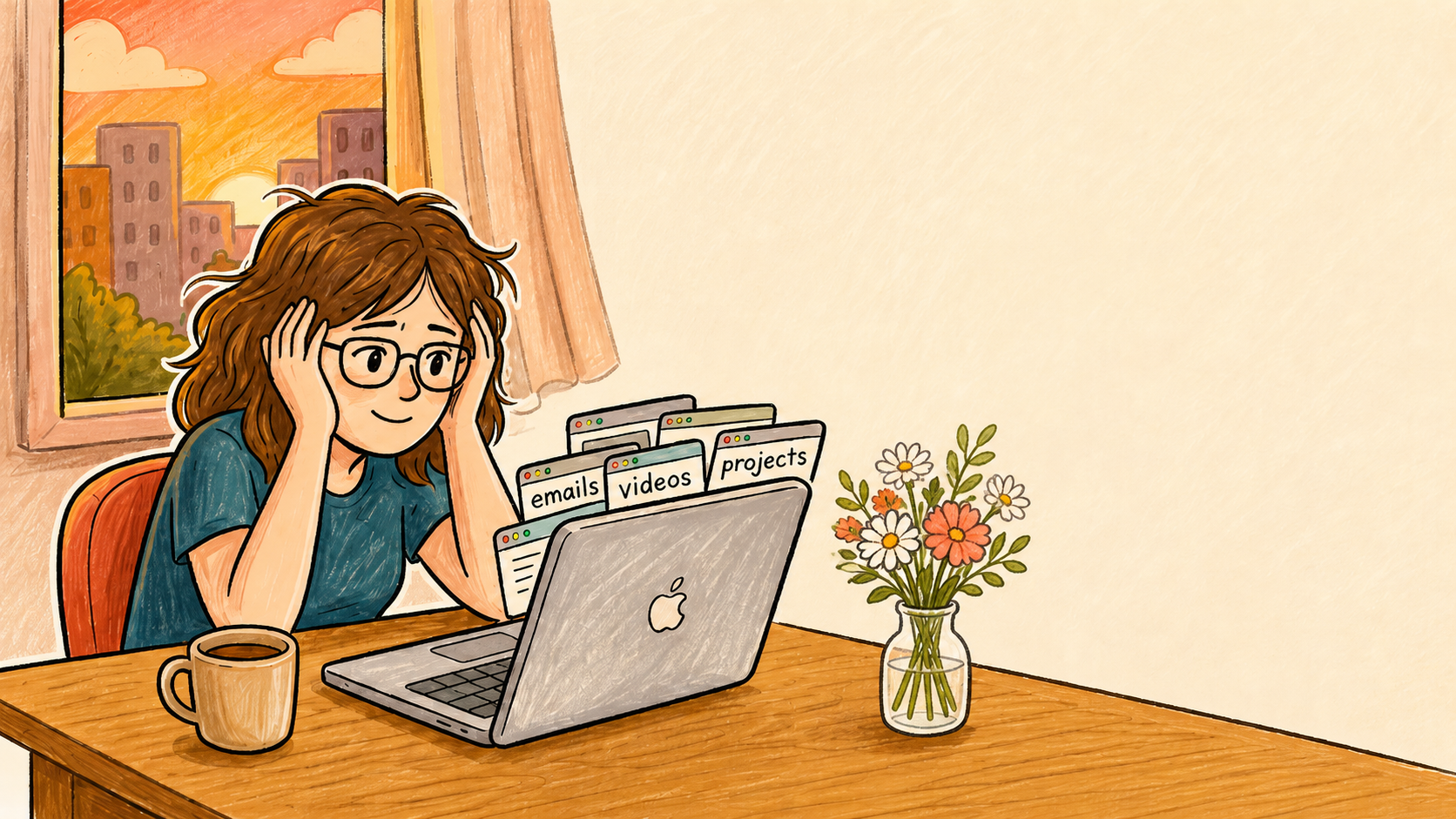
Freelancing With ADHD: Why Open-Ended Workdays Feel So Hard
Freelance freedom helped Maya work on her own terms, but open-ended workdays made starting hard. A smaller ADHD freelance routine helped her begin.
Read story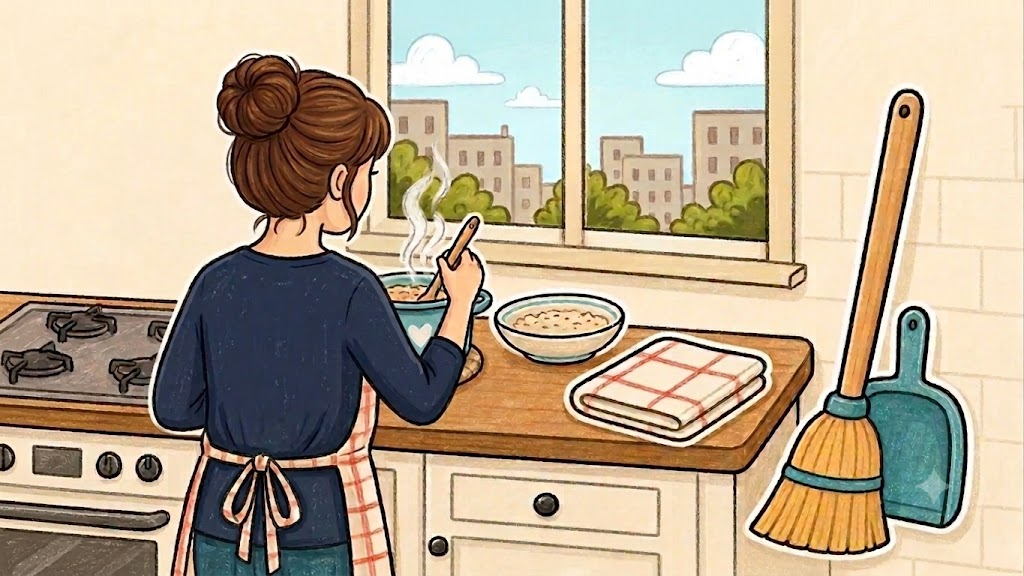
Living Alone With ADHD: Small Visible Steps That Make Life Easier
Living alone with ADHD made daily care feel heavy for CC. Small visible steps helped make the day feel lighter, clearer, and easier to restart.
Read story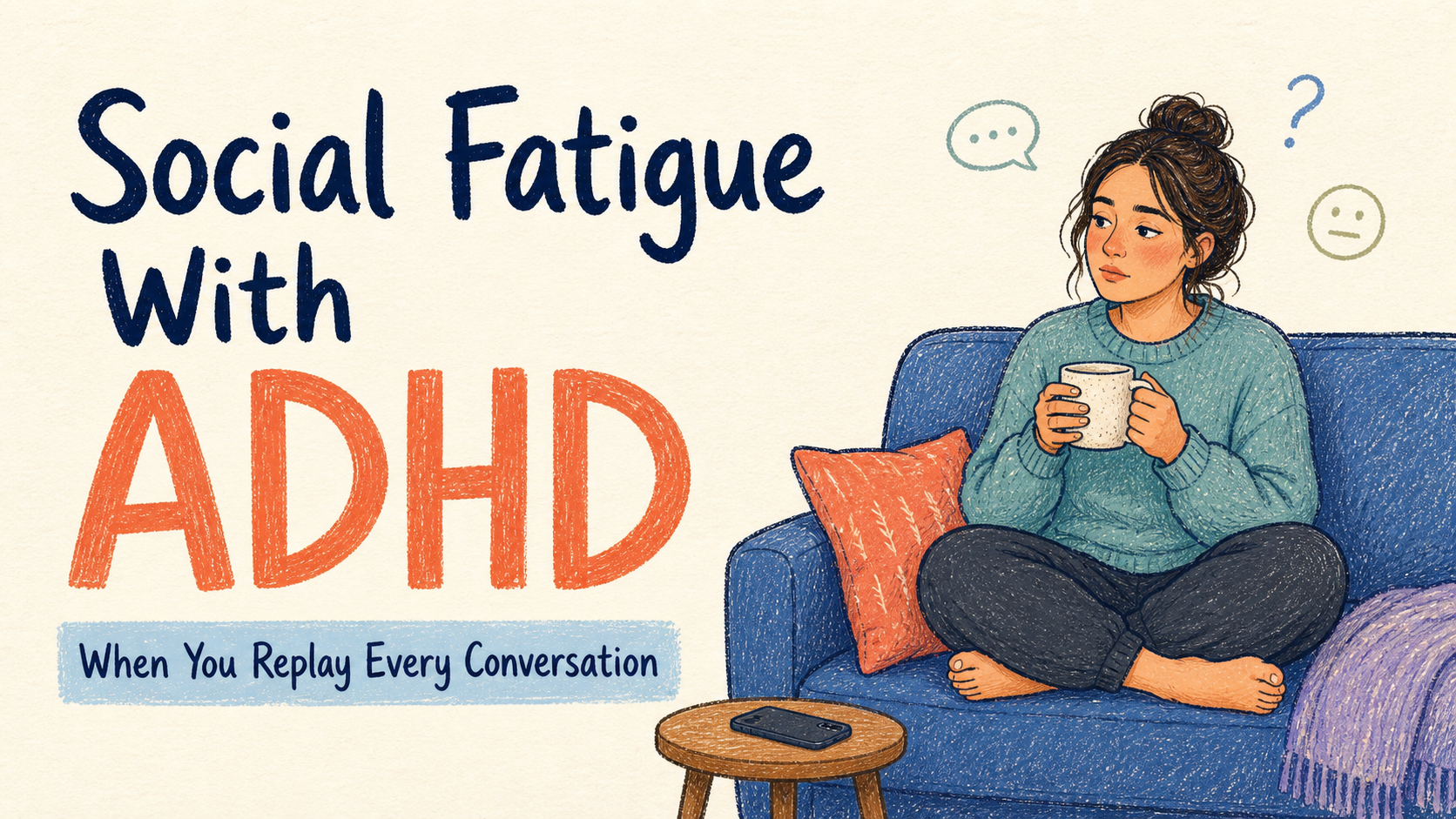
ADHD Social Fatigue: When You Replay Every Conversation
If a normal gathering leaves you replaying every sentence, you are not alone. ADHD social fatigue often comes from the hidden work of reading cues and staying composed.
Read story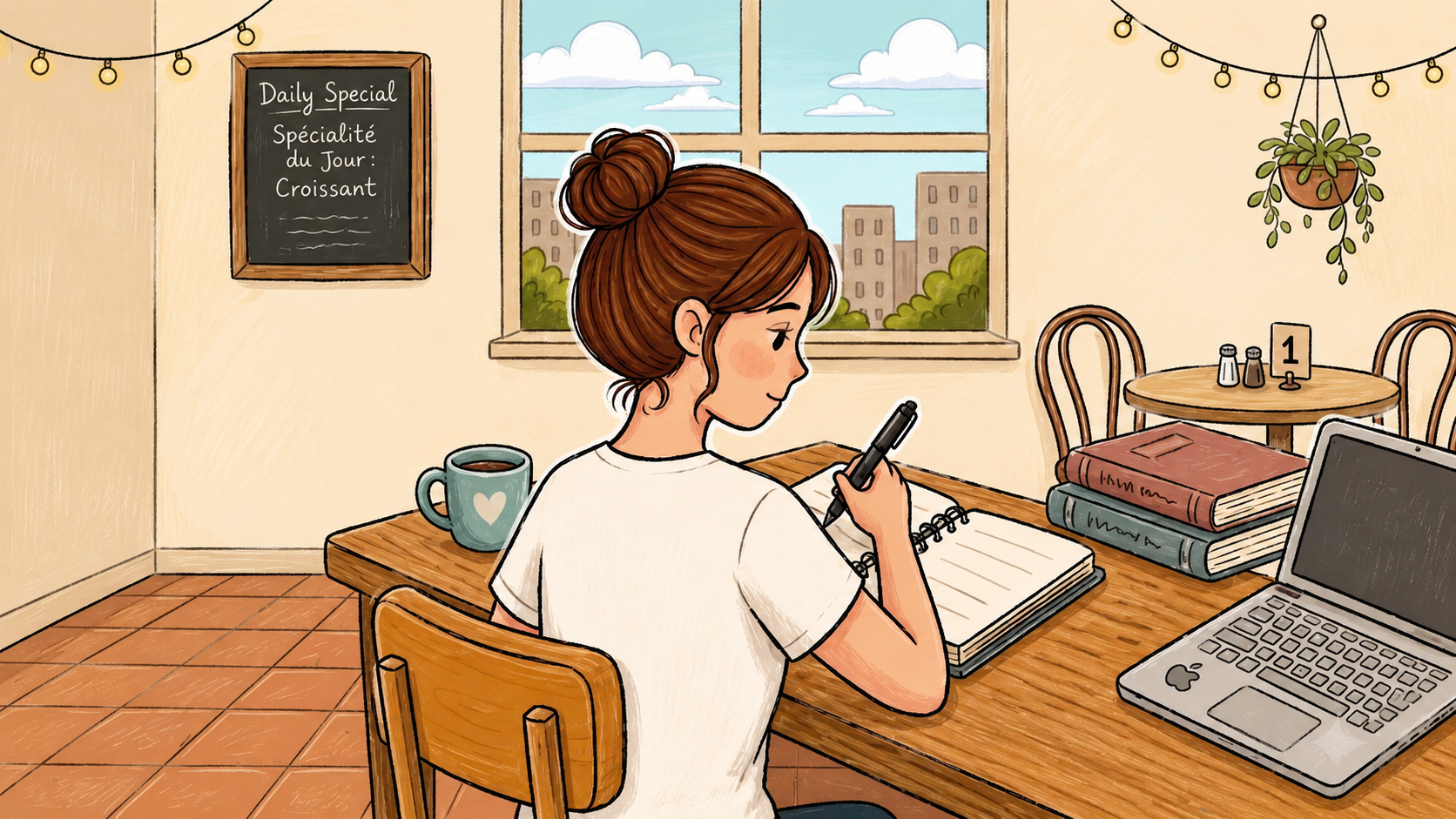
How to Study With ADHD Without Getting Stuck Before You Start
Studying with ADHD can feel hard before the studying even begins. Ashley used small visible steps to move through ADHD paralysis.
Read story