

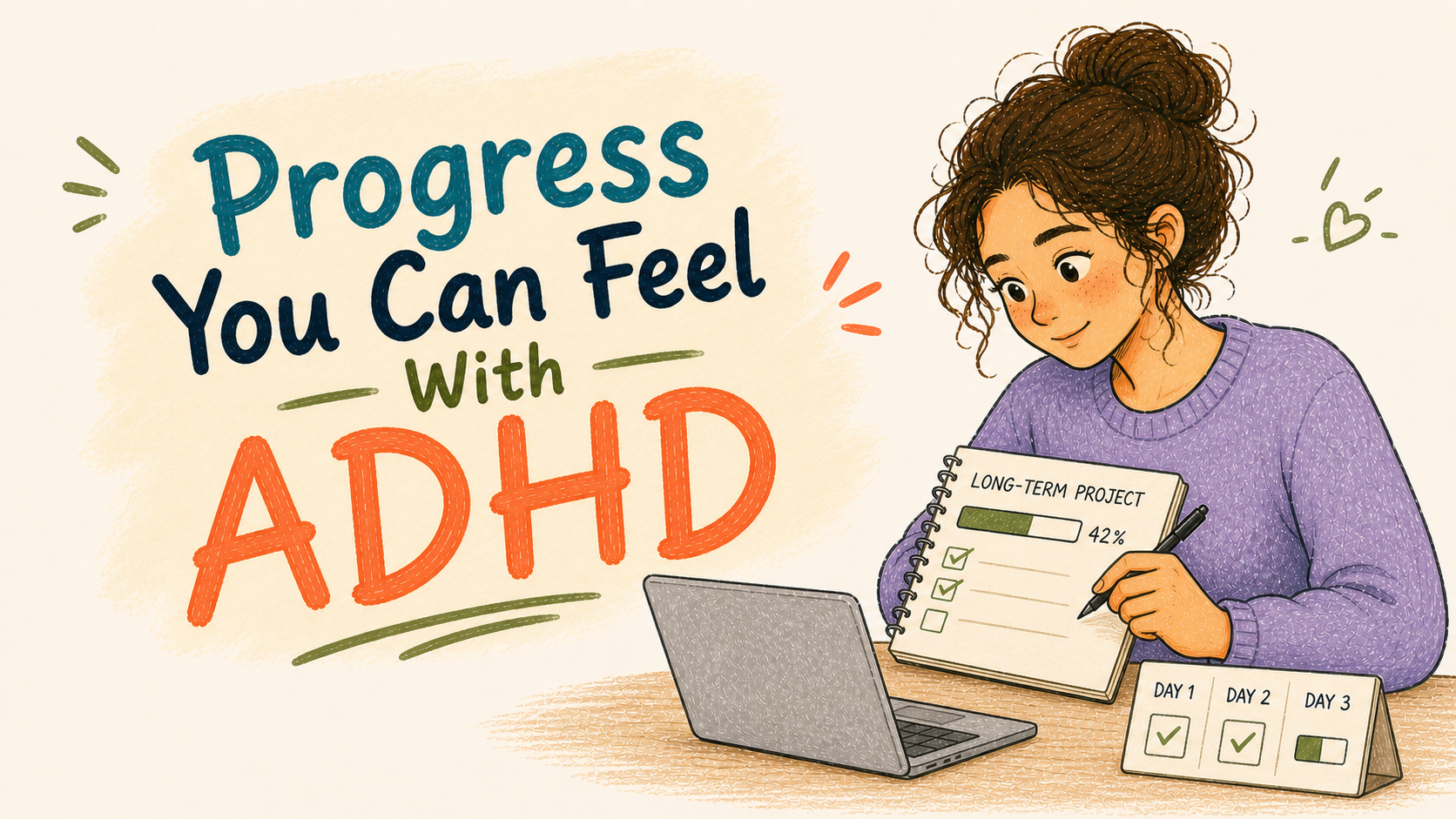
When Slow Work Feels Like No Work
For many people with adult ADHD, long-term projects are hard because the reward arrives too late. You can spend three hours on a paper, research folder, exam plan, or work project and still feel like nothing changed.
The document is still unfinished. The deadline is still far away. The progress bar in your mind feels stuck.
Invisible progress
You may have read, sorted, outlined, or solved a small problem, but the project still looks almost the same from the outside.
The boring middle
After the first burst of interest fades, the task can feel directionless even when it is still important.
Replacement rewards
A video, a new tab, or another project gives faster feedback, so the brain starts looking there instead.
This can create a painful loop: start with energy, push for a while, lose the feeling of progress, switch away, then wonder why the project keeps stopping in the middle.
Why Feedback Matters So Much
ADHD is not a lack of ambition. Many ADHD brains have strong starting energy, especially when a task is new, urgent, or interesting.
The harder part is delayed reward. If the brain cannot feel a small win along the way, the long task starts to feel like an empty room. Nothing answers back.
01 Delay
The reward is too far away
A final grade, finished thesis, or completed project may be months away. That can make today's effort feel unreal.
02 Scale
The task looks too large
When the project is one giant shape, the brain can jump from I should work to I will never finish this.
03 Proof
The progress is hard to see
If you do not record the small moves, your brain may not notice that you already did something useful.
So the support system has to do one thing clearly: make progress visible before the project is finished.
The Change: Use a Three-Day Cycle
A year is too big. A month can feel empty. Even a week can become vague: there is still time, so the task can keep sliding.
A three-day cycle is short enough to feel real, but long enough to hold normal ADHD fluctuation. One day can be strong, one day can be basic, and one day can be a low-energy maintenance day. The cycle can still close.
Method
Set one three-day window
Do not ask, Can I keep this up forever? Ask, What would count as progress by the end of these three days?
Method
Choose one visible output
Make the goal something you can point to: a rough outline, 500 words, one source table, five practice questions, or a cleaned project folder.
Method
Close the loop on day three
At the end, write one sentence: what moved forward, what felt hard, and what the next three-day cycle should hold.
The point is not to make every day equally productive. The point is to finish many small cycles so the long project never becomes completely disconnected from your real life.
Build an Immediate Feedback System
Long-term projects need artificial feedback points. Not because you are childish or lazy, but because the project itself does not give enough signals back to the brain.
Method
Create small reward points
After 500 words, one practice set, or one cleaned section, give yourself a tiny reward: music, tea, a walk, or a short reset.
Method
Leave proof that it happened
Take a screenshot, mark a checkbox, move a card, or write done today beside the task. The proof matters more than the size.
Method
Add gentle social feedback
Send one line to a friend or group: Today I finished the outline. Being seen can make the effort feel more real.
You are not trying to trick yourself. You are giving your nervous system the feedback the long task forgot to provide.
How Vingoals Helps Make Progress Visible
A visual ADHD checklist app can help when a long project feels invisible. Vingoals turns progress into small squares you can complete, review, and return to.
For long-term work, a board can hold tiny proof points, small rewards, and tomorrow's next step, so progress does not depend on memory alone.
A feedback board could include:
- Read 5 pages
- Write one paragraph
- Sort 3 links
- Finish one practice set
- Watch a 10-minute video
- Take a 15-minute walk
- See a friend for 1 hour
- Make tomorrow's list
- Make a coffee
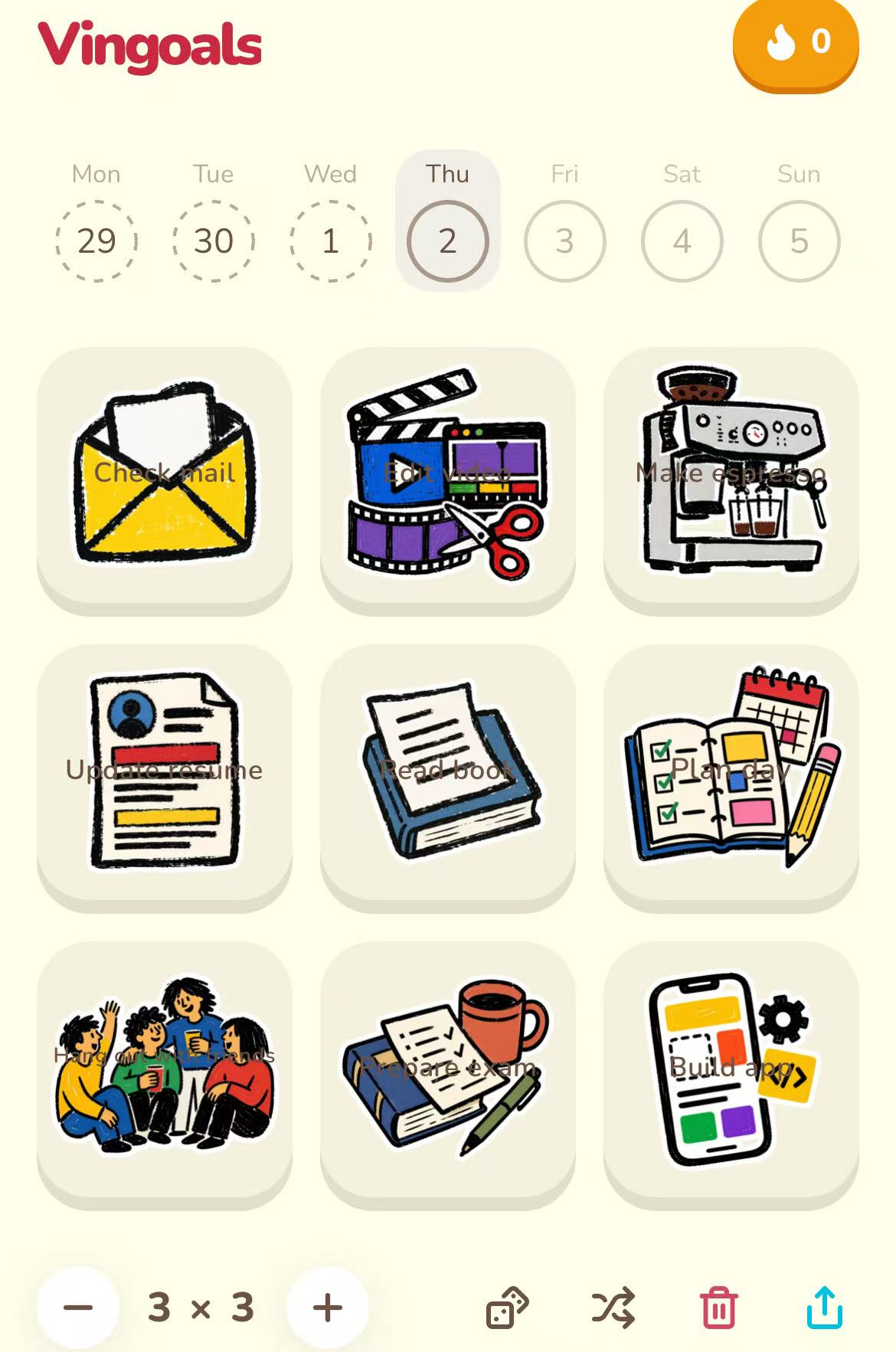
Each square becomes a tiny receipt: something happened today. Over time, those receipts make the larger project feel less like a blank wall.
Slow Progress Still Counts
The middle of a long task can feel boring, but boring does not mean broken. It often means the task needs a shorter feedback loop.
Try measuring the project in three-day cycles instead of perfect daily streaks. Try leaving proof instead of trusting memory. Try sharing one small update instead of waiting for a dramatic milestone.
A long project becomes less frightening when your brain can see the path it is already making.
Start with one tiny win today
Choose one three-day cycle for the project in front of you.
Start with one tiny proof of progress today.
More real stories
See all stories
What Is ADHD? Why Starting Tasks Can Feel So Hard
ADHD is not laziness. Executive dysfunction and ADHD paralysis can make starting hard when the first step is too vague.
Read story
ADHD Task Switching: Use a Main Quest and Side Quest Strategy
When ADHD attention keeps following side quests, a work routine needs one main quest and a place for everything else.
Read story
Study and Work With ADHD: Build a Sustainable Focus Rhythm
For ADHD, focus is often hard to switch on but powerful once it starts. A flow-friendly setup can make task initiation feel less jagged.
Read story
ADHD and Irregular Eating: A Low-Friction Food System
When ADHD hyperfocus takes over, meals can disappear from the day. A low-friction daily routine makes eating easier before energy crashes.
Read story
ADHD-Friendly Organizing: Make Things Easier to Put Away
For ADHD, organizing often fails when every object asks for a decision. A visible home for everyday things can make putting them away less exhausting.
Read story
ADHD Bedtime Procrastination
ADHD bedtime procrastination can make nights feel impossible to end. A softer shutdown routine can help your brain move toward sleep.
Read story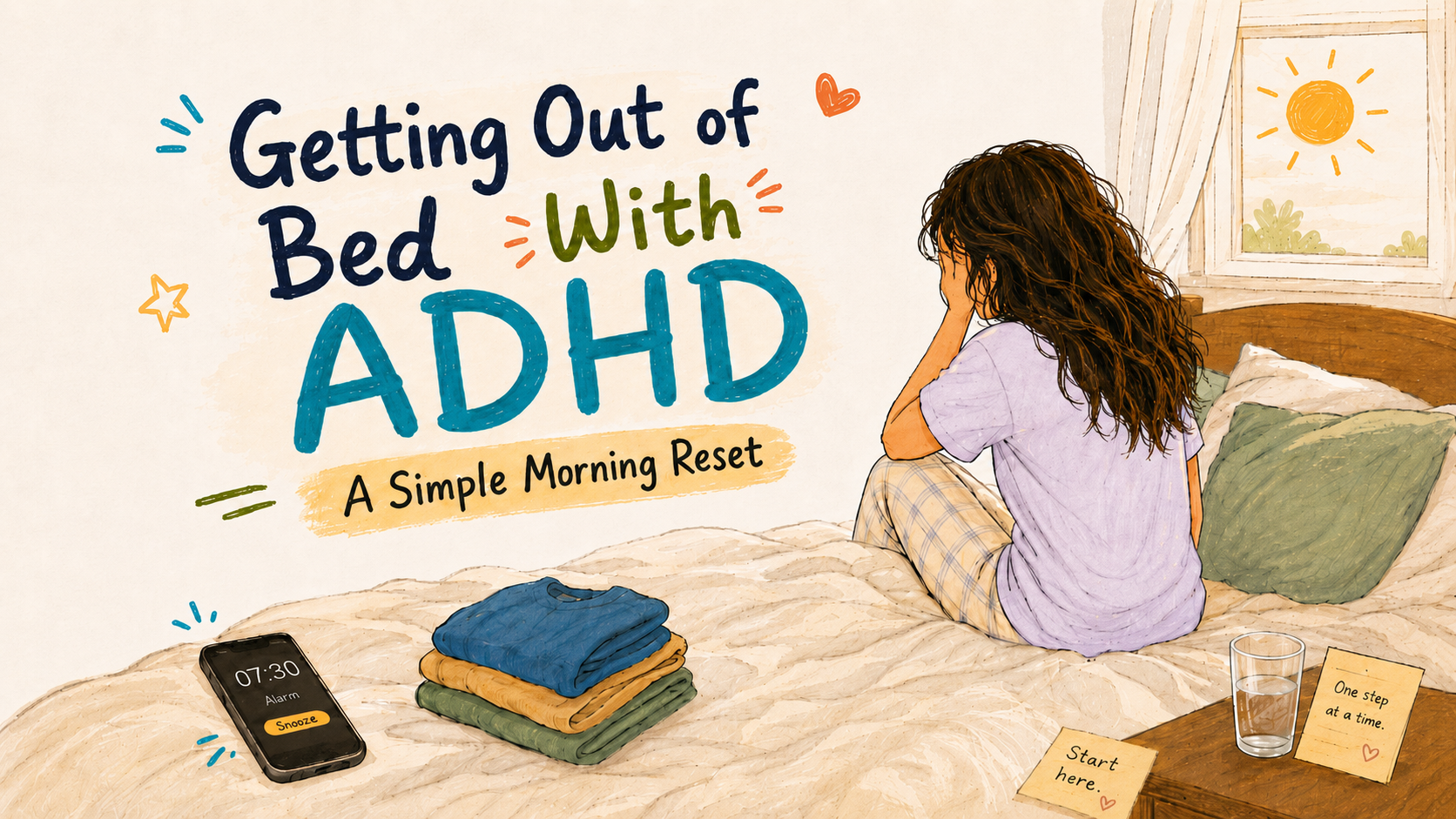
ADHD Morning Routine Reset
Getting out of bed with ADHD can feel like a whole task chain. A softer morning routine can help you restart without shame.
Read story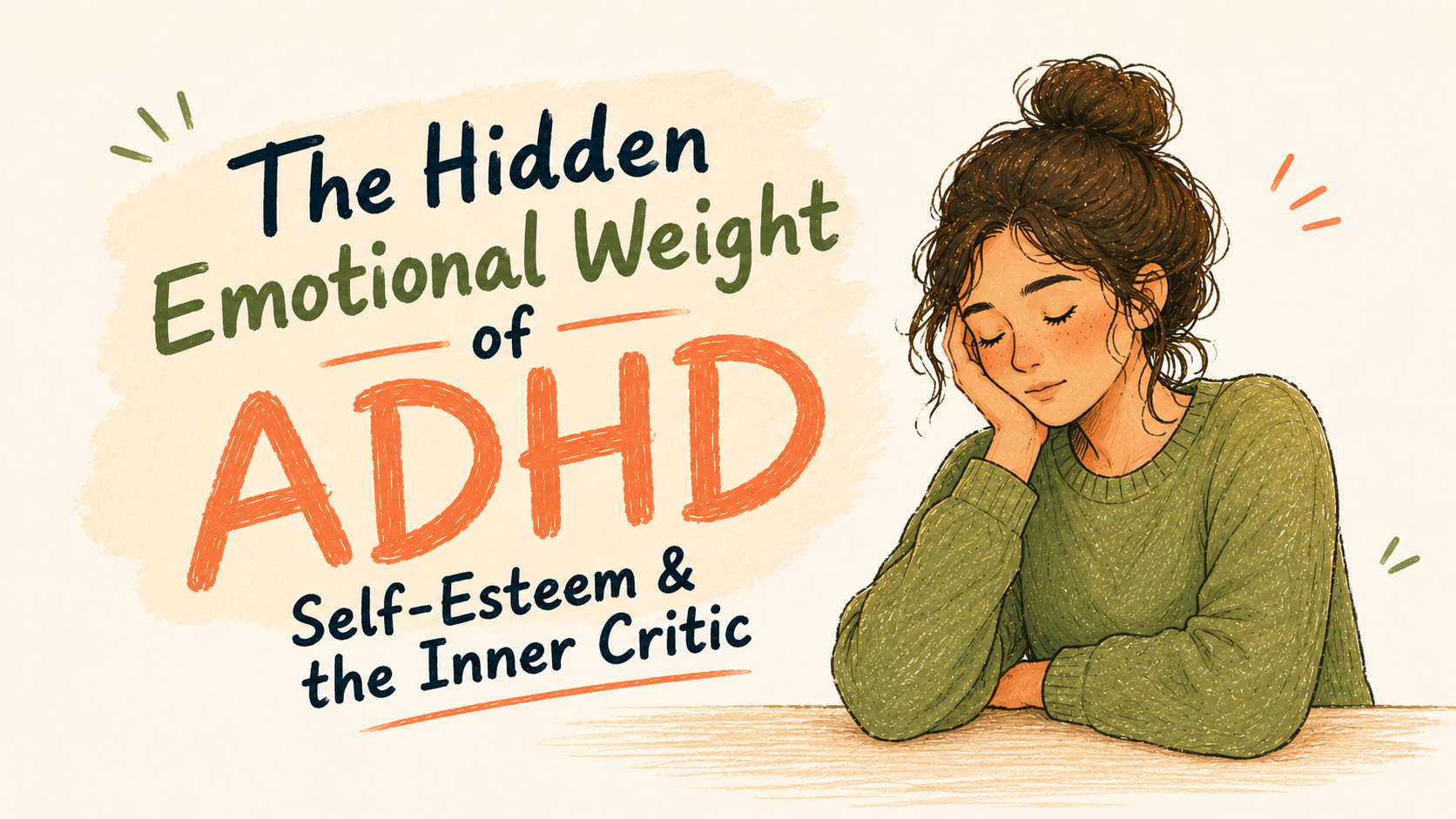
The Hidden Emotional Weight of ADHD
ADHD self-esteem can be shaped by shame, self-criticism, and the hard moments after a mistake. A kinder voice can help you recover.
Read story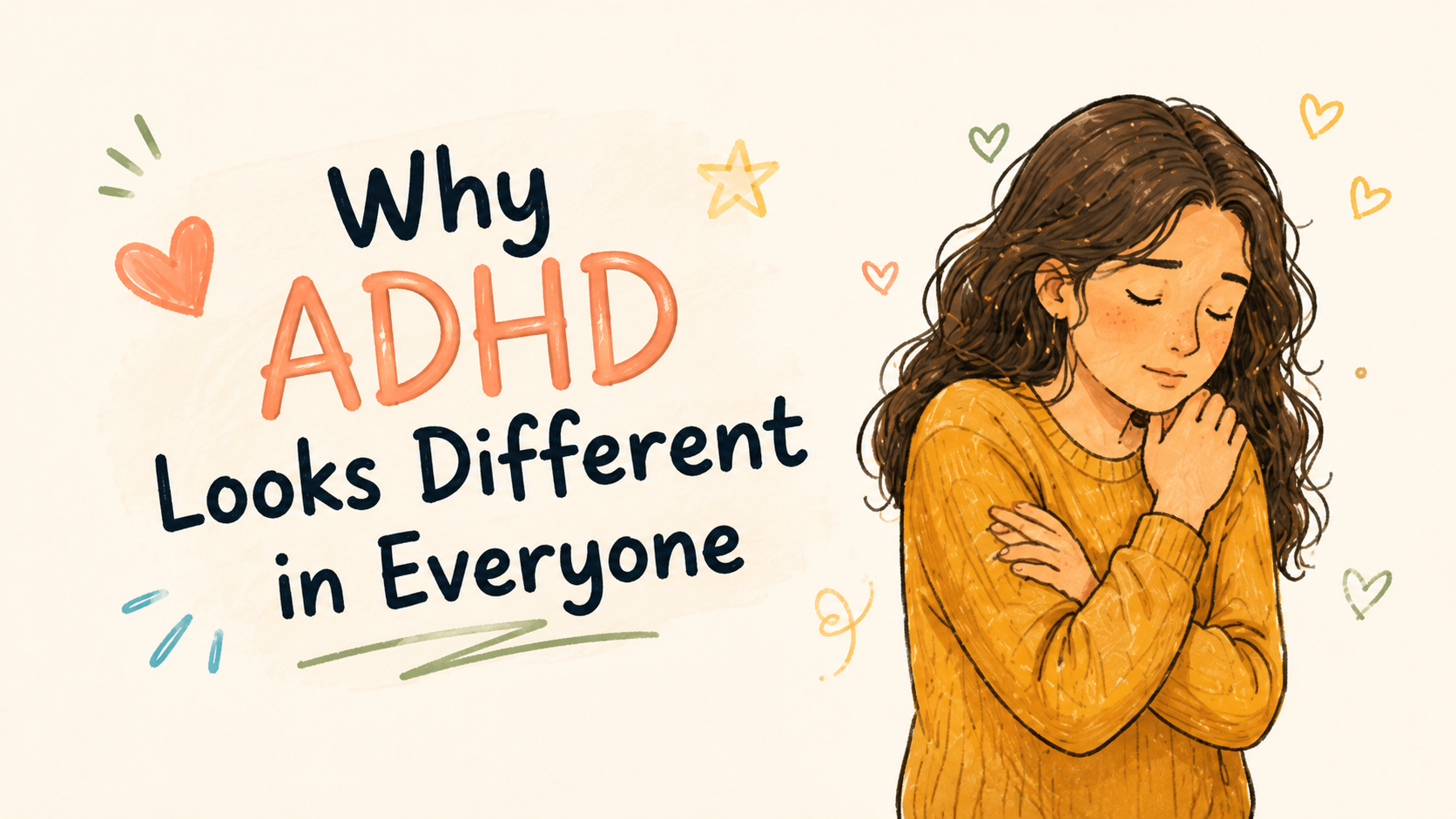
Why ADHD Looks Different in Everyone
ADHD can look restless, quiet, overwhelmed, impulsive, or hidden. The support that helps most depends on how it shows up in your real life.
Read story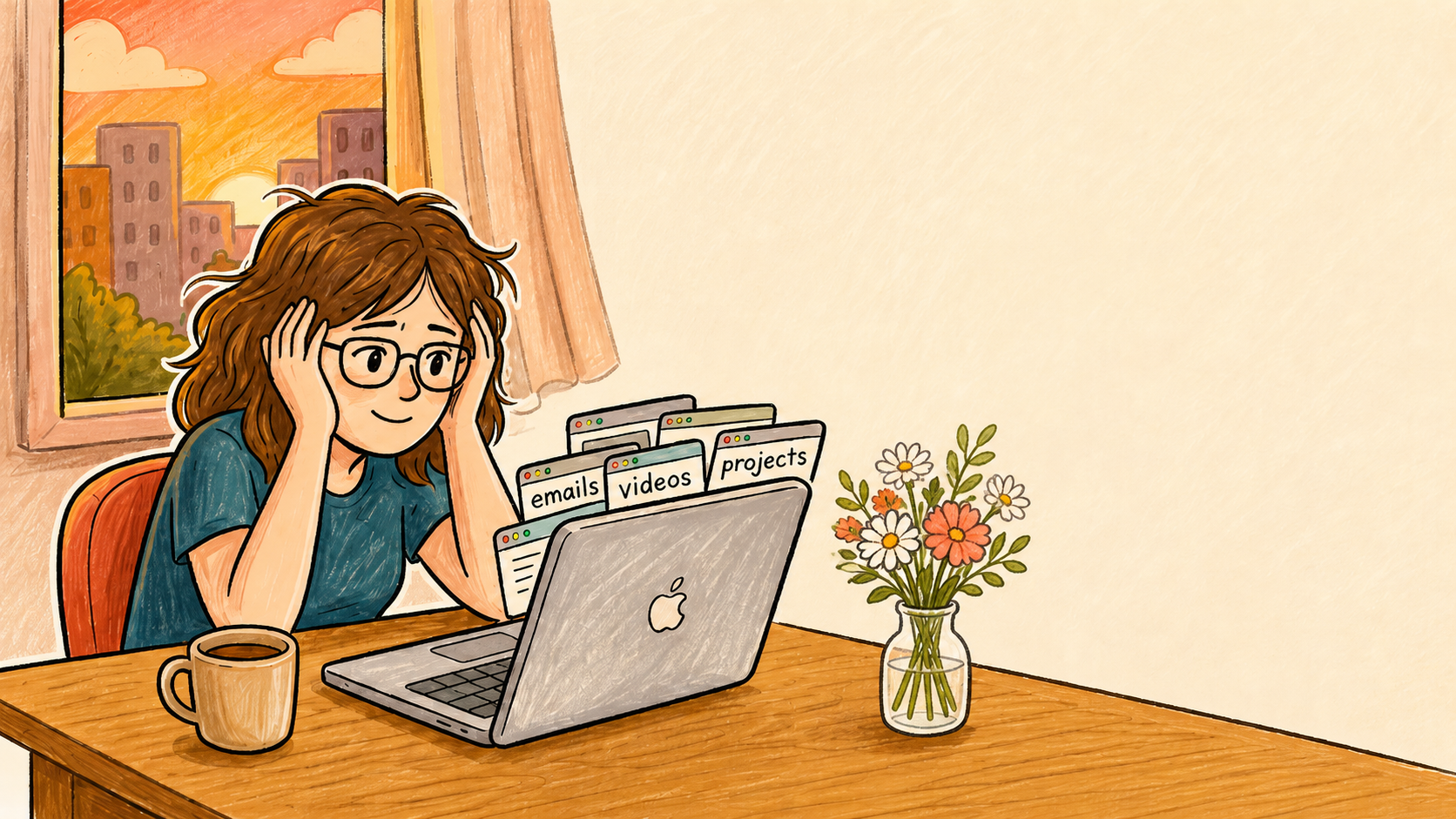
Freelancing With ADHD: Why Open-Ended Workdays Feel So Hard
Freelance freedom helped Maya work on her own terms, but open-ended workdays made starting hard. A smaller ADHD freelance routine helped her begin.
Read story
Living Alone With ADHD: Small Visible Steps That Make Life Easier
Living alone with ADHD made daily care feel heavy for CC. Small visible steps helped make the day feel lighter, clearer, and easier to restart.
Read story
ADHD Social Fatigue: When You Replay Every Conversation
If a normal gathering leaves you replaying every sentence, you are not alone. ADHD social fatigue often comes from the hidden work of reading cues and staying composed.
Read story
How to Study With ADHD Without Getting Stuck Before You Start
Studying with ADHD can feel hard before the studying even begins. Ashley used small visible steps to move through ADHD paralysis.
Read story