ADHD Does Not Look the Same for Everyone
In our last article, we explained what ADHD is. Now let's look at why ADHD can show up differently from person to person.
People with ADHD may share similar underlying brain differences, but their daily experiences can look completely different.
Genetics, personality, environment, childhood experiences, gender, culture, and current responsibilities can all shape how ADHD appears.
That is why one person may struggle with visible restlessness, while another seems calm but constantly feels distracted and overwhelmed.
Different ADHD Patterns
ADHD patterns can be easier to understand when the traits are named clearly. These descriptions are not rigid boxes, but they can help you notice what kind of support may fit.
Hyperactive-impulsive
Restless, talkative, impulsive, and often hard to slow down. This may show up as moving a lot, interrupting, or acting before thinking.
Predominantly inattentive
Distracted, forgetful, daydreamy, or struggling to finish tasks. This may look quiet outside, but feel scattered inside.
Combined
A mix of inattentive, hyperactive, and impulsive traits. Some days one side may feel stronger than the other.
ADHD in women
Mental restlessness, overwhelm, perfectionism, or hidden exhaustion. It can be easier to miss because the struggle is often less visible.
ADHD in women is not a separate clinical type. It is simply a common way people talk about patterns that may be easier to overlook.
ADHD Can Become More Noticeable When Life Changes
Someone may manage well in school because schedules, teachers, and parents provide structure.
The difficulties may become clearer after starting work, living alone, getting married, becoming a parent, or taking on more responsibilities.
Life may suddenly require more of your brain:
- Time and deadlines
- Work and household tasks
- Appointments and routines
- Emotions and relationships
The ADHD did not suddenly appear. Life simply began requiring more planning, organization, and self-management.
Why ADHD Is Often Missed in Women
Many women do not show the obvious physical hyperactivity people usually associate with ADHD.
They may look calm and capable while experiencing constant mental noise, emotional overload, forgetfulness, or exhaustion.
Some also rely on perfectionism, overplanning, or people-pleasing to hide how much they are struggling.
Because these experiences can resemble anxiety or depression, ADHD may be misunderstood or recognized much later.
Why Someone Else's ADHD Advice May Not Work for You
A routine that helps another person may not fit your brain, schedule, energy, or responsibilities.
That does not mean you failed. It may simply mean that you need a different kind of support.
Instead of searching for one perfect ADHD method, it can help to notice your own patterns.
- When is starting easiest?
- What usually makes you feel stuck?
- Where do you focus best?
- Which reminders do you actually notice?
- Which tasks drain you the most?
These answers can help you build a system that works in your real life.
How Vingoals Helps Organize Your Own Pattern
Once you know your own ADHD pattern, support can become more specific. Vingoals helps turn different needs into one visual board, so the day feels easier to see and organize.
A board can hold very different kinds of tasks:
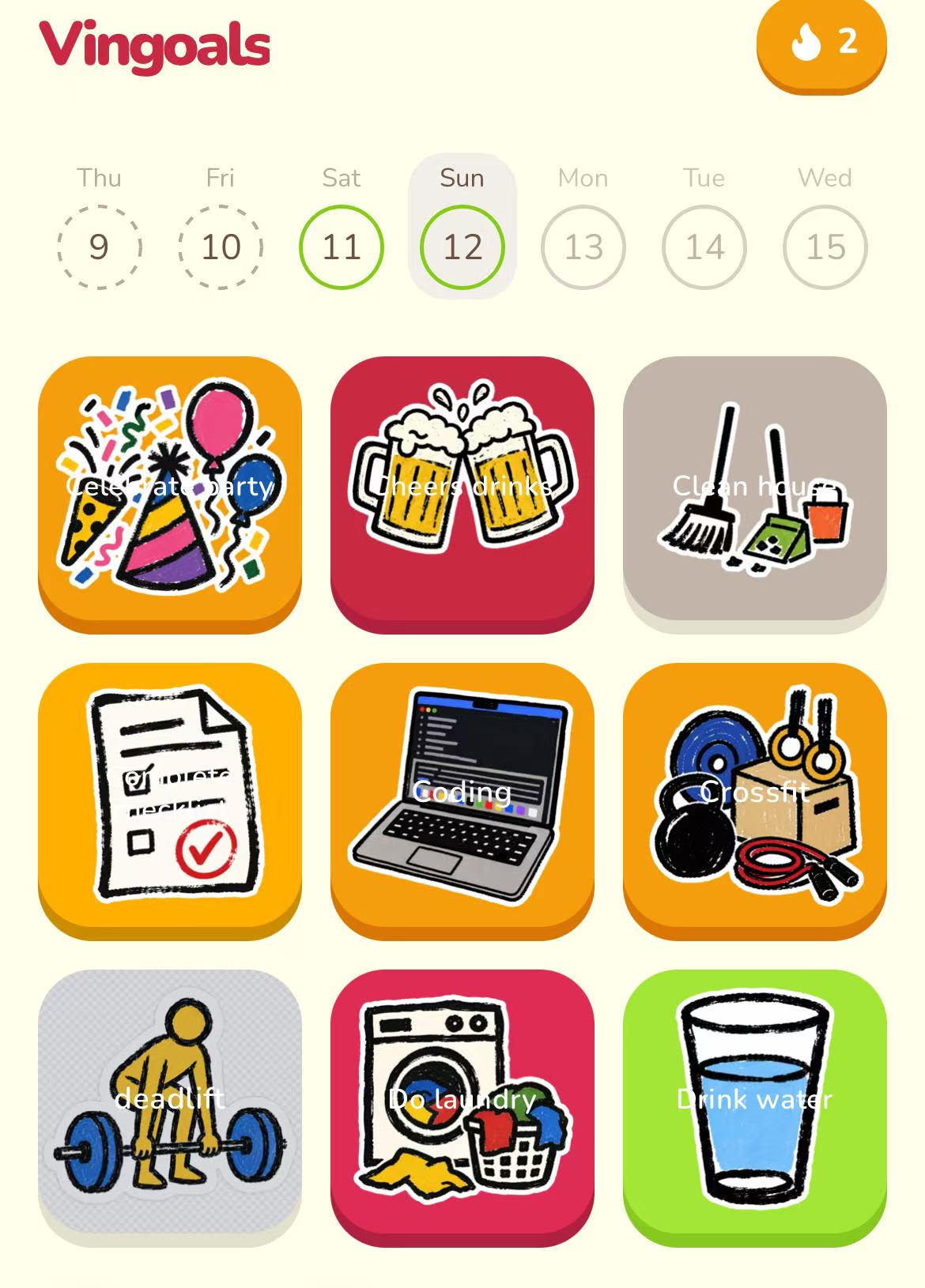
The point is not to copy someone else's perfect routine. It is to organize the tasks, reminders, and goals that fit your real life.
Build Around Your Own ADHD Pattern
ADHD has shared mechanisms, but every person experiences them differently.
The goal is not to copy someone else's routine. It is to understand how ADHD shows up for you and build support around your actual needs.
Notice your own ADHD pattern
- When is starting easiest?
- What usually makes you feel stuck?
- Where do you focus best?
- Which reminders do you notice?
- Which tasks drain you most?
“The goal is not to copy someone else's routine. It is to build support around your actual needs.”
Shared ADHD mechanisms plus your personal pattern can become a system that fits you better.
Start with one tiny win today
Your ADHD pattern is allowed to be specific.
Start with the support your real life can use.
More real stories
See all stories
What Is ADHD? Why Starting Tasks Can Feel So Hard
ADHD is not laziness. Executive dysfunction and ADHD paralysis can make starting hard when the first step is too vague.
Read story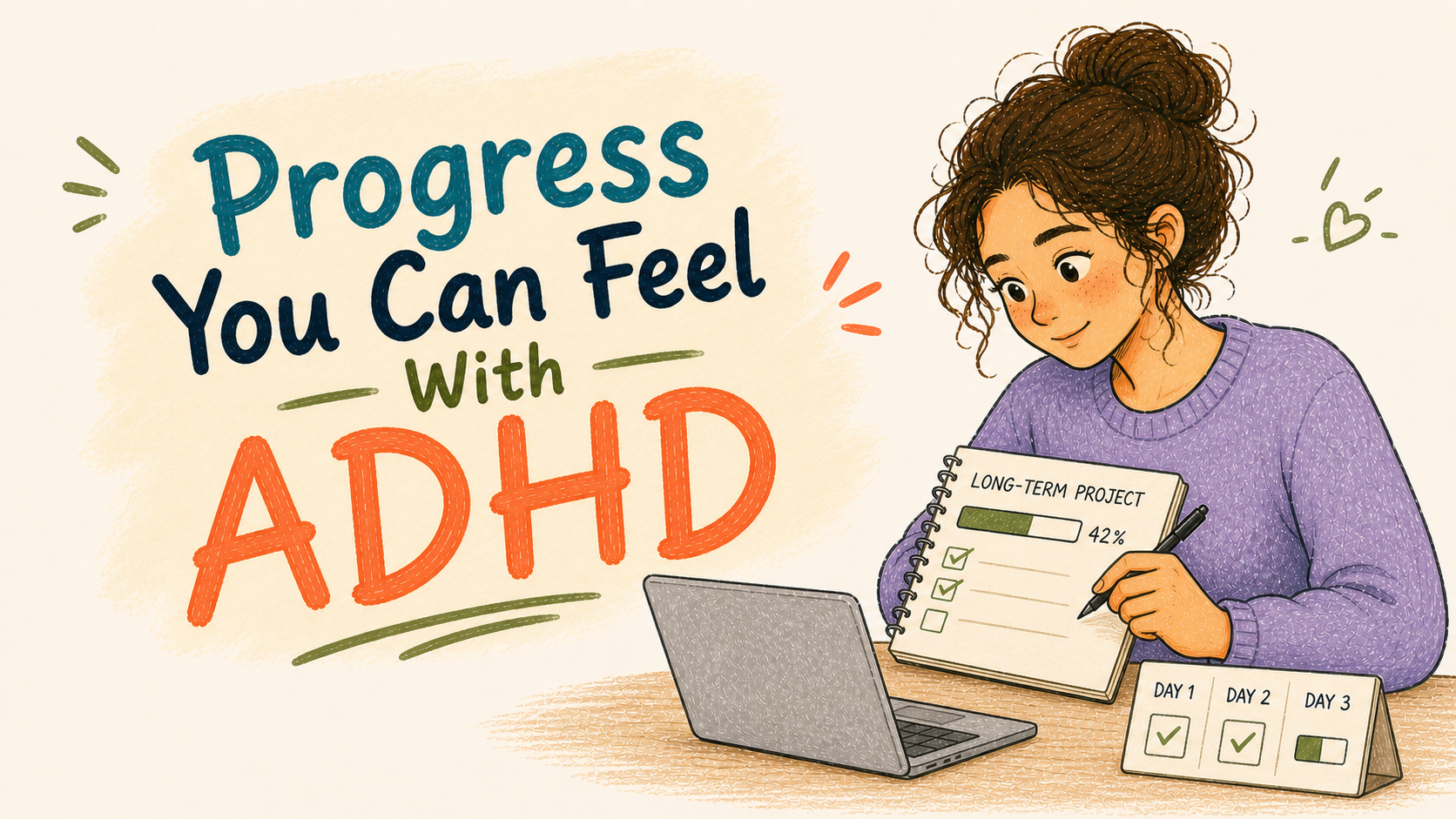
ADHD Long-Term Projects: Make Slow Progress Feel Visible
Long tasks can feel impossible when the reward is too far away. A three-day cycle and small feedback points can make slow progress easier to feel.
Read story
ADHD Task Switching: Use a Main Quest and Side Quest Strategy
When ADHD attention keeps following side quests, a work routine needs one main quest and a place for everything else.
Read story
Study and Work With ADHD: Build a Sustainable Focus Rhythm
For ADHD, focus is often hard to switch on but powerful once it starts. A flow-friendly setup can make task initiation feel less jagged.
Read story
ADHD and Irregular Eating: A Low-Friction Food System
When ADHD hyperfocus takes over, meals can disappear from the day. A low-friction daily routine makes eating easier before energy crashes.
Read story
ADHD-Friendly Organizing: Make Things Easier to Put Away
For ADHD, organizing often fails when every object asks for a decision. A visible home for everyday things can make putting them away less exhausting.
Read story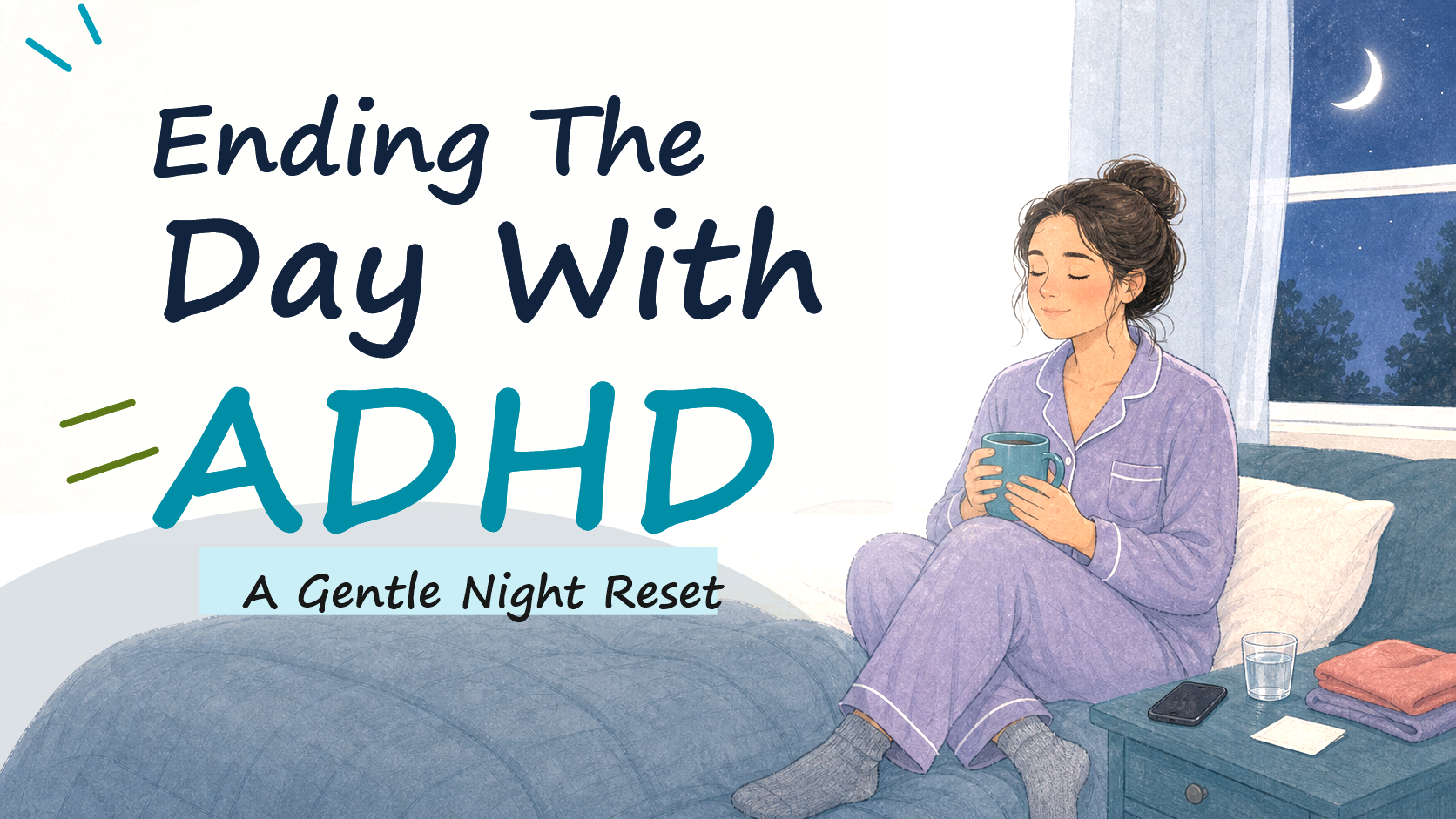
ADHD Bedtime Procrastination
ADHD bedtime procrastination can make nights feel impossible to end. A softer shutdown routine can help your brain move toward sleep.
Read story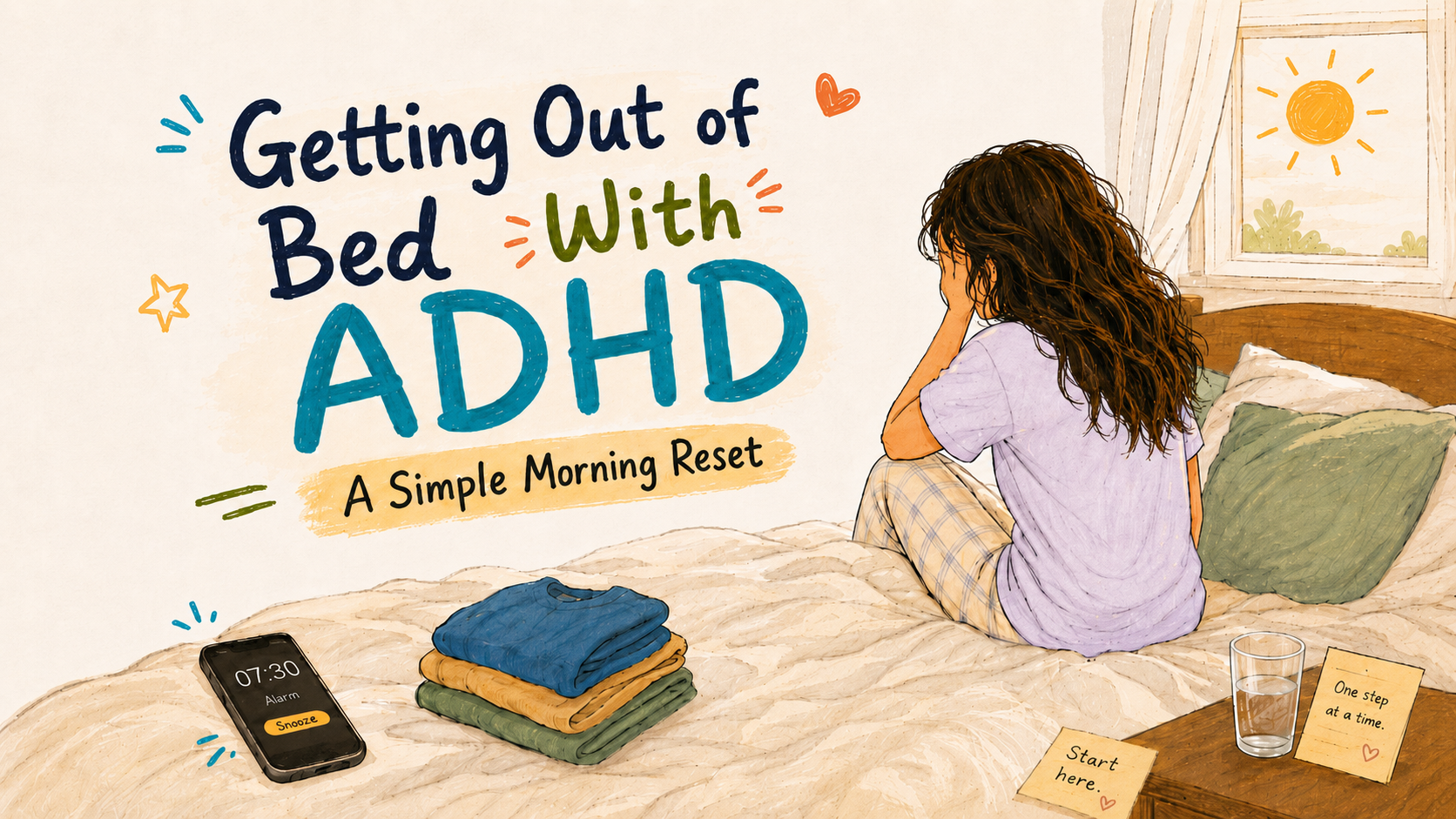
ADHD Morning Routine Reset
Getting out of bed with ADHD can feel like a whole task chain. A softer morning routine can help you restart without shame.
Read story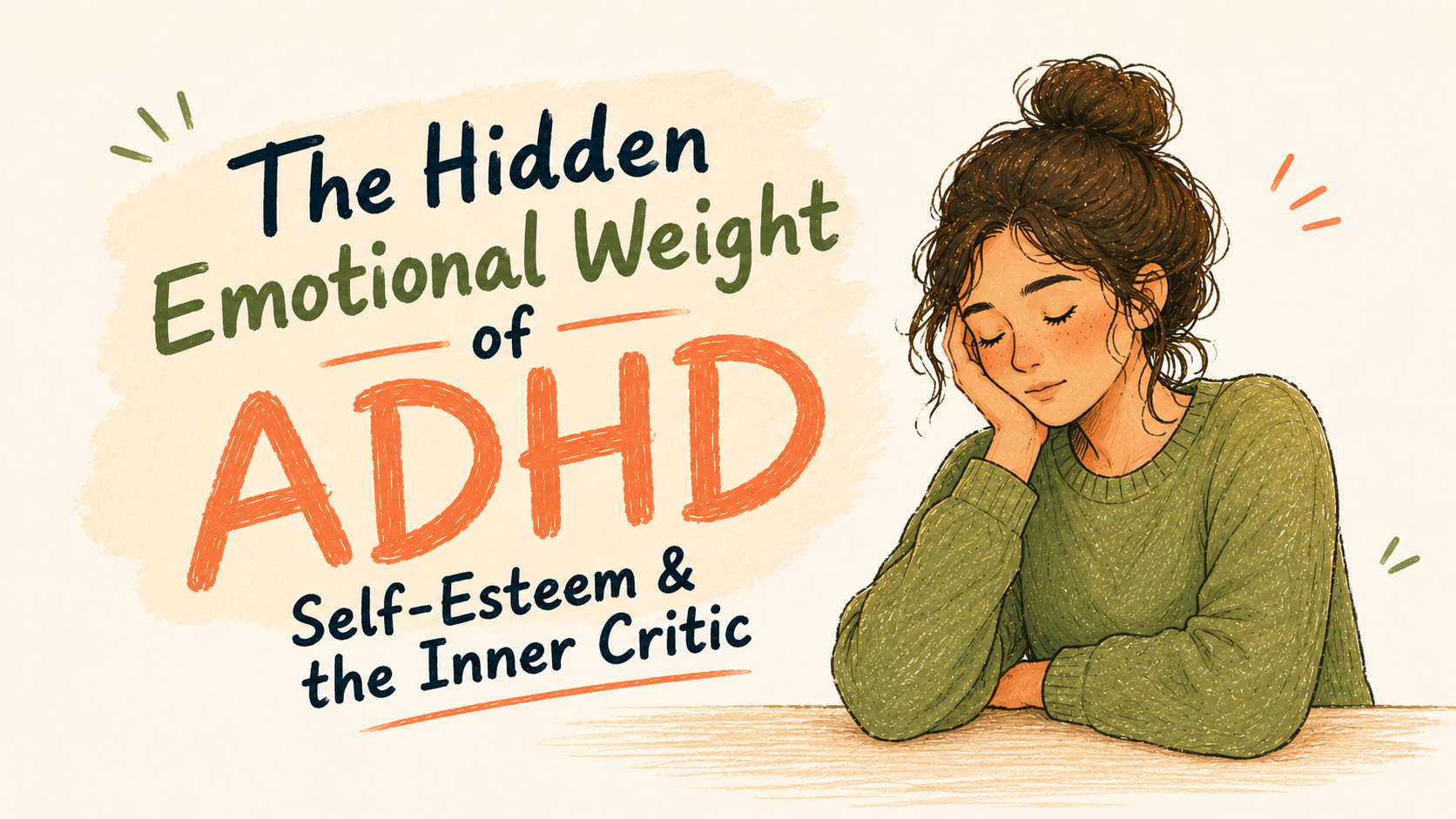
The Hidden Emotional Weight of ADHD
ADHD self-esteem can be shaped by shame, self-criticism, and the hard moments after a mistake. A kinder voice can help you recover.
Read story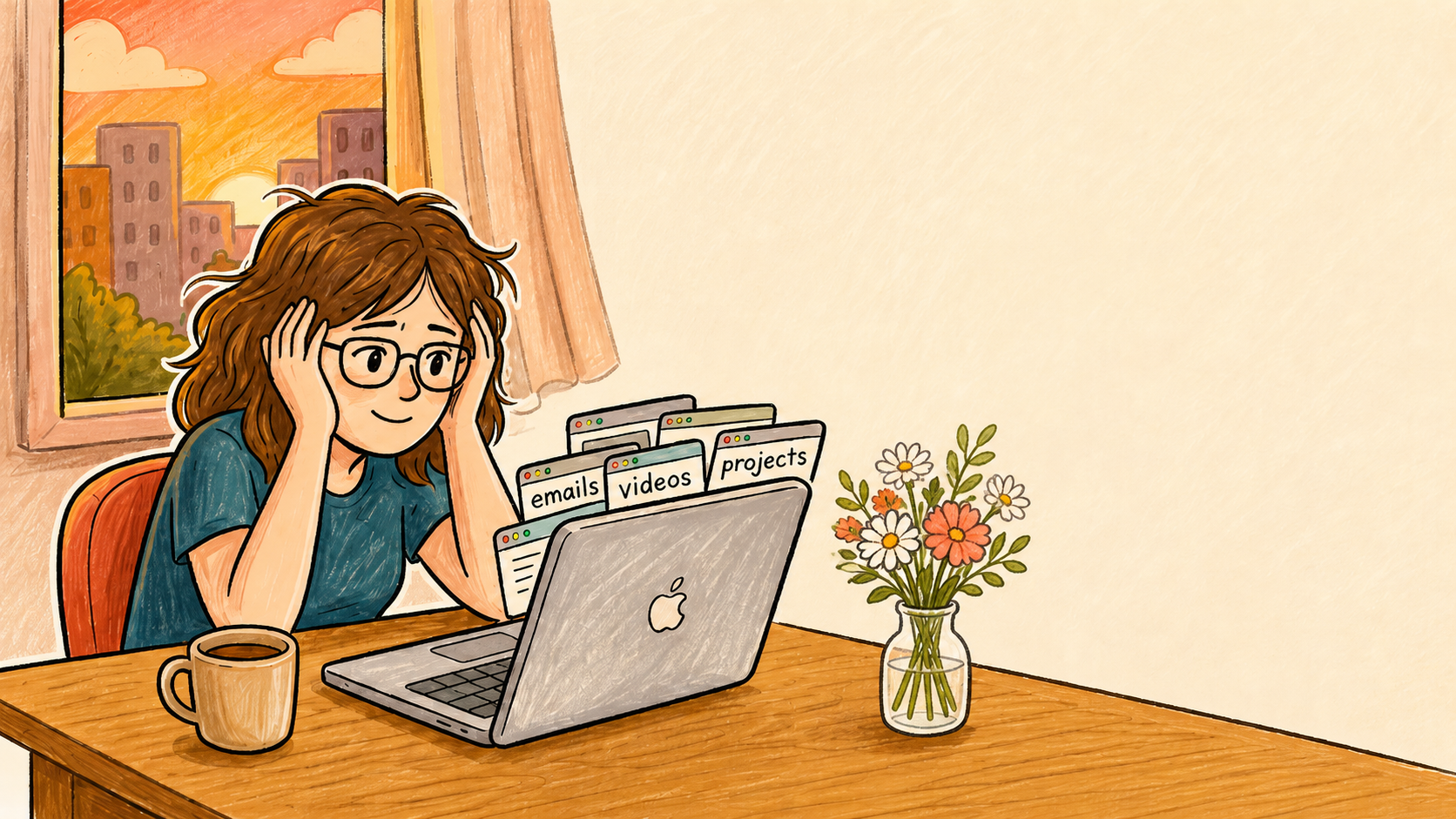
Freelancing With ADHD: Why Open-Ended Workdays Feel So Hard
Freelance freedom helped Maya work on her own terms, but open-ended workdays made starting hard. A smaller ADHD freelance routine helped her begin.
Read story
Living Alone With ADHD: Small Visible Steps That Make Life Easier
Living alone with ADHD made daily care feel heavy for CC. Small visible steps helped make the day feel lighter, clearer, and easier to restart.
Read story
How to Study With ADHD Without Getting Stuck Before You Start
Studying with ADHD can feel hard before the studying even begins. Ashley used small visible steps to move through ADHD paralysis.
Read story