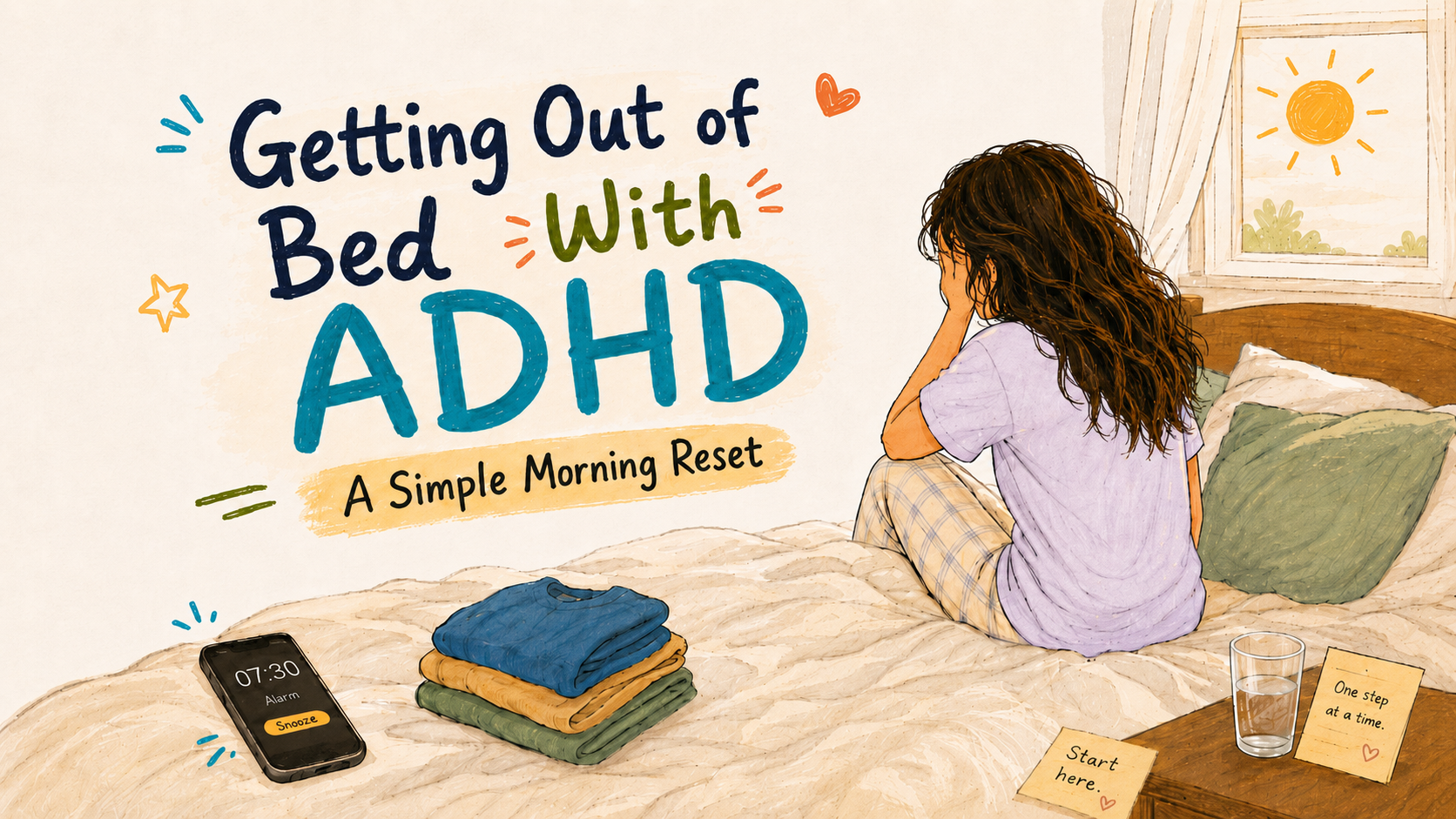
When Morning Falls Apart
For many people with ADHD, life does not start feeling messy because of one huge event. It starts with small breakdowns: waking up late, skipping breakfast, losing keys, or staring at the phone until the morning disappears.
From the outside, getting up looks like one simple action.
Inside an ADHD brain, it can feel like a whole chain of tasks: wake up, understand the time, manage the dread, decide what to do first, move your body, and enter the day.
If that chain breaks at the first step, the rest of the morning can feel harder than it should.
Why Getting Out of Bed Can Feel So Hard With ADHD
ADHD motivation often depends on clear reward, interest, urgency, or novelty. Getting out of bed rarely offers any of those right away.
What waits after waking up may be work, school, messages, unfinished chores, or yesterday's missed tasks. Your brain may read the morning as high effort and low reward, then choose the easiest escape: stay in bed.
This is not laziness. It can be ADHD task initiation, executive dysfunction ADHD, time blindness ADHD, and morning anxiety all arriving at once.
The loop may look like this:
The goal is not to force a perfect morning. The goal is to make the first move easier.
Create a Wake-Up Buffer
Try not to treat opening your eyes and leaving the bed as the same step. For ADHD, that jump can be too sharp.
A wake-up buffer gives your brain a softer bridge from sleep to action.
- Play the same morning song or podcast.
- Use a sunrise lamp or timed curtains if light helps you wake.
- Put water beside the bed.
- Sit up before asking yourself to stand up.
- Keep your phone away from your pillow if scrolling steals the first hour.
The buffer is not extra time to disappear. It is a clear signal: the day is starting, and you do not have to sprint into it.
Pick One First Step

A full ADHD morning routine can be too much when you are still half-asleep. Choose one action that requires almost no decision.
Instead of
Start my perfect morning
Try
Drink water
Instead of
Get ready for the whole day
Try
Put both feet on the floor
Instead of
Fix my schedule
Try
Open the curtains
Instead of
Be productive now
Try
Wash my face
The first win does not need to be impressive. It just needs to be possible.
Once one small action is done, your brain gets a tiny signal of movement. That signal can make the next action less blurry.
Make Tomorrow Morning Lighter Tonight
Morning is a hard time to make decisions. If you wake up and immediately need to choose clothes, food, a bag, keys, and a plan, your brain can hit overload before the day begins.
Remove a few decisions before you sleep:
- Put tomorrow's clothes in one visible place.
- Set out breakfast or one easy snack.
- Leave keys, wallet, and bag by the door.
- Write one first task on a sticky note.
- Put the most important item where you will see it.
You are not trying to become a perfectly organized person overnight. You are helping tomorrow's brain start with fewer choices.
If You Wake Up Late, the Day Is Not Ruined
For many people with adult ADHD, waking up late does not feel neutral. It can feel like proof that the whole day is already lost.
That all-or-nothing feeling can turn one late morning into a full day of avoidance. The reset is simple: stop trying to rescue the ideal day. Start the real one.
You can wake up at 11:00, eat at 11:10, and begin one real task at 11:20. That is not the perfect morning. It is still a start.
This is where a visual morning board can help. When the routine stays in your head, every step competes for attention. Seeing the steps as small squares can make the next move feel less blurry.
A board like this can turn the morning into clear squares:
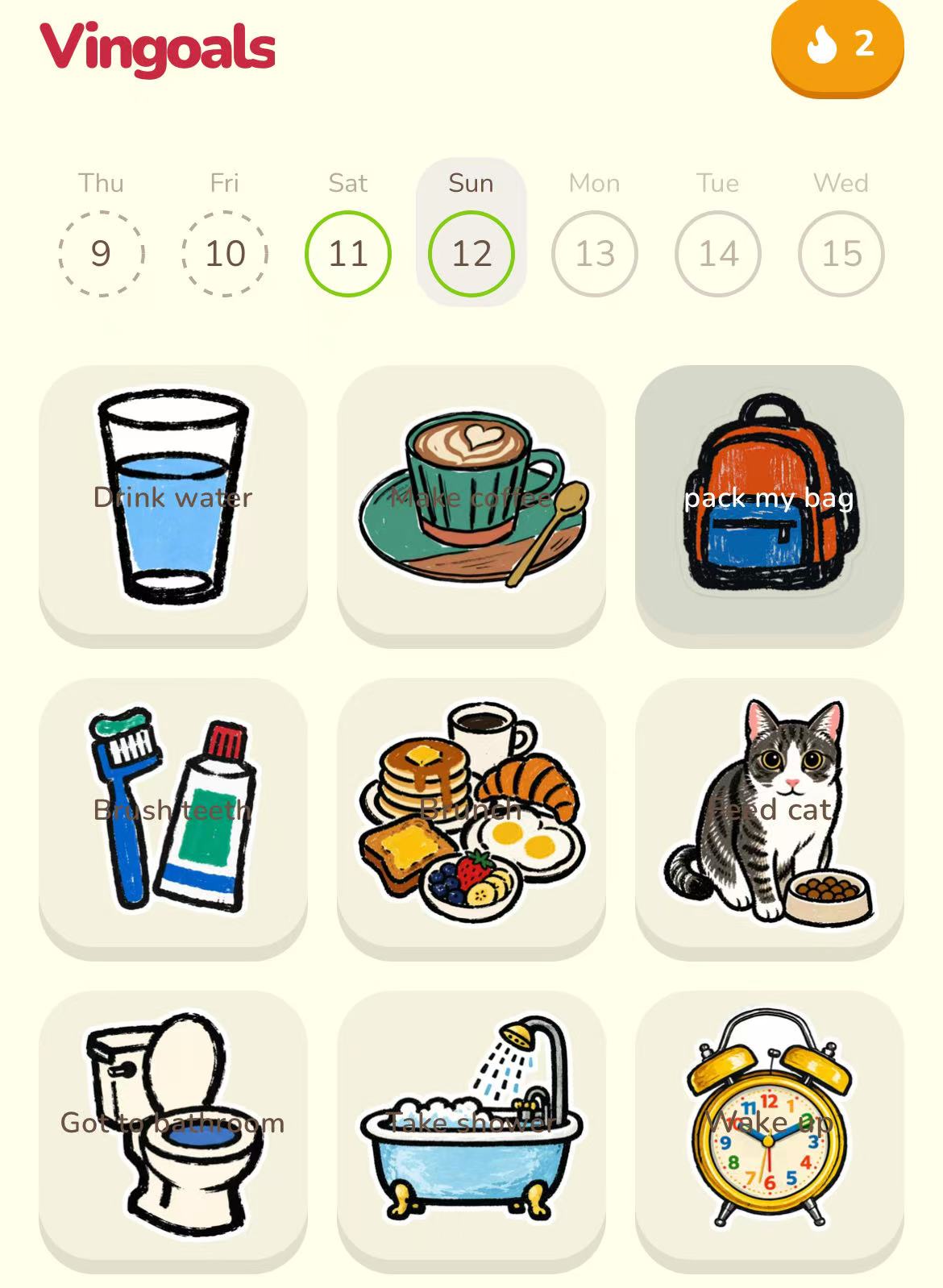
This works because the next step is no longer hidden inside a vague command like "get ready." It is one square you can finish, even if the morning started late.
For ADHD coping strategies, visual tools can lower pressure. You do not need to hold the whole morning in working memory. You only need to complete the next visible step.
Start with one tiny win today
You are not trying to win the whole morning.
Start with one square, then let the next one become easier.
More real stories
See all stories
What Is ADHD? Why Starting Tasks Can Feel So Hard
ADHD is not laziness. Executive dysfunction and ADHD paralysis can make starting hard when the first step is too vague.
Read story
ADHD Long-Term Projects: Make Slow Progress Feel Visible
Long tasks can feel impossible when the reward is too far away. A three-day cycle and small feedback points can make slow progress easier to feel.
Read story
ADHD Task Switching: Use a Main Quest and Side Quest Strategy
When ADHD attention keeps following side quests, a work routine needs one main quest and a place for everything else.
Read story
Study and Work With ADHD: Build a Sustainable Focus Rhythm
For ADHD, focus is often hard to switch on but powerful once it starts. A flow-friendly setup can make task initiation feel less jagged.
Read story
ADHD and Irregular Eating: A Low-Friction Food System
When ADHD hyperfocus takes over, meals can disappear from the day. A low-friction daily routine makes eating easier before energy crashes.
Read story
ADHD-Friendly Organizing: Make Things Easier to Put Away
For ADHD, organizing often fails when every object asks for a decision. A visible home for everyday things can make putting them away less exhausting.
Read story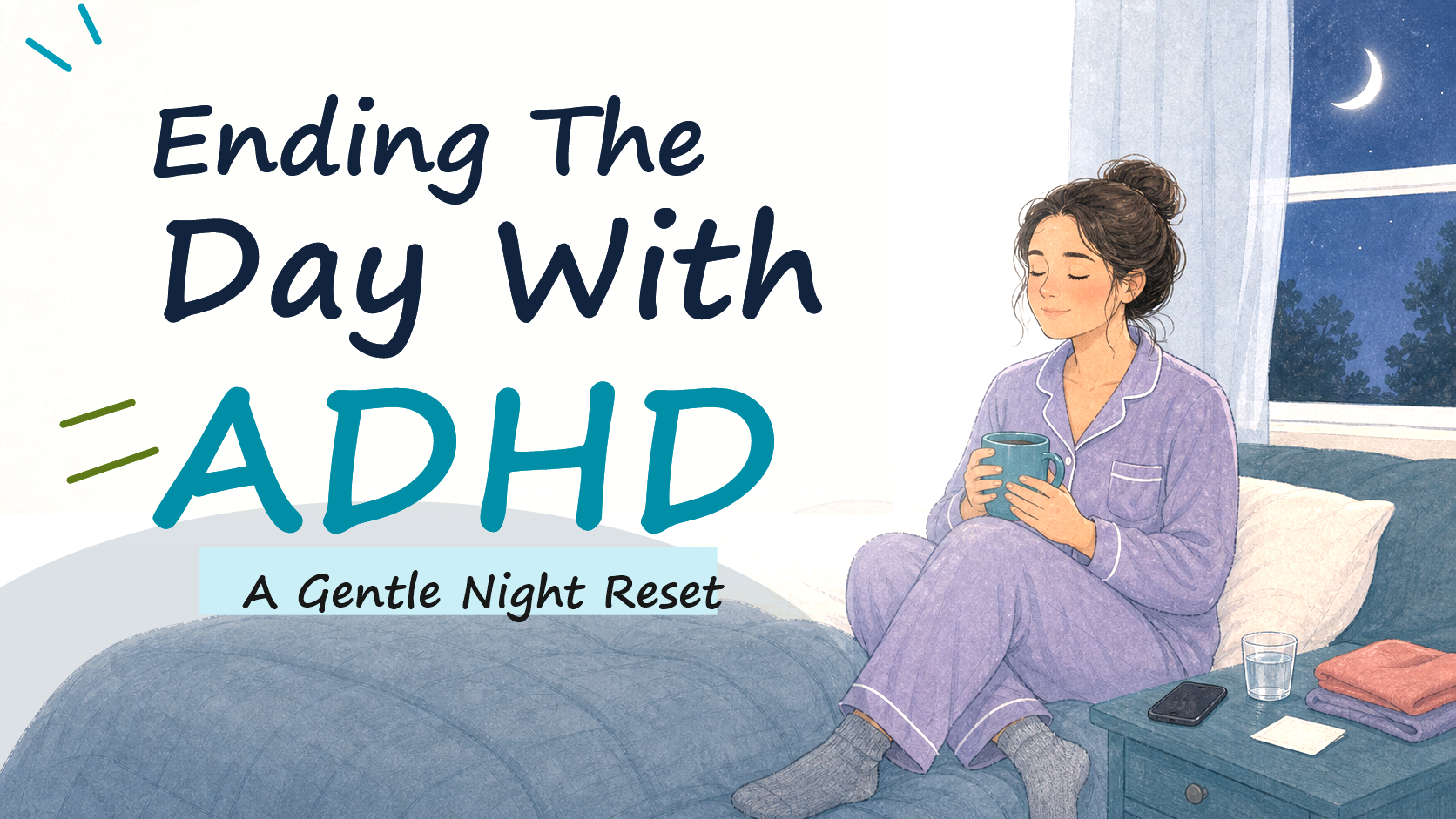
ADHD Bedtime Procrastination
ADHD bedtime procrastination can make nights feel impossible to end. A softer shutdown routine can help your brain move toward sleep.
Read story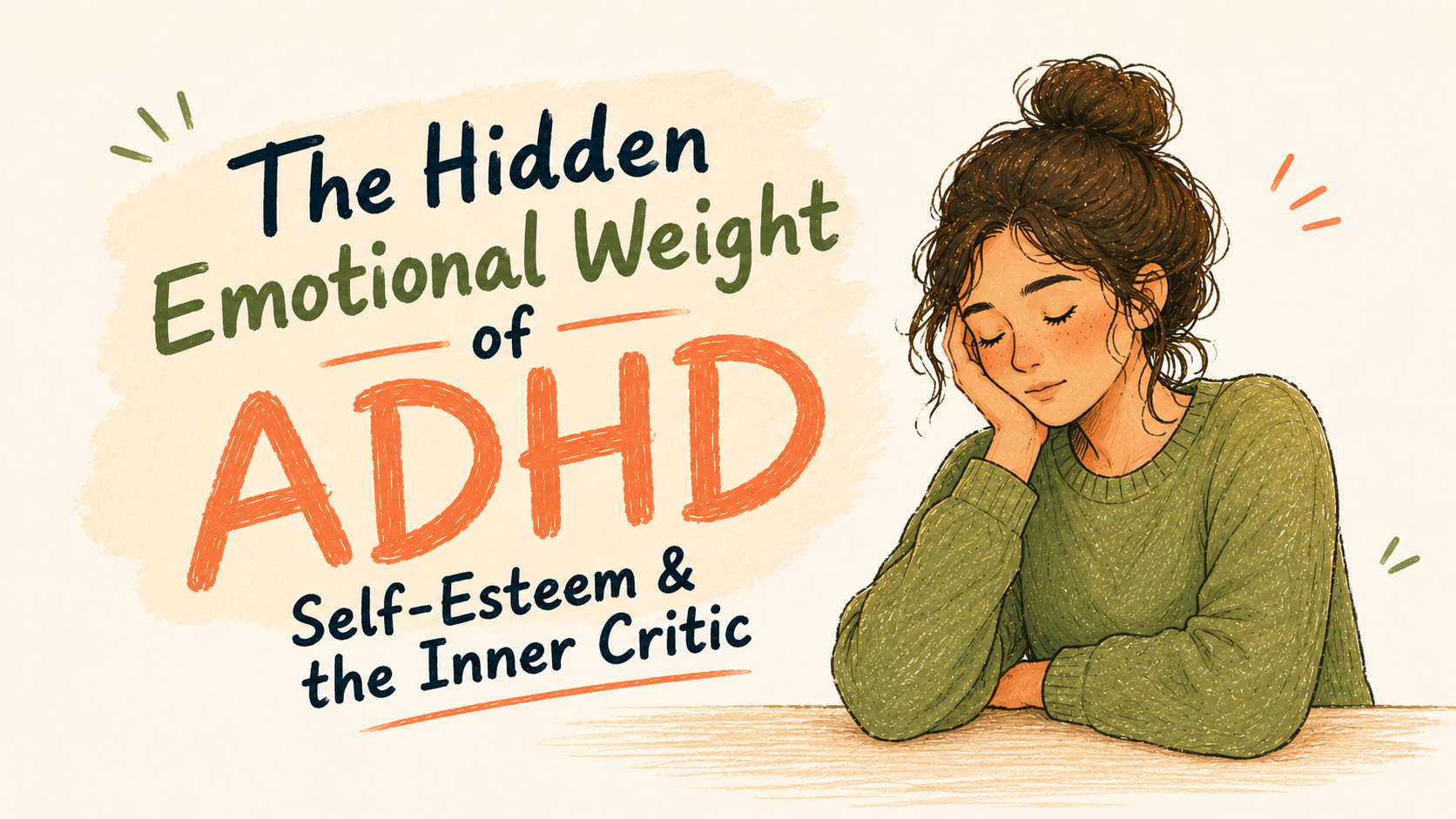
The Hidden Emotional Weight of ADHD
ADHD self-esteem can be shaped by shame, self-criticism, and the hard moments after a mistake. A kinder voice can help you recover.
Read story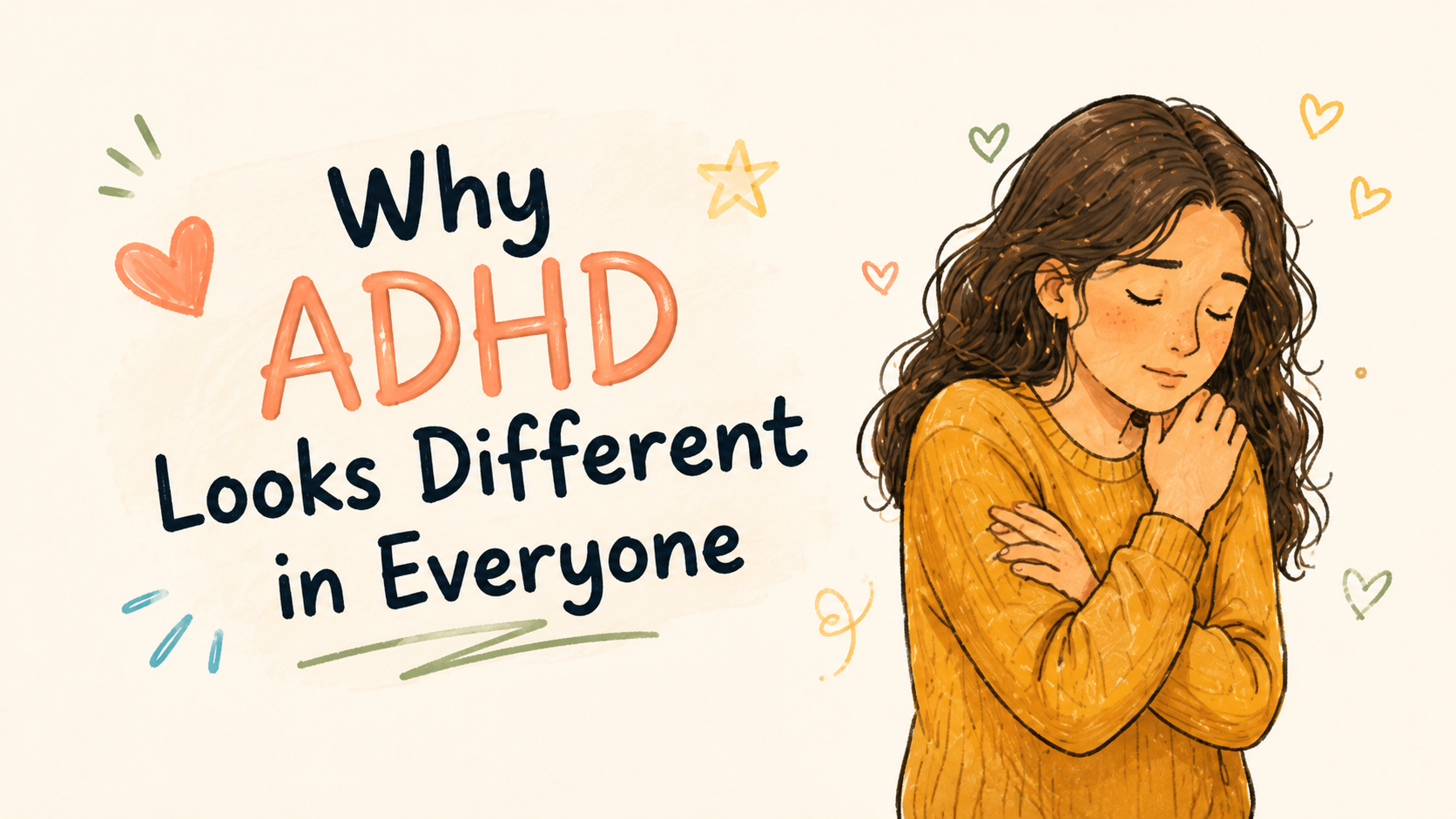
Why ADHD Looks Different in Everyone
ADHD can look restless, quiet, overwhelmed, impulsive, or hidden. The support that helps most depends on how it shows up in your real life.
Read story
Freelancing With ADHD: Why Open-Ended Workdays Feel So Hard
Freelance freedom helped Maya work on her own terms, but open-ended workdays made starting hard. A smaller ADHD freelance routine helped her begin.
Read story
Living Alone With ADHD: Small Visible Steps That Make Life Easier
Living alone with ADHD made daily care feel heavy for CC. Small visible steps helped make the day feel lighter, clearer, and easier to restart.
Read story
How to Study With ADHD Without Getting Stuck Before You Start
Studying with ADHD can feel hard before the studying even begins. Ashley used small visible steps to move through ADHD paralysis.
Read story