Why Organizing Keeps Breaking Down
Have you had this experience? You come home already exhausted, step over shoes and bags on the floor, then still have to search for your keys or headphones. You want to start work, but the desk looks like it has been through a storm. The moment you think, "I should clean this first," your energy drops, and your phone suddenly feels much easier.
For many people with adult ADHD, this scene repeats often, but the question underneath gets skipped: why is it so hard to keep cleaning going? From an ADHD-friendly organizing perspective, there are usually two connected reasons.
Two reasons underneath the mess
Problem 1: Too many things, no clear start
Why: task ambiguity plus too many small switches.
The first problem is task ambiguity. "Clean the room" sounds simple, but it secretly includes starting, planning, judging, sorting, deciding what to keep, finding a place, putting the item away, and returning to the mess again. That many steps can overload executive function, especially when the room already feels like a mountain.
Problem 2: The room gets messy again
Why: no fixed home system, so every reset depends on memory.
The second problem is the missing return-home system. If every object is placed by temporary decision, your brain has to remember a new location every time. For an ADHD brain, closed drawers and deep bins can make useful things feel like they disappeared, so the room quietly slides back into chaos.
Build Homes Where Things Already Land
The most helpful shift is simple: put the container where the object already appears.
If your keys always end up on the bedside table, place a small tray there. If clothes always land on the chair, put a basket beside the chair for "can wear again" clothes. If your bag dumps receipts and lip balm near the door, give that spot a shallow bowl.
Instead of
Stop dropping keys everywhere
Try
Put a tray where keys already land
Instead of
Keep the chair perfectly clear
Try
Add a basket for rewear clothes
Instead of
Organize the whole desk
Try
Make one landing spot for loose items
Instead of
Remember every storage place
Try
Use visible containers for daily items
You are not trying to force a brand-new personality onto your home. You are using the path your brain already takes, then making that path less messy.
Make the System Easy Enough to Use
The best organizing system for ADHD is usually not the prettiest one. It is the one you will actually use when you are tired.
No lid
If you have to open something every time, the step may get skipped on tired days.
Not too deep
Deep bins can turn into places where useful things disappear, which makes the system harder to trust.
Visible enough
Clear, open, or labeled containers help your memory from the outside.
Close to the action
The fewer steps between using something and putting it back, the more likely things go back.
This is close to habit stacking: attach the new habit to something you already do. You already come home and drop your keys. The change is not "become organized." The change is "drop keys in this tray."
That tiny change matters because it lowers the amount of willpower required. Over time, the tray becomes the route.
How Vingoals Helps Make the Next Reset Visible
A visual ADHD checklist app can help when your space feels blurry. Instead of holding the whole room in your head, Vingoals can turn the next reset into a few visible squares.
For organizing, the board does not need to include every possible chore. It can focus on the tiny actions that keep things from spreading everywhere.
A low-friction home reset board could include:
- Put keys in tray
- Drop bag by the door
- Clear one desk corner
- Put rewear clothes in basket
- Throw away visible trash
- Drink water
- Step outside
- Mark today complete
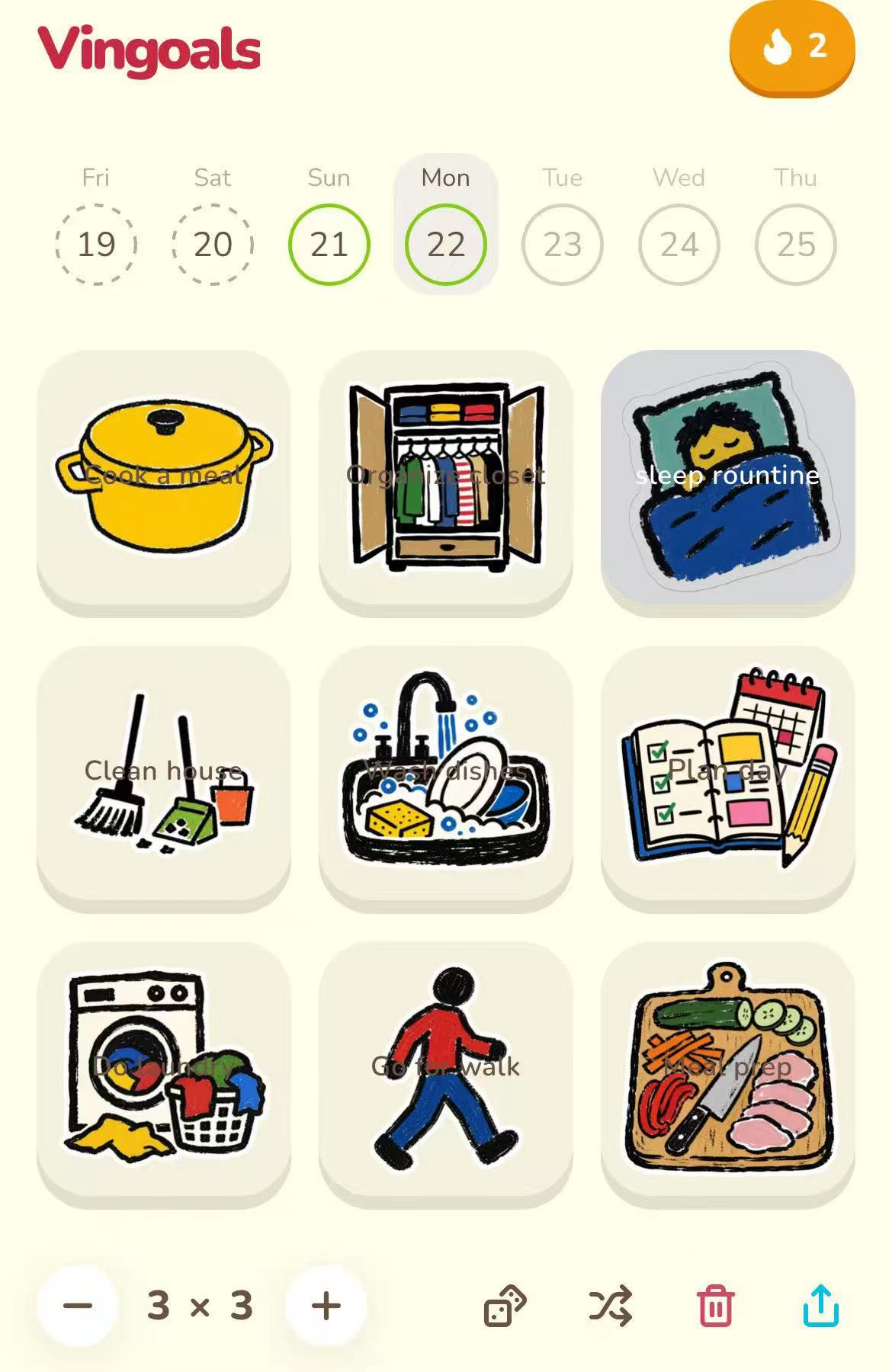
The point is not to make your home perfect. It is to make the next action easier to see, so organizing with ADHD becomes less about pressure and more about one small return path.
Start with one tiny win today
You do not need a perfect storage system to start.
Choose one repeated mess, give it one visible home, and let that be enough for today.
More real stories
See all stories
What Is ADHD? Why Starting Tasks Can Feel So Hard
ADHD is not laziness. Executive dysfunction and ADHD paralysis can make starting hard when the first step is too vague.
Read story
ADHD Long-Term Projects: Make Slow Progress Feel Visible
Long tasks can feel impossible when the reward is too far away. A three-day cycle and small feedback points can make slow progress easier to feel.
Read story
ADHD Task Switching: Use a Main Quest and Side Quest Strategy
When ADHD attention keeps following side quests, a work routine needs one main quest and a place for everything else.
Read story
Study and Work With ADHD: Build a Sustainable Focus Rhythm
For ADHD, focus is often hard to switch on but powerful once it starts. A flow-friendly setup can make task initiation feel less jagged.
Read story
ADHD and Irregular Eating: A Low-Friction Food System
When ADHD hyperfocus takes over, meals can disappear from the day. A low-friction daily routine makes eating easier before energy crashes.
Read story
ADHD Bedtime Procrastination
ADHD bedtime procrastination can make nights feel impossible to end. A softer shutdown routine can help your brain move toward sleep.
Read story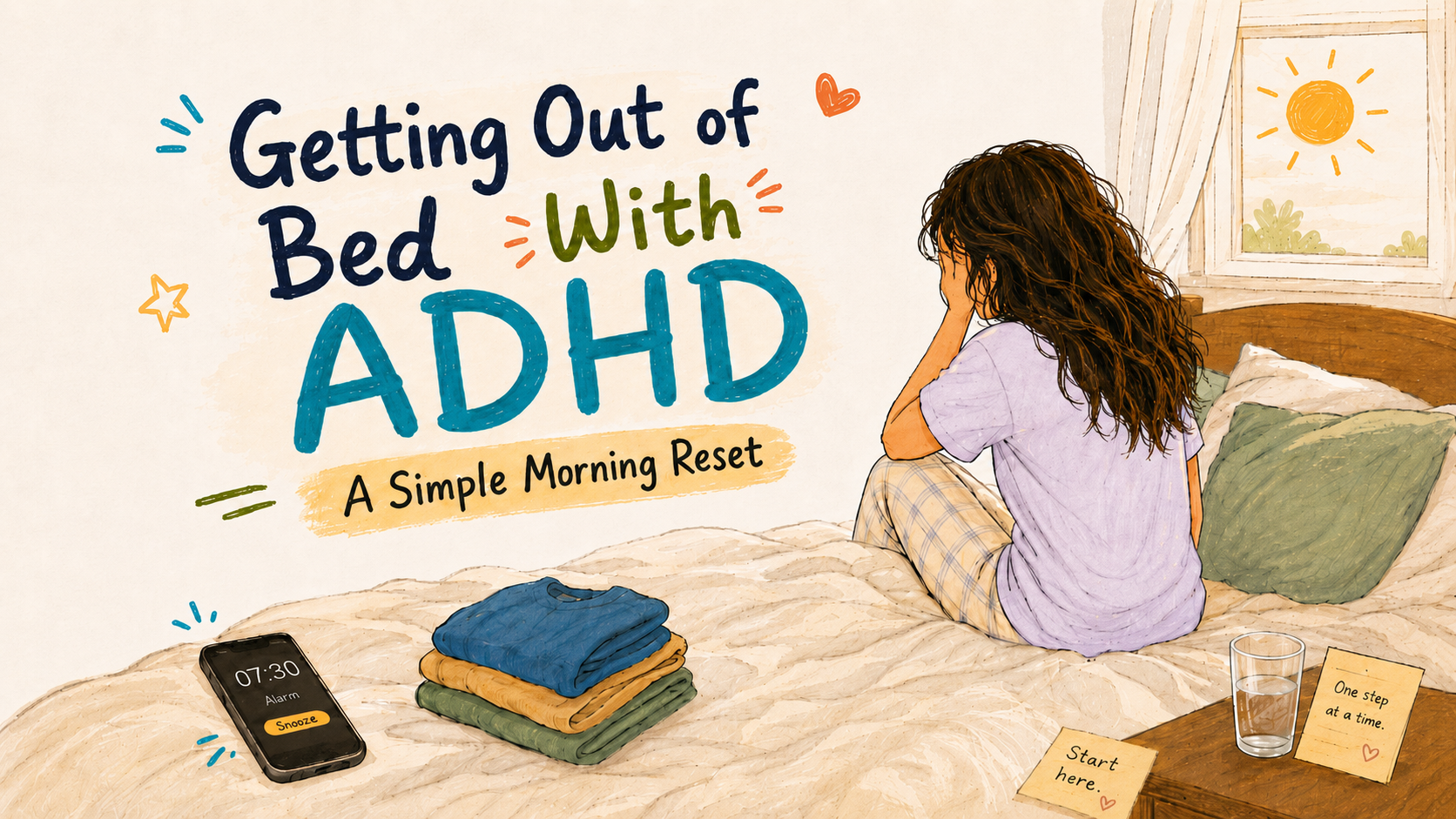
ADHD Morning Routine Reset
Getting out of bed with ADHD can feel like a whole task chain. A softer morning routine can help you restart without shame.
Read story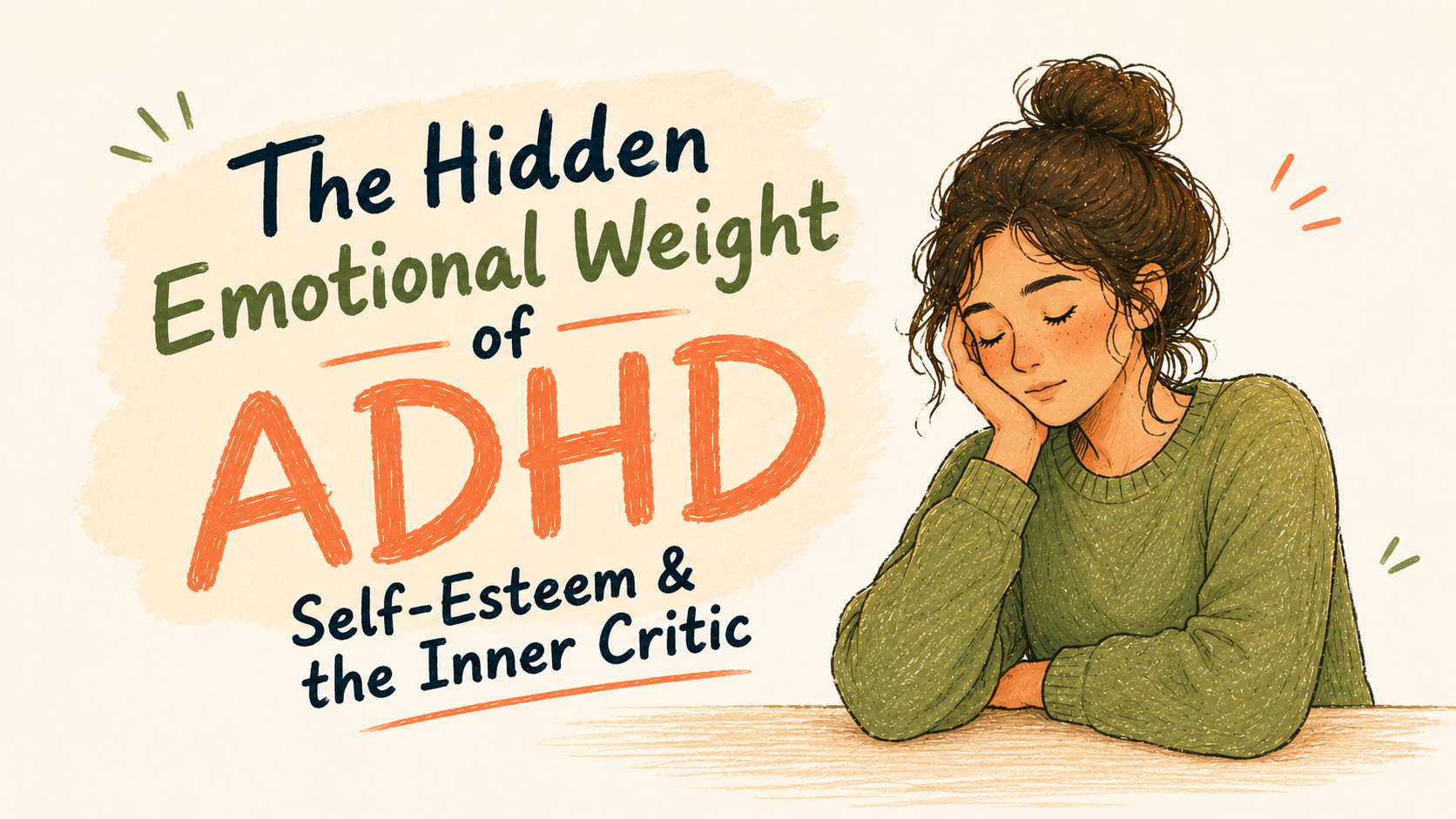
The Hidden Emotional Weight of ADHD
ADHD self-esteem can be shaped by shame, self-criticism, and the hard moments after a mistake. A kinder voice can help you recover.
Read story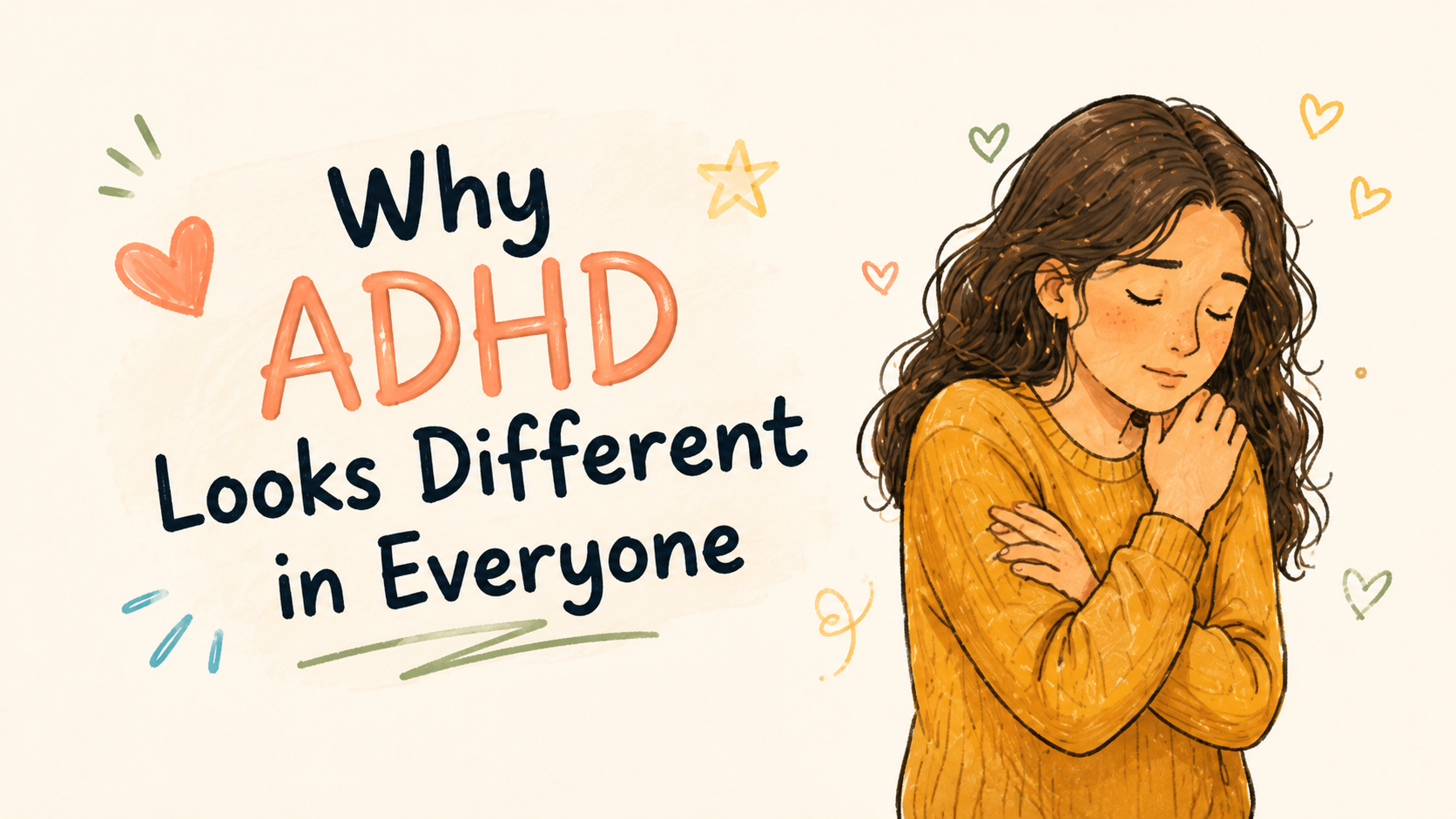
Why ADHD Looks Different in Everyone
ADHD can look restless, quiet, overwhelmed, impulsive, or hidden. The support that helps most depends on how it shows up in your real life.
Read story
Freelancing With ADHD: Why Open-Ended Workdays Feel So Hard
Freelance freedom helped Maya work on her own terms, but open-ended workdays made starting hard. A smaller ADHD freelance routine helped her begin.
Read story
Living Alone With ADHD: Small Visible Steps That Make Life Easier
Living alone with ADHD made daily care feel heavy for CC. Small visible steps helped make the day feel lighter, clearer, and easier to restart.
Read story
How to Study With ADHD Without Getting Stuck Before You Start
Studying with ADHD can feel hard before the studying even begins. Ashley used small visible steps to move through ADHD paralysis.
Read story