

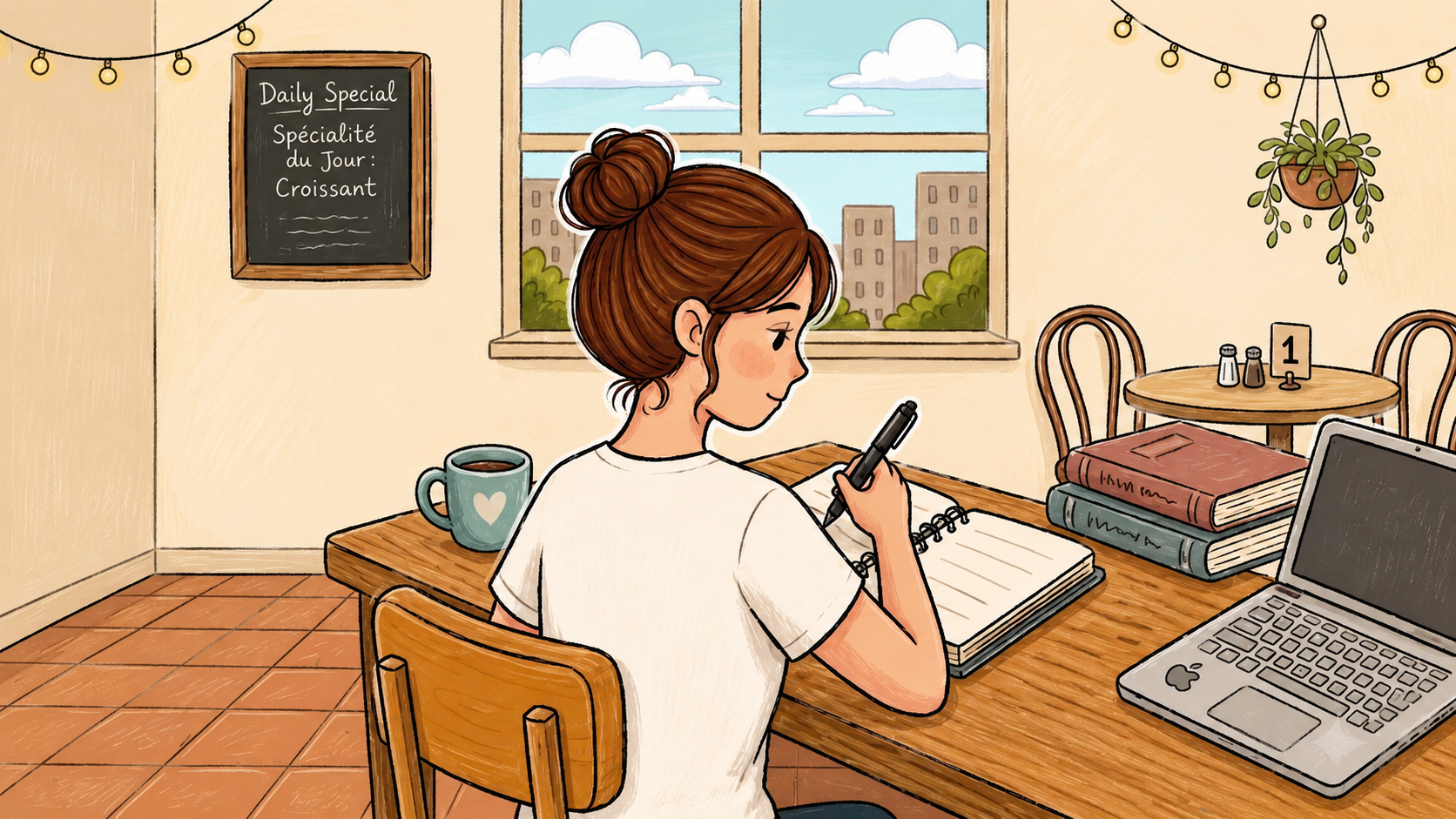
Studying With ADHD Can Get Hard Before You Start
Studying with ADHD is not always hard because the subject is too difficult. Sometimes, the hardest part happens before studying even begins.
A simple goal like "go study" can quietly turn into many hidden steps: getting ready, finding your charger, packing your notes, choosing where to study, leaving the house, sitting down, and deciding where to begin.
To other people, these steps may look small. But for an ADHD brain, each one can use energy, memory, and decision-making. When too many small steps pile up, starting can feel too heavy.
Why Big Goals Feel So Hard With ADHD

Big goals often sound simple on paper: study for the CPA exam, finish one chapter, complete practice questions, or focus at the coffee shop for two hours.
But underneath one big goal are many smaller actions. You need your materials, your laptop, your notes, a place to study, and a clear starting point.
When all of those steps live only in your head, the task can feel much bigger than it looks. This is often where ADHD paralysis shows up. You know what you need to do, but you feel stuck before you begin.
Ashley's Story: Getting Stuck Before the CPA Exam
Ashley was preparing for the CPA exam. She had the books, the study plan, and the motivation to pass.
She also knew she studied better outside her apartment. At home, her bed felt too close, her phone was too easy to reach, and unfinished chores made her feel behind before she even opened her book.
So Ashley decided to study at a coffee shop. It sounded like a good plan, but every morning she got stuck before leaving.
Her laptop was not charged. Her headphones were missing. She could not decide what to wear. She spent too long scrolling while trying to "get ready."
By the time she was supposed to leave, she already felt exhausted. Then the guilt came in: "I wasted the morning again."
The problem was not that Ashley did not want to study. The problem was that "go study" was too big and too vague. Her brain needed a clearer path.
The Change: Make the First Step Smaller

Ashley stopped trying to force herself into a perfect ADHD study routine. Instead of writing one big task like "Study for the CPA exam," she made the beginning smaller and more visible.
Her small study start looked like this
- Pack CPA book
- Charge laptop
- Put headphones in bag
- Fill water bottle
- Put keys by the door
- Leave apartment
“The first win was not studying for six hours. The first win was leaving the apartment.”
This looked almost too simple, but that was the point. Once the steps were visible, Ashley did not need to hold the whole plan in her head. She only needed to follow the next small action.
For ADHD, a tiny step gives the brain something clear to do. Opening the book, packing the bag, or doing five practice questions may not look dramatic, but it creates momentum.
It reminds you that you can move forward, even if the day did not start perfectly.
How Vingoals Helps Make Studying Feel Less Overwhelming
A long to-do list can feel overwhelming, especially when every task looks equally important and unfinished.
Vingoals helps turn one big study goal into a small visual board. Instead of staring at "Study for the CPA exam," you can break the routine into small squares:
- Pack study bag
- Review one topic
- Do 10 practice questions
- Watch one lecture
- Check one answer explanation
- Drink water
- Study for 30 minutes
- Mark today complete
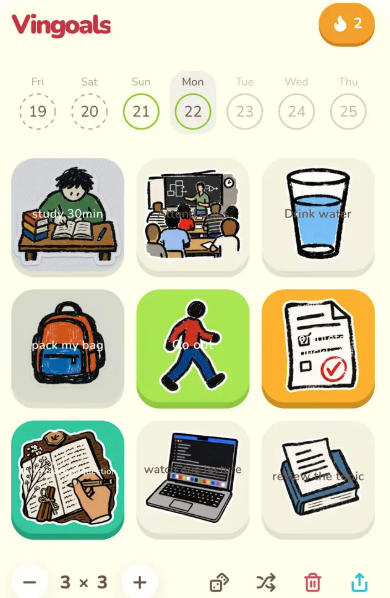
Each square is small on purpose. For ADHD, the problem is often not the goal itself. The problem is getting started.
When the next step is visible, studying can feel less blurry. You do not have to complete the whole goal at once. You only have to move through one small step at a time. Start with one square. Then another. That is how momentum begins.
Start with one tiny win today
Turn one big study goal into small visible steps.
Start with one tiny win today.
More real stories
See all stories
What Is ADHD? Why Starting Tasks Can Feel So Hard
ADHD is not laziness. Executive dysfunction and ADHD paralysis can make starting hard when the first step is too vague.
Read story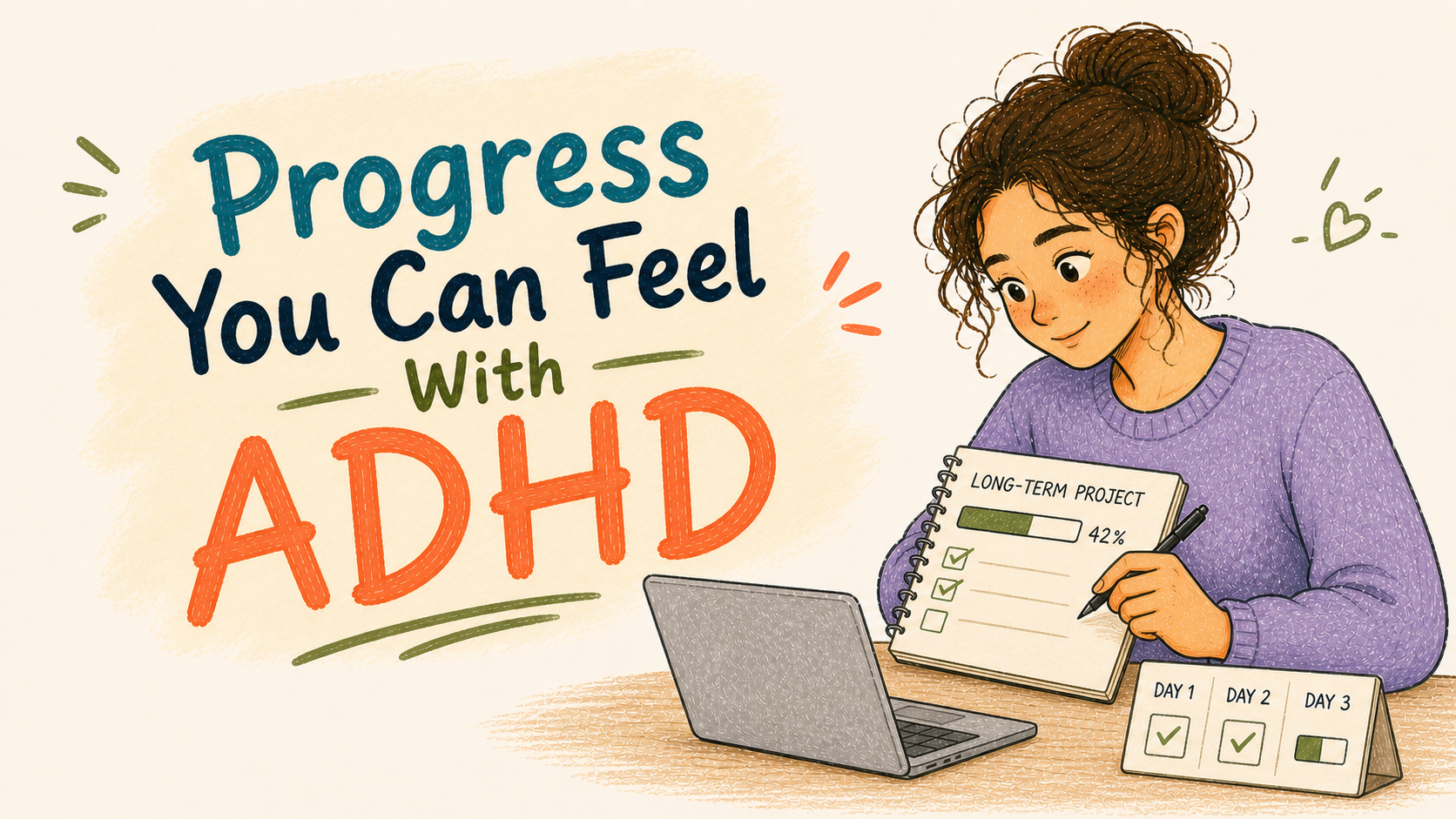
ADHD Long-Term Projects: Make Slow Progress Feel Visible
Long tasks can feel impossible when the reward is too far away. A three-day cycle and small feedback points can make slow progress easier to feel.
Read story
ADHD Task Switching: Use a Main Quest and Side Quest Strategy
When ADHD attention keeps following side quests, a work routine needs one main quest and a place for everything else.
Read story
Study and Work With ADHD: Build a Sustainable Focus Rhythm
For ADHD, focus is often hard to switch on but powerful once it starts. A flow-friendly setup can make task initiation feel less jagged.
Read story
ADHD and Irregular Eating: A Low-Friction Food System
When ADHD hyperfocus takes over, meals can disappear from the day. A low-friction daily routine makes eating easier before energy crashes.
Read story
ADHD-Friendly Organizing: Make Things Easier to Put Away
For ADHD, organizing often fails when every object asks for a decision. A visible home for everyday things can make putting them away less exhausting.
Read story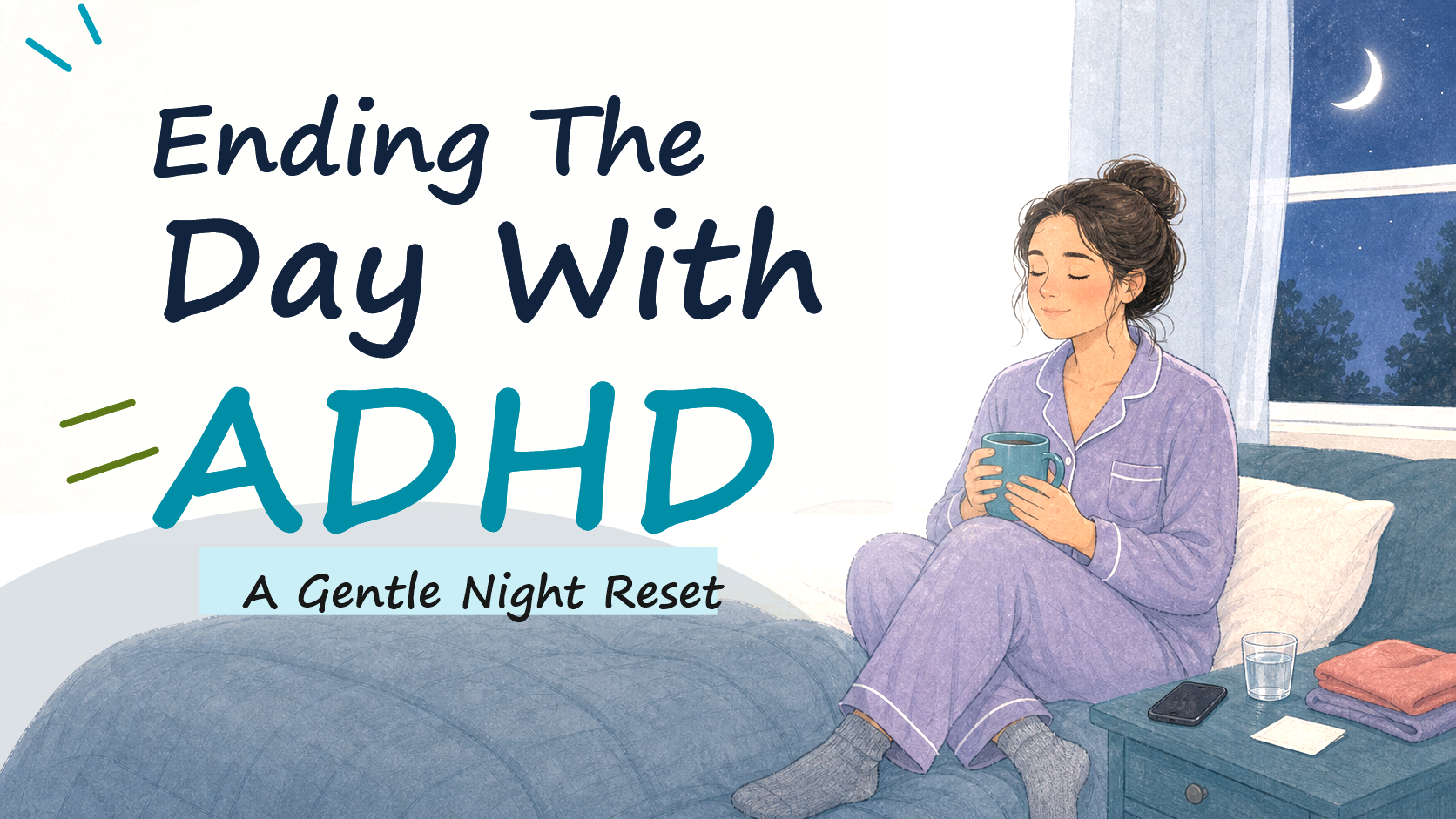
ADHD Bedtime Procrastination
ADHD bedtime procrastination can make nights feel impossible to end. A softer shutdown routine can help your brain move toward sleep.
Read story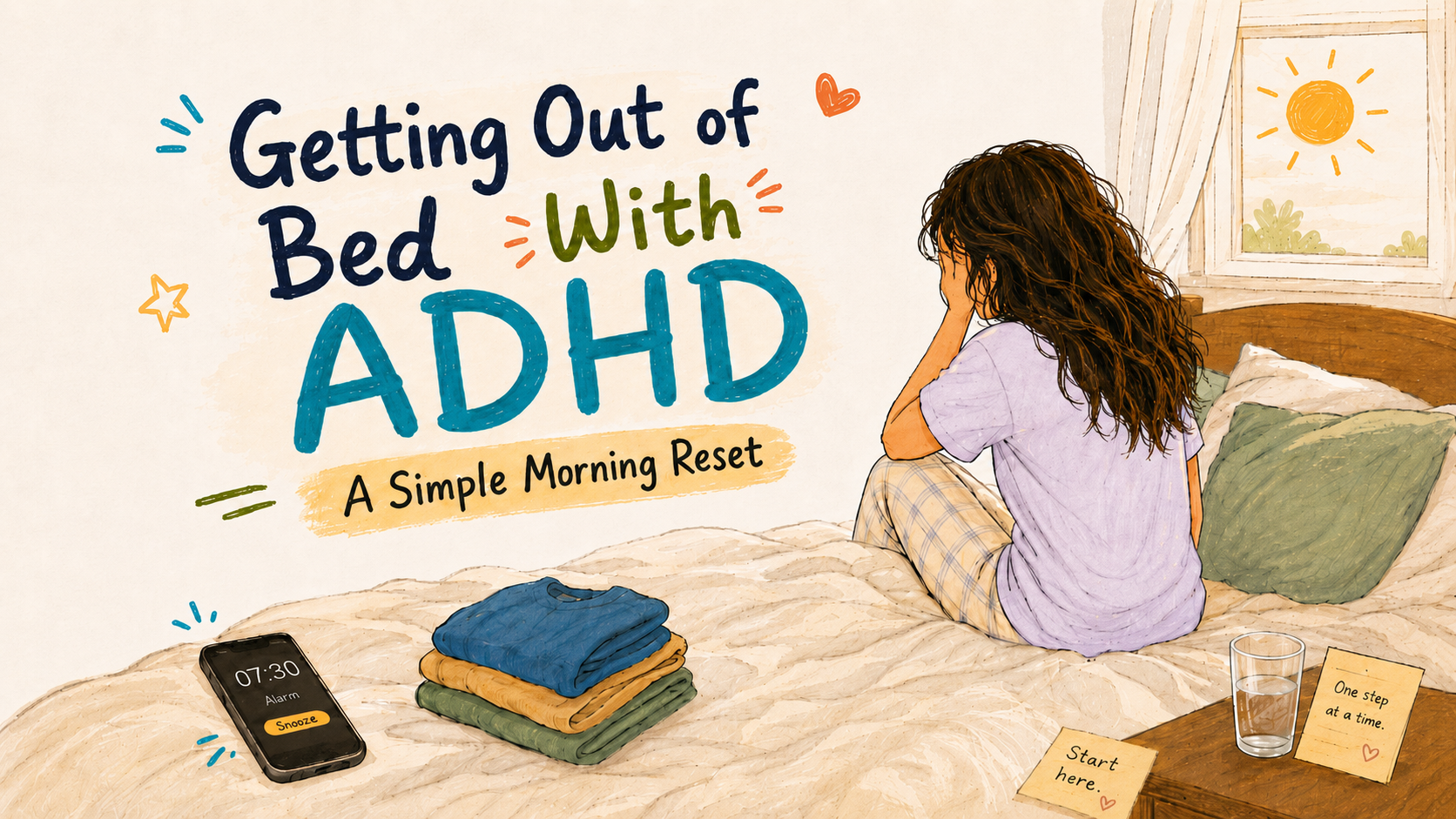
ADHD Morning Routine Reset
Getting out of bed with ADHD can feel like a whole task chain. A softer morning routine can help you restart without shame.
Read story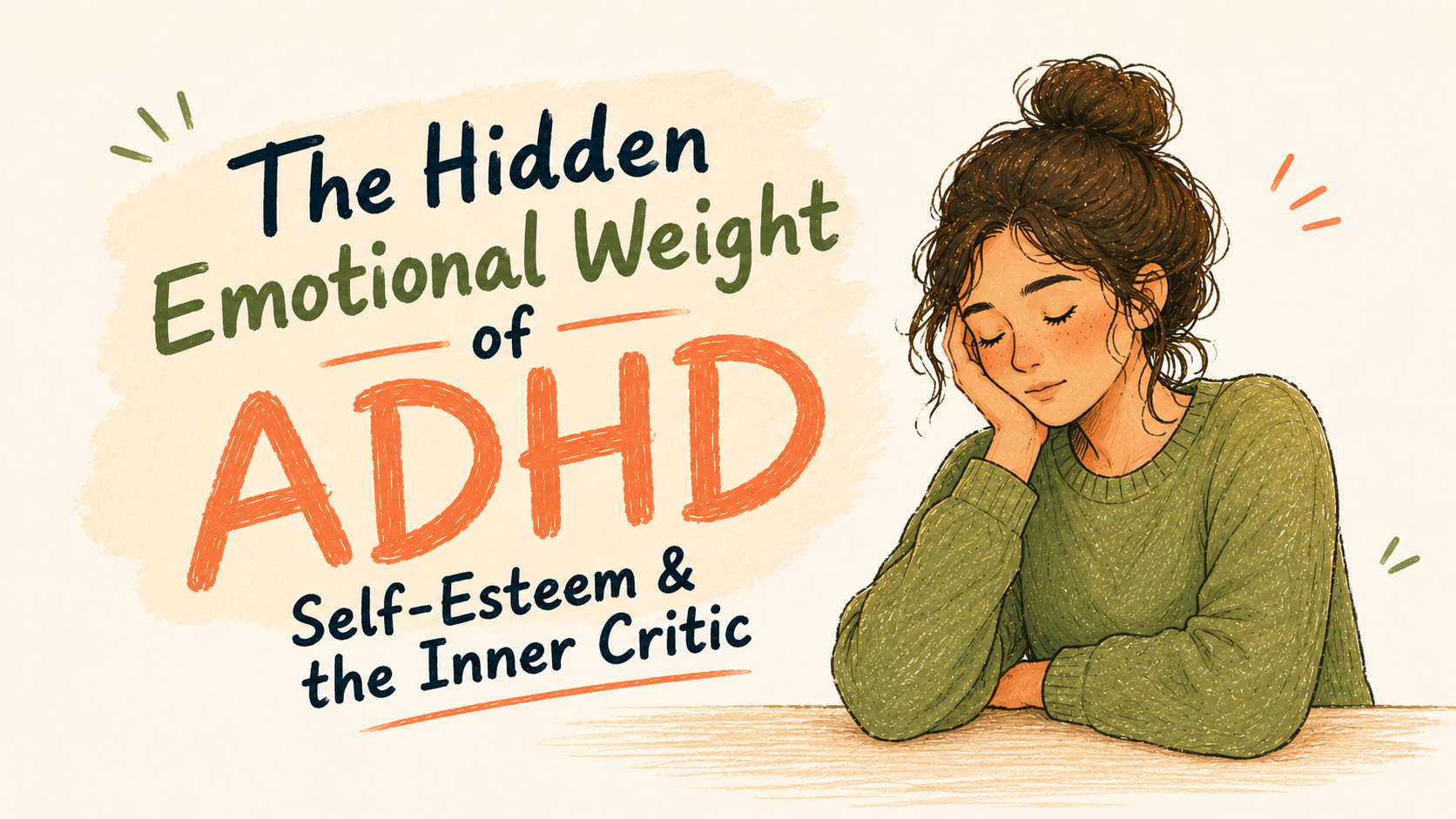
The Hidden Emotional Weight of ADHD
ADHD self-esteem can be shaped by shame, self-criticism, and the hard moments after a mistake. A kinder voice can help you recover.
Read story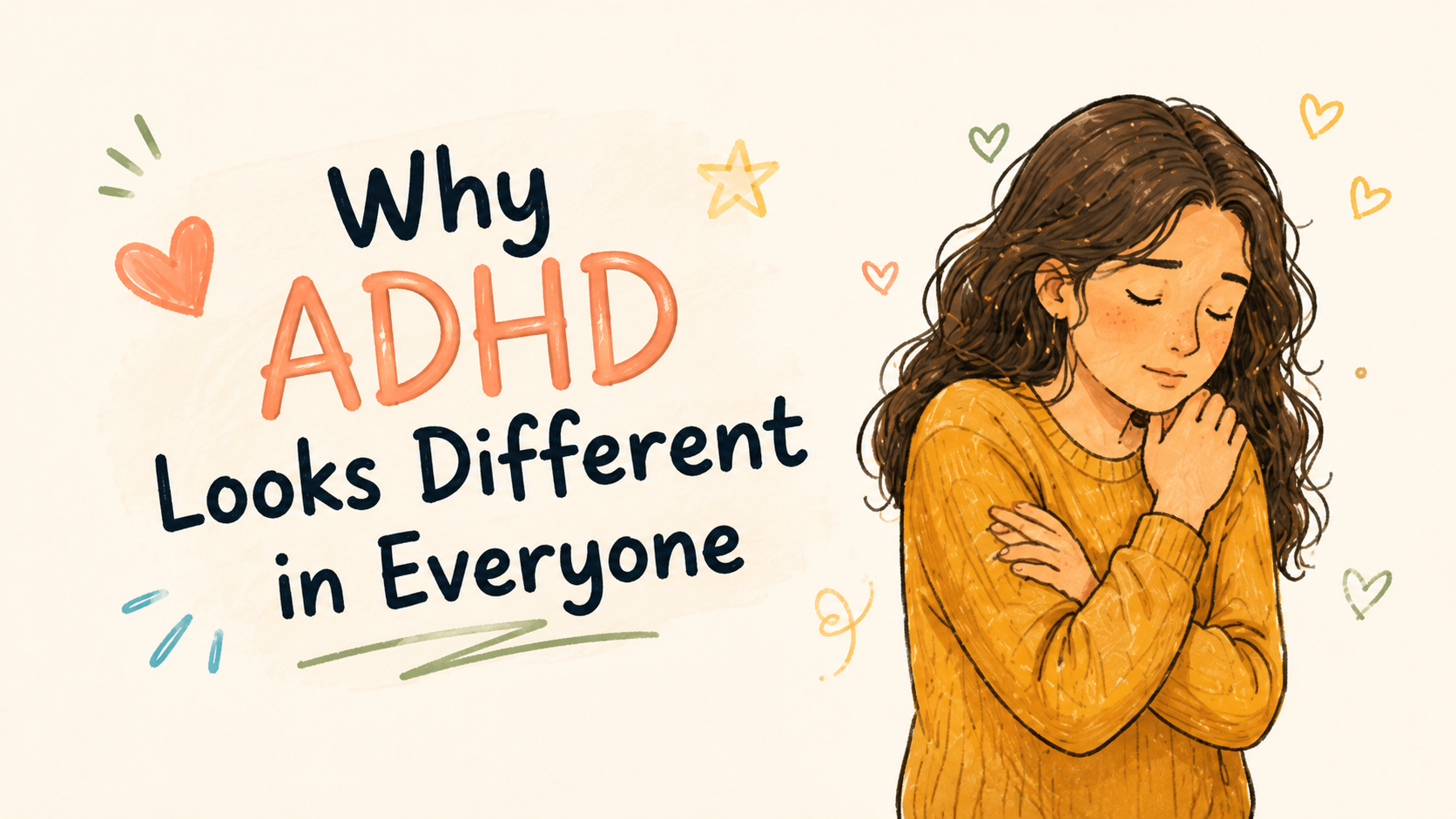
Why ADHD Looks Different in Everyone
ADHD can look restless, quiet, overwhelmed, impulsive, or hidden. The support that helps most depends on how it shows up in your real life.
Read story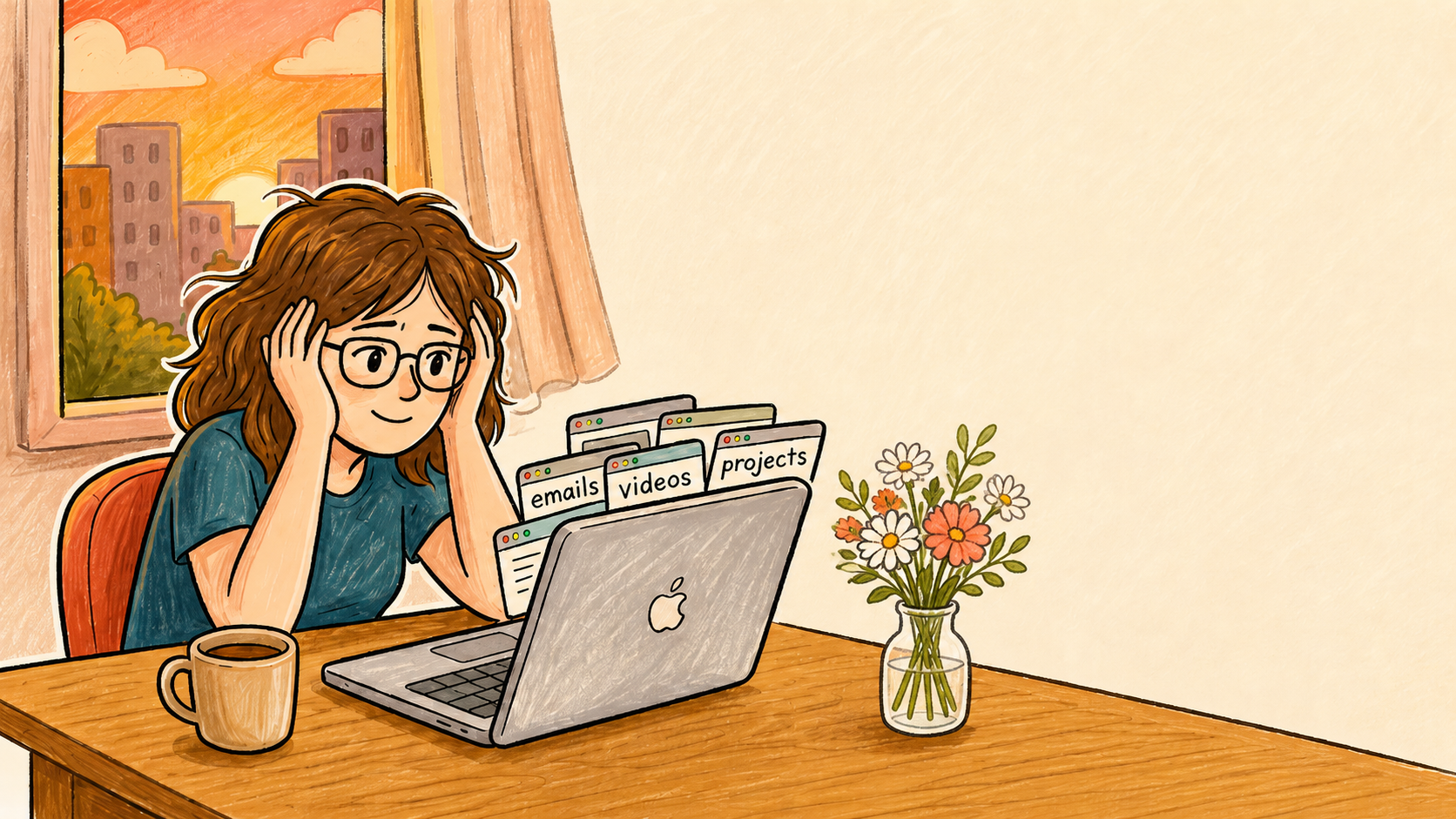
Freelancing With ADHD: Why Open-Ended Workdays Feel So Hard
Freelance freedom helped Maya work on her own terms, but open-ended workdays made starting hard. A smaller ADHD freelance routine helped her begin.
Read story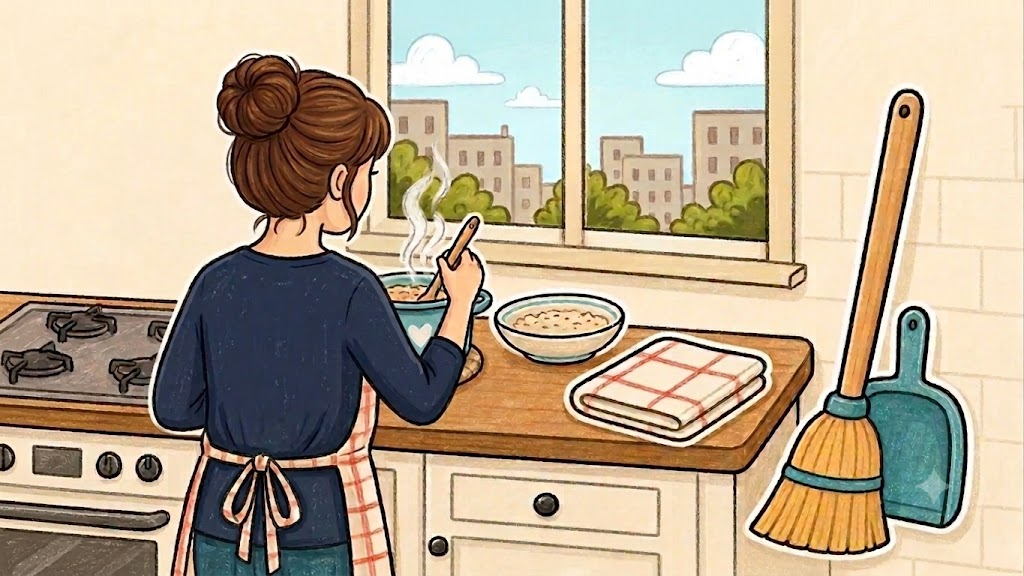
Living Alone With ADHD: Small Visible Steps That Make Life Easier
Living alone with ADHD made daily care feel heavy for CC. Small visible steps helped make the day feel lighter, clearer, and easier to restart.
Read story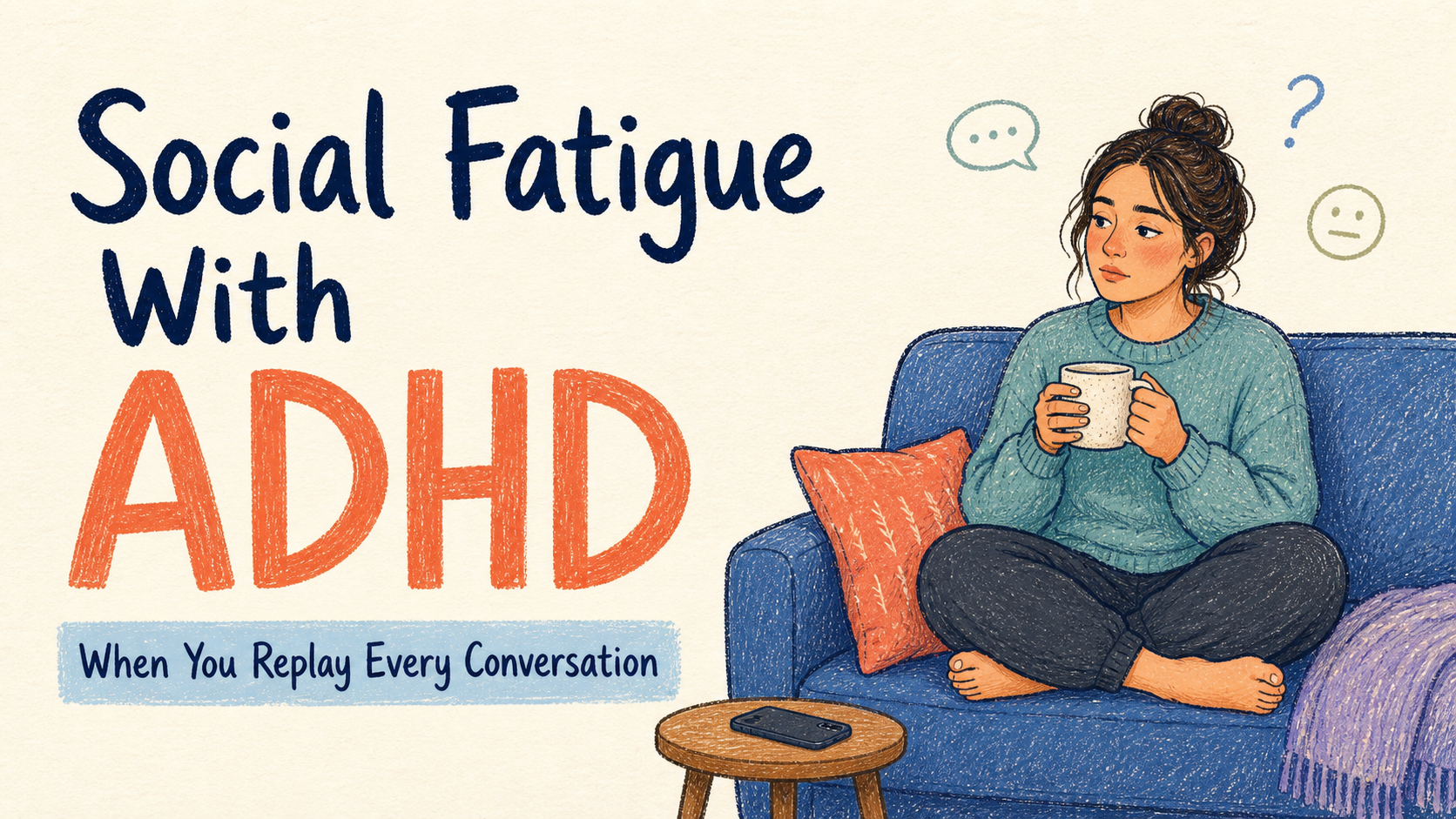
ADHD Social Fatigue: When You Replay Every Conversation
If a normal gathering leaves you replaying every sentence, you are not alone. ADHD social fatigue often comes from the hidden work of reading cues and staying composed.
Read story