

Focus Is Not Always a Simple Switch
For many people with adult ADHD, studying or working does not begin the moment you sit down. A useful ADHD work routine often has to make the beginning easier before focus can arrive.
Before the document opens, you may need to find the charger, move the chair, fix the light, clear the desk, choose music, and decide where to start. By the time everything is ready, the first wave of energy may already be gone.
Then a notification appears. Or the sentence you wrote does not feel right. Or the formatting looks messy. The task turns from one clear thing into a loop of switching, fixing, scrolling, and feeling behind.
Daytime spinning
You know what matters, but the start feels blurry and every small setup choice asks for attention.
Nighttime sprinting
When the deadline finally feels real, pressure creates a burst of focus, but sleep and recovery often pay the bill.
This does not mean you have no focus. Many ADHD brains can focus deeply once the conditions are right. The hard part is often controlling the doorway into that state.
Build a Flow-Friendly Start
Flow cannot be forced like a command. It is usually invited by the environment: a familiar place, a repeatable sound, a low-friction first action, and fewer chances to wander away before the task begins.
For ADHD, a good focus setup is less about becoming perfectly disciplined and more about giving the brain a familiar signal: this is the place where we begin.
01 Space cue
Choose one focus corner
Use a desk mat, lamp, chair, or pair of headphones as a physical cue. The space does not need to be perfect. It just needs to mean work starts here.
02 Start ritual
Repeat one starting ritual
Pour water, start the same playlist, open the document, and write the first task title. Repetition helps the transition feel less sudden.
03 Phone boundary
Give your phone a parking spot
Put it across the room, inside a drawer, or behind the laptop screen. The goal is not heroic willpower. It is fewer surprise exits.
A looping song can work surprisingly well for some people. Choose something steady enough that your brain can stop noticing it. After a while, the sound becomes a doorway back into the last focused version of you.
Turn the Big Task Into a Small Loop
A task like "write the report," "study for the exam," or "start the project" is not one action. It is a whole cloud of actions. ADHD task initiation gets harder when the brain has to face the entire cloud at once.
Instead of asking yourself to begin the whole thing, build a small loop: one action you can start, finish, and feel complete in a few minutes.
Instead of
Write the paper
Try
Open the file and write the title
Instead of
Study for the exam
Try
Review one page of notes
Instead of
Clean the room
Try
Move cups off the desk
Instead of
Start the project
Try
Paste the reference links
A useful small loop has four traits: you know exactly how to start, it does not require many new decisions, it has a clear ending, and it can usually be done in a few minutes.
The first win does not need to be impressive. It just needs to be possible. Once one loop closes, momentum has something to hold onto.
Make Time Visible Enough to Feel Real
ADHD time blindness can make distant deadlines feel unreal until they are suddenly urgent. A project due next month may feel like "not now," while a closing cafe or a 30-minute timer can create a real edge.
A gentle fake deadline is not about scaring yourself. It is about giving the task a visible start and stop, so your brain can sense the container.
Try one of these three time-limited focus fields when a task feels too open-ended:
Method
Use a natural end point
Choose a cafe, library, or study room that closes at a known time. If the cafe closes at 9 PM, your brain can feel: I have two hours here.
Method
Let battery become the countdown
For a short task, work unplugged and treat 30% battery as a soft boundary. The limit turns I can start later into this window is real.
Method
Make the countdown visible
Use Forest, BeFocused, TimeTimer, or another visual timer for 25 to 30 minutes. Pair it with Do Not Disturb so the block feels like a small meeting with yourself.
The more concrete the boundary is, the easier it is for attention to gather. A vague "later today" asks the brain to hold too much. A visible 30-minute box asks for one return.
How Vingoals Helps Make Focus Easier to Start
A visual ADHD checklist app can help when a work or study plan feels too abstract. Vingoals turns the day into small squares you can see, tap, and return to.
For a focus rhythm, your board might match the kinds of actions shown here:
- Study 30 minutes
- Attend one lecture
- Drink water
- Pack my bag
- Go out to study
- Check one short list
- Take notes
- Watch one lecture
- Review notes
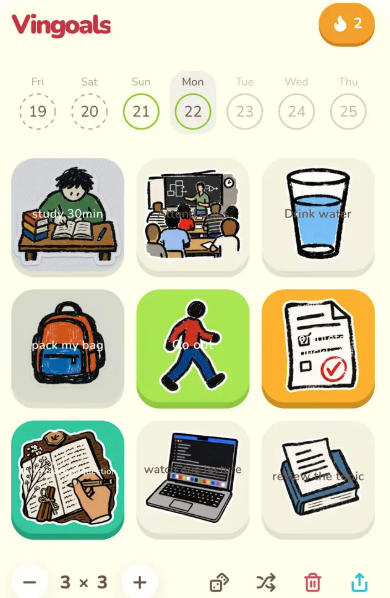
This makes the routine external. You do not have to keep the whole task, the timing, and the next step in working memory at the same time.
You are not trying to fix your whole work life in one day. You are just trying to make the next square easier to start.
A Sustainable Focus Rhythm Is Built by Returning
Some days, the focus corner works. Some days, the song helps. Some days, the timer gets you through one small loop and that is all you have.
That still counts. Sustainable focus is not built by staying locked in forever. It is built by making it easier to come back after attention drifts.
Start with the smallest clear action: open the file, write the title, pour the water, set the timer. One square is enough to begin.
Start with one tiny win today
Make the task concrete, limited, and visible.
Start with one tiny work square today.
More real stories
See all stories
What Is ADHD? Why Starting Tasks Can Feel So Hard
ADHD is not laziness. Executive dysfunction and ADHD paralysis can make starting hard when the first step is too vague.
Read story
ADHD Long-Term Projects: Make Slow Progress Feel Visible
Long tasks can feel impossible when the reward is too far away. A three-day cycle and small feedback points can make slow progress easier to feel.
Read story
ADHD Task Switching: Use a Main Quest and Side Quest Strategy
When ADHD attention keeps following side quests, a work routine needs one main quest and a place for everything else.
Read story
ADHD and Irregular Eating: A Low-Friction Food System
When ADHD hyperfocus takes over, meals can disappear from the day. A low-friction daily routine makes eating easier before energy crashes.
Read story
ADHD-Friendly Organizing: Make Things Easier to Put Away
For ADHD, organizing often fails when every object asks for a decision. A visible home for everyday things can make putting them away less exhausting.
Read story
ADHD Bedtime Procrastination
ADHD bedtime procrastination can make nights feel impossible to end. A softer shutdown routine can help your brain move toward sleep.
Read story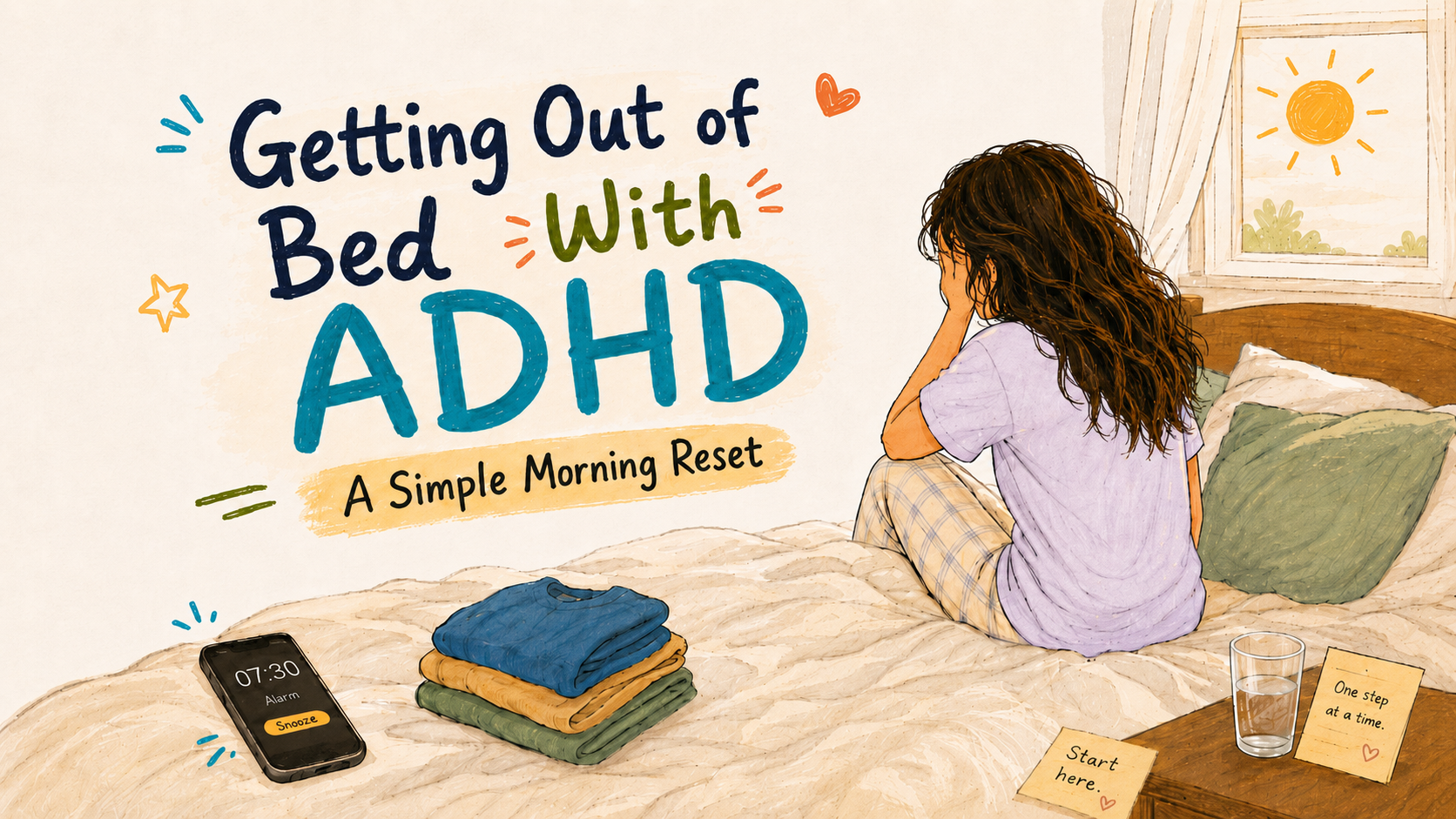
ADHD Morning Routine Reset
Getting out of bed with ADHD can feel like a whole task chain. A softer morning routine can help you restart without shame.
Read story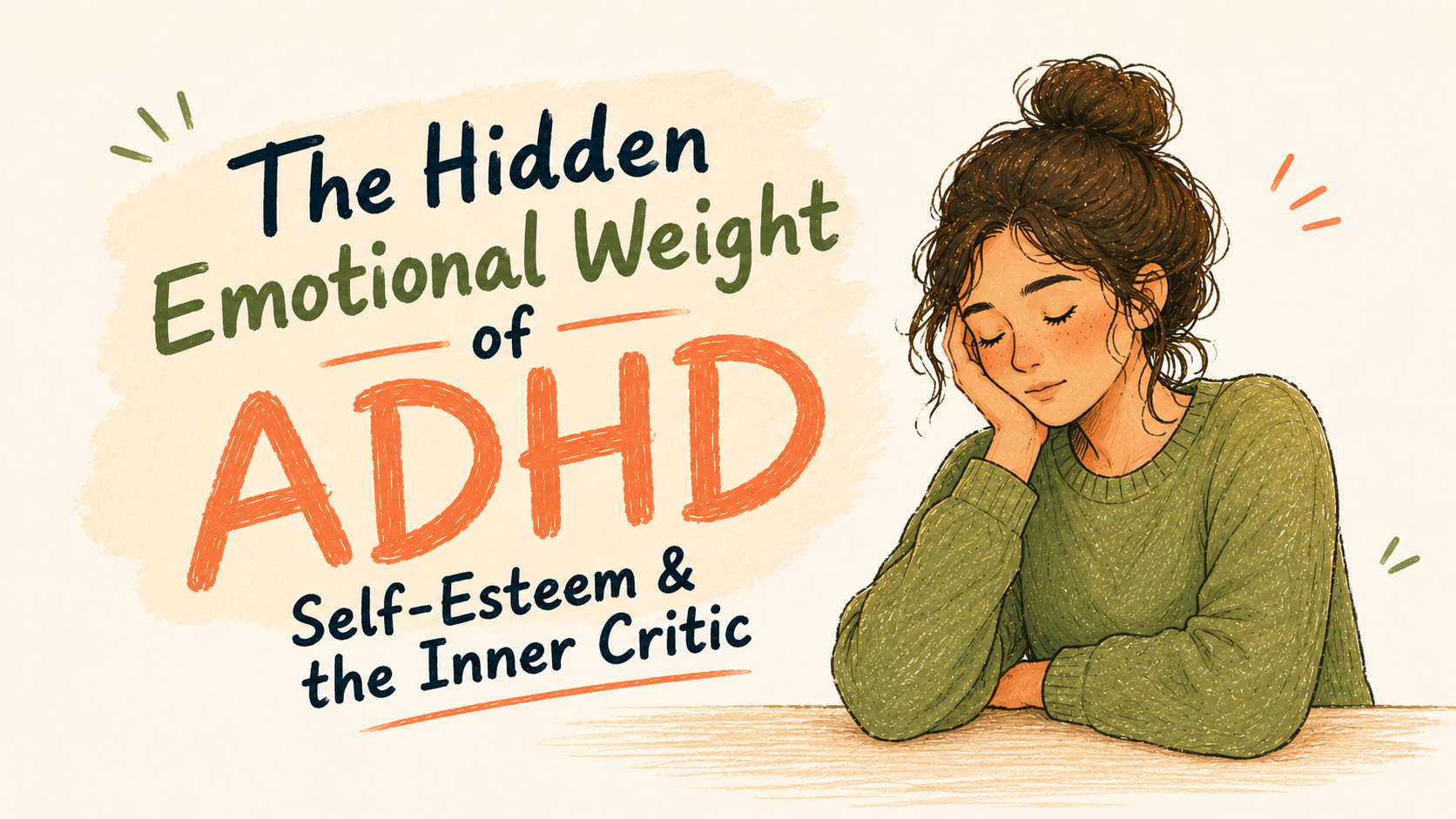
The Hidden Emotional Weight of ADHD
ADHD self-esteem can be shaped by shame, self-criticism, and the hard moments after a mistake. A kinder voice can help you recover.
Read story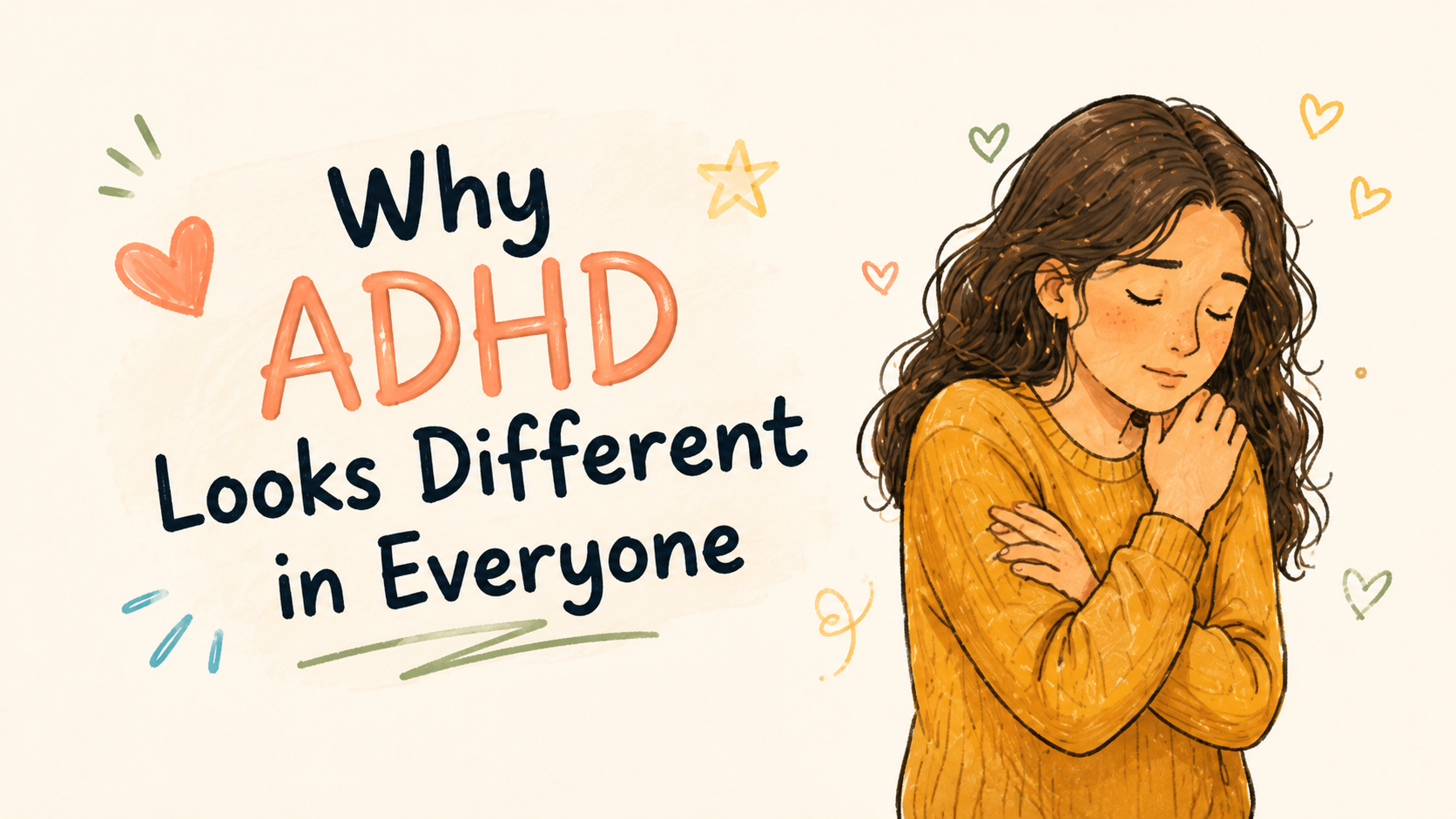
Why ADHD Looks Different in Everyone
ADHD can look restless, quiet, overwhelmed, impulsive, or hidden. The support that helps most depends on how it shows up in your real life.
Read story
Freelancing With ADHD: Why Open-Ended Workdays Feel So Hard
Freelance freedom helped Maya work on her own terms, but open-ended workdays made starting hard. A smaller ADHD freelance routine helped her begin.
Read story
Living Alone With ADHD: Small Visible Steps That Make Life Easier
Living alone with ADHD made daily care feel heavy for CC. Small visible steps helped make the day feel lighter, clearer, and easier to restart.
Read story
ADHD Social Fatigue: When You Replay Every Conversation
If a normal gathering leaves you replaying every sentence, you are not alone. ADHD social fatigue often comes from the hidden work of reading cues and staying composed.
Read story
How to Study With ADHD Without Getting Stuck Before You Start
Studying with ADHD can feel hard before the studying even begins. Ashley used small visible steps to move through ADHD paralysis.
Read story